
TL;DR: Shipping feels so expensive because you rarely pay just a base rate. You pay base transportation, dimensional (DIM) weight, and a stack of surcharges layered on top. Fuel, residential, and delivery area fees often appear only on the final invoice, so the total looks higher than the original quote. Sellers in the U.S. and Canada cannot control carrier rate hikes. They can control packaging, carrier choice, and whether they ship through a multi-carrier shipping platform that surfaces the real landed cost before the label is printed.
Key Facts: Why Is Shipping So Expensive?
- A shipping price combines base transportation, distance, package weight or dimensional weight, and a range of surcharges.
- Dimensional (DIM) weight means a light but bulky box can be billed as if it were heavier, raising costs unexpectedly.
- Fuel surcharges apply as a percentage of the base rate and update on each carrier’s own published schedule.
- Residential delivery and Delivery Area Surcharges (DAS) add per-package fees most sellers underestimate.
- A handling fee is a separate, seller-set charge—not a carrier rate—and it is not the same as a carrier’s additional handling surcharge.
- International shipments add customs clearance, duties, and longer zones on top of every domestic cost.
- U.S. and Canadian carriers each have their own surcharge tables—USPS, UPS®, FedEx, Canada Post, UPS® Canada, FedEx Canada, and Purolator do not align.
- Carriers publish General Rate Increases (GRI) annually, typically in late December or January.
This guide is written for solo operators and small-team sellers in the U.S. and Canada who feel shipping is reactive—something that breaks every week without warning.
Table of Contents
Intro
If you ship daily and keep asking why shipping is so expensive, the answer is rarely one fee. It is a stack of small charges layered on top of a quoted base rate. Most sellers see the headline price at checkout and miss the surcharges that appear later on the invoice.
The pattern is the same in the United States and Canada. A Shopify seller in Ohio shipping with UPS® and a TikTok Shop seller in Toronto shipping with Canada Post both face fuel surcharges, residential fees, and dimensional weight math. The base rate is rarely the final cost.
This guide breaks down where shipping costs come from, what sellers can control, and what they cannot. It is written for solo operators and small-team sellers who feel shipping is reactive — something that breaks every week without warning.
What Drives the Real Cost of a Shipment?

Call this what it is: the Surcharge Stack. A base rate is never the final cost—it is the floor on which fuel, residential, DAS, DIM, and address correction fees are layered.
The real cost of a shipment is the base rate plus every surcharge a carrier applies before delivery. Surcharges include fuel, residential delivery, delivery area, dimensional weight uplift, and address corrections. Most sellers quote the base rate to themselves and learn about the surcharges only when the invoice arrives.
A base rate is determined by three inputs: weight, zone, and service level. After that, the carrier layers on:
- Fuel surcharge — a percentage adjustment, updated monthly.
- Residential surcharge — added when delivery is to a home address.
- Delivery Area Surcharge (DAS) — for ZIP/postal codes considered remote.
- Dimensional weight uplift—when the package’s volume “weighs” more than its actual weight.
- Address correction fee — for incomplete or wrong addresses.
Each surcharge is small on its own. Stacked, they often add [ESTIMATED RANGE: 15–35%] to the quoted base rate. Each new fee feels personal—but it is simply the result of how a carrier’s rules interacted with packaging, addresses, or service choices.
What Is Dimensional (DIM) Weight and Why Does It Matter?

Dimensional weight is a pricing method where the carrier charges based on the package’s volume, not just its actual weight. The carrier multiplies length × width × height, divides by a DIM divisor, and bills the higher of the actual or dimensional weights. A light item in a big box can be billed as if it weighed several pounds more.
Quick DIM math example (illustrative, not a quote)
- Box: 14 × 14 × 14 inches = 2,744 cubic inches
- Common U.S. DIM divisor: 139
- Dimensional weight: 2,744 ÷ 139 ≈ 20 lb
- Actual weight: 1 lb
- Carrier bills the higher number: 20 lb
A simple way to picture it: imagine shipping a bulky hoodie in a big, mostly empty box versus a well-sized poly mailer. The product is the same, but the box occupies more cubic space. Dimensional weight charges make the box shipment more expensive than the mailer.
In Canada, carriers use a metric DIM divisor that varies by carrier and service. Canada Post, UPS® Canada, and Purolator each apply DIM differently. That is why the same box can cost different amounts across providers.
What Hidden Fees Show Up on a Shipping Invoice?

Most small-business sellers describe the same experience: a shipping bill that lands two to four weeks later, higher than the rate that was quoted, with line items they did not budget for.
Hidden shipping fees are charges that do not appear in the rate quote but show up on the invoice. The most common are fuel surcharge adjustments, residential delivery fees, delivery area surcharges, address correction fees, and additional handling charges for oversized or irregular packages. Most sellers do not see these until weeks after the shipment.
Here are the recurring culprits:
- Fuel surcharge: applied as a percentage of the base rate and adjusted monthly—UPS® publishes its current fuel surcharge rates on a weekly basis, and USPS, FedEx, Canada Post, and Purolator each publish their own.
- Residential delivery fee: added when delivering to a home rather than a commercial address.
- Delivery Area Surcharge (DAS): for ZIPs/postal codes flagged as extended or remote.
- Additional handling: triggered by package length, irregular shape, or weight thresholds.
- Address correction: when the carrier has to fix or research an address.
- Saturday or weekend delivery: optional but easy to trigger without noticing.
The bill arrives well after the shipment, which is why so many sellers feel blindsided. The carriers are not hiding anything — the surcharge tables are public — but the math is fragmented across multiple PDFs per carrier.
Tip: With Rollo Ship, fuel, residential, and DAS fees are visible in the rate comparison view before you click ‘Buy Label’—not weeks later on the invoice.
Why Does Shipping Feel More Expensive Every Year?
Shipping feels more expensive every year because carriers publish General Rate Increases (GRI) annually, surcharges expand in scope, and DIM divisors get tighter. Even when the headline rate looks flat, the underlying cost structure shifts. Sellers who ship the same product in the same box can pay more year over year without changing anything.
Common annual adjustments include:
- A General Rate Increase (GRI) announced by each carrier—for example, USPS announced its 2026 competitive pricing in November 2025, with rate changes taking effect in January 2026.
- New or expanded peak season surcharges during Q4.
- Tighter DIM divisors, which inflate billed weight on the same box.
- More ZIPs/postal codes added to the DAS list.
In Canada, Canada Post and Purolator publish similar annual updates. UPS® Canada follows its own program rate schedule.
How Shipping Costs Compare Across U.S. and Canadian Carriers

Different carriers price the same package differently because each one weighs zone, service level, surcharges, and dimensional rules on its own terms.
A 2-lb package going from a U.S. seller to a residential customer may be more economical via one carrier and less so via another after surcharges.
A Canadian seller shipping to a remote postal code may find one carrier more competitive for lightweight parcels and another more competitive for ground.
The high-level pattern looks like this:
| Carrier | Typical Strength | Surcharge Exposure | Often Used For |
|---|---|---|---|
| USPS (U.S.) | Light parcels, residential delivery | Lower residential exposure; DIM applies on larger boxes | Lightweight e-commerce, P.O. boxes |
| UPS® (U.S.) | UPS® — broad ground network across the U.S., often competitive for heavier and bulkier parcels | Fuel, residential, DAS, additional handling | Heavier parcels, commercial deliveries |
| FedEx (U.S.) | Express and ground access via connected account | Fuel, residential, DAS | Time-sensitive shipments via connected account |
| Canada Post | Domestic Canada coverage including rural | DIM applies; remote-area thresholds | Lightweight Canadian domestic |
| UPS® Canada | Domestic, U.S. export, international | Fuel, residential, DAS (Canada-specific) | Cross-border to U.S. and ground Canada |
| FedEx Canada | Express and international; access via connected account | Fuel, residential, DAS | Time-sensitive Canadian and international shipments |
| Purolator | Domestic Canadian ground | DIM, residential | Ground shipments inside Canada |
No single carrier fits every shipment. The most economical option changes by weight, zone, and destination type. Defaulting to one carrier is a common form of overpayment.
Why Canadian Sellers Face Different Surcharge Math
Canadian sellers ship into a fragmented surcharge map. Canada Post applies its own DIM divisor and remote-area thresholds. UPS® Canada and Purolator each publish independent residential and extended-area fees. A Toronto seller shipping to rural Manitoba may find Canada Post more economical for one order and Purolator more economical for the next—the answer changes per shipment, not per carrier.
Where Shipping Costs Surface in Your Workflow

Shipping costs do not appear in one place. They surface at multiple steps from order import to delivery. Understanding where each cost risk sits helps sellers design a workflow that catches problems earlier — before the label is printed.
| Workflow step | Example cost risk | What the seller can control |
|---|---|---|
| Order import | Residential address treated as commercial, or data errors | Use address validation and consistent data sources |
| Packaging | Oversized box triggers higher dimensional weight | Standardize boxes/mailers and map SKUs to packaging |
| Carrier selection | Defaulting to a familiar service when other options exist | Compare multiple carriers and services per order |
| Label creation | Incorrect weight or dimensions; adjustment fees later | Use a digital scale and saved package presets |
| Shipment handoff | Delivery area or extended area surcharge surprises | Check service availability and alternatives |
| Tracking | Missed delivery windows leading to reships or refunds | Choose realistic service levels based on destination |
The same pattern holds in the U.S. and Canada, even though the carrier names change. Most cost leakage happens in the carrier selection and label creation steps — the moment before a label is generated.
Most cost leakage in small-business shipping does not happen at the carrier. It happens in two workflow steps—carrier selection and label creation—both controlled by the seller, both invisible until the invoice arrives weeks later.
Real-World Cost Scenarios: Where the Bill Actually Comes From
Three short scenarios show how everyday packaging and carrier choices change the final invoice. The numbers are illustrative—not quotes—but the pattern is consistent across U.S. and Canadian carriers.
Scenario 1: The Shopify apparel founder shipping a hoodie
A Shopify apparel founder sends a 1-lb cotton hoodie in a 14×14×14 box because that is the box size she bought in bulk. With a U.S. DIM divisor of 139, the package bills as roughly 20 lb even though the hoodie weighs 1 lb. Switching to a snug poly mailer drops the billed weight close to the actual 1 lb. Same product. Same destination. Different billed weight. The packaging decision — not the carrier — drives most of the cost gap.
Inside Rollo Ship, switching package types updates the rate per carrier live—so the box-vs-mailer math is a comparison, not a guess.
Scenario 2: The cross-border seller shipping U.S. to rural Canada
A small business in Buffalo ships a 3-lb electronics accessory to a residential address in rural Manitoba. The base rate looks reasonable. The invoice adds a fuel surcharge, a residential delivery fee, and a delivery area surcharge for the rural postal code. Together, those surcharges can add [ESTIMATED RANGE: 20–40%] to the original quote. The seller cannot remove the surcharges. They can compare carriers—USPS to Canada Post handoff, UPS® Canada, and FedEx Canada via a connected account—to see which combination handles rural Canadian residential more efficiently for that order.
Scenario 3: The cosmetics brand shipping a lipstick in a “safe” box
A Wix cosmetics brand ships a single lipstick—under 4 oz actual weight—in a 10×10×6 box with extra fill for protection. The DIM math turns that 4-oz lipstick into a several-pound bill shipment. A right-sized small parcel or padded mailer keeps billed weight near actual weight. The product is identical. The protection is comparable. The cost difference comes entirely from cubic volume.
The pattern across all three: packaging and carrier choice are bigger levers than most sellers think, and the levers are pulled before the label is printed—not after the invoice arrives.

Shipping Fee Glossary: Terms Every Seller Should Know
A short glossary makes shipping invoices easier to read. These are the terms that most often appear on carrier bills in the U.S. and Canada.
- Base rate — the core transportation cost for a given weight, zone, and service level.
- Zone — a measure of distance between the origin and destination. Higher zones generally cost more.
- Actual weight — the physical scale weight of the package.
- Dimensional (DIM) weight — a calculated weight based on the volume of the package.
- DIM divisor — the number a carrier uses to convert volume into billable weight. A smaller divisor means a higher DIM weight.
- Fuel surcharge — a percentage added to the base rate, updated monthly to reflect fuel costs.
- Residential surcharge — a flat fee added when the destination is a home rather than a commercial address.
- Delivery Area Surcharge (DAS) — a fee for ZIP or postal codes flagged as extended or remote.
- Additional handling — a fee for packages that exceed length, weight, or shape thresholds.
- Address correction fee — a fee when an incomplete or invalid address requires manual research.
- General Rate Increase (GRI) — the annual rate update most carriers announce in late December or January.
- Peak season surcharge — temporary fees during high-volume periods, typically Q4.
- Landed cost — the full delivered cost of a shipment, including base rate and all surcharges.
Knowing the names of the fees turns a confusing invoice into a checklist. Once the line items are named, sellers can map each one back to a workflow control — packaging, carrier choice, address quality, or service level.
The Hidden Cost Most Sellers Forget: Time

Time is the most underestimated shipping cost. Logging into separate carrier portals, copying addresses, and re-keying package dimensions takes minutes per order. At [ESTIMATED RANGE: 50–300] shipments per week, that workflow tax becomes a salary line item.
The Overwhelmed Shipper feels this every day: switching tabs between USPS, UPS®, and Canada Post or Purolator, then fixing a printed label that came out wrong. Each fix is small. The stack of fixes is the real cost.
The time cost is not just minutes per label. It is the mental cost of starting from zero every morning—logging into a different portal for each carrier, copying the same address twice, and re-printing a label that came out wrong. The cost is the absence of a repeatable system, not the line item on the invoice.
Intent-Shift Marker
Once you see the full cost picture, the next question is which platform structure lets you see and control those costs before you buy each label.
How a Multi-Carrier Shipping Platform Solves This

Rollo Ship is a multi-carrier shipping platform that surfaces real landed cost across USPS, UPS®, FedEx, Canada Post, UPS® Canada, FedEx Canada, and Purolator before a label is printed, allowing U.S. and Canadian sellers to compare base rates plus surcharges on one screen.
A multi-carrier shipping platform consolidates carrier rate comparison, label generation, and shipment management into one dashboard. Instead of logging into separate carrier portals, sellers see real-time rates across carriers side by side—with surcharges factored in—before printing. This is the structural answer to rate opacity and workflow fragmentation.
Rollo Ship is a multi-carrier shipping platform available in the United States and Canada. It connects sellers to USPS, UPS®, FedEx, Canada Post, UPS® Canada, FedEx Canada, and Purolator from one dashboard. Rollo is not a carrier. Postage is always paid directly to the carrier. The platform surfaces real landed cost across carriers before the seller commits to a label, so hidden shipping fees become visible decisions rather than unpleasant surprises.
How Rollo Ship implements the pattern
- One dashboard to compare USPS, UPS®, and FedEx rates side by side (U.S.) and Canada Post, UPS® Canada, FedEx Canada, and Purolator (Canada).
- Program rates, not retail—including access to discounted USPS rates up to 90% off retail USPS rates on select services and discounted UPS® rates through the UPS® Digital Access Program.
- FedEx and FedEx Canada are accessible via a connected account.
- Canada Post and Purolator are supported as integrated carriers with commercial platform rates.
- Per-label service fee of 5¢ that decreases to as low as 1¢ through Rollo Rewards as shipping volume grows. The first 200 labels are fee-free for new users. No monthly subscription.
- Direct thermal printing—Rollo label printers print without ink, toner, or cartridges, removing a recurring supply cost most sellers underestimate. The Rollo Ship mobile app (iOS and Android) lets sellers buy and print labels from a phone when the desktop workflow is not available.
- Marketplace integrations including Shopify, Amazon, eBay, WooCommerce, TikTok Shop, Squarespace, Wix, and Best Buy Marketplace.
Example scenario
A Shopify apparel seller in Pennsylvania ships [ESTIMATED RANGE: 80–150] orders per week. About 60% are residential. She used to print labels through Shopify Shipping, then jump to UPS.com for heavier orders. The tab-switching alone cost her [ESTIMATED RANGE: 30–60] minutes a day.
After moving to Rollo Ship, she sees USPS Ground Advantage, UPS® Ground, and FedEx rates side by side per order.
She experiments with poly mailer vs. box sizes and sees how each one changes dimensional weight before printing. The 5¢ per-label fee is waived for her first 200 labels and decreases as her volume grows through Rollo Rewards.
A similar pattern holds for a small business in British Columbia shipping with Canada Post, UPS® Canada, and Purolator from one Rollo Ship dashboard.
What Happens Without a System Like This

Continuing to guess at shipping costs means living in a reactive state where every invoice is a post-mortem. Sellers stay stuck in a loop of unexpected adjustments, customer complaints, and internal questions about where the margin went.
Without a multi-carrier shipping platform, sellers default to one of three setups:
- Manual carrier portals: separate logins for USPS, UPS®, Canada Post, and Purolator. Comparison is done by eye. Time cost is high; rate optimization is limited.
- Marketplace-native shipping: convenient for one platform, but limited to the carrier set that platform offers. A Shopify seller cannot compare a TikTok Shop order against UPS® Ground from the same dashboard. Sellers can overpay on the simpler-looking option without ever seeing the alternative.
- Some subscription-based shipping tools: a flat monthly fee charged regardless of shipping volume. A seller who ships 50 labels and a seller who ships 500 labels pay the same platform cost—the per-label economics do not improve with growth.
None of these setups align platform cost with shipping volume. A seller who ships 500 labels pays the same per-label economics as a seller who ships 50.
When to Try Rollo Ship
Make label printing the easiest part of your workflow
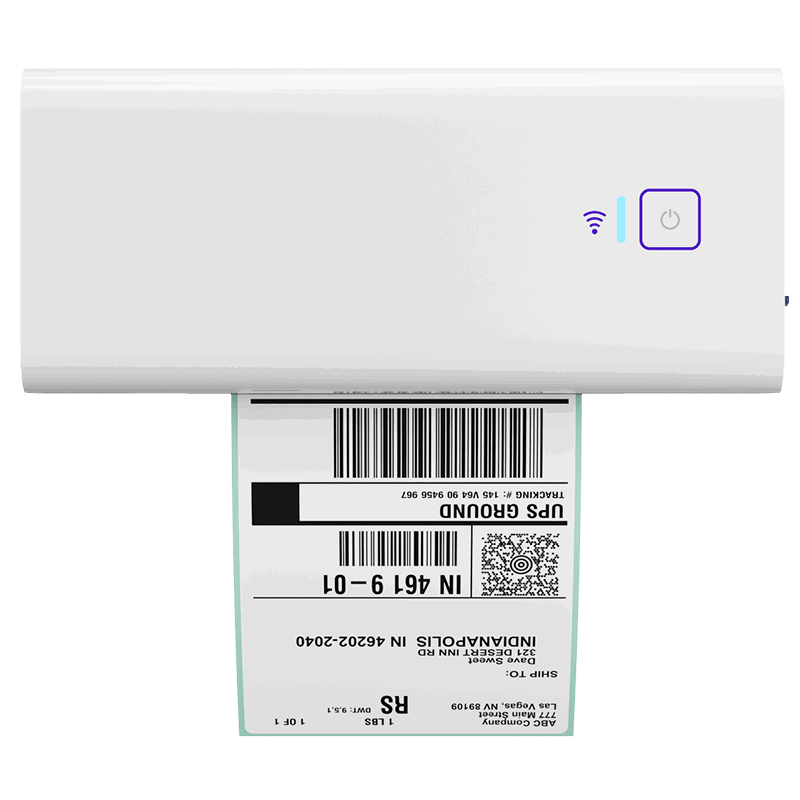
If your team is ready to spend less time on one-by-one labels, the Rollo Wireless Printer can help simplify one of the most repeated steps in shipping. It is a practical next step for small teams that want faster label printing, fewer interruptions, and a setup that feels easier to manage as order volume grows.
Rollo Ship is a structural fit for sellers who want full landed-cost visibility before printing a label and per-label economics that can improve with volume. Rollo Ship is free to start and has no monthly subscription. A small per-label service fee applies, starting at 5 cents and decreasing to as low as 1 cent per label through Rollo Rewards, with the first 200 labels fee-free for new users.
Rollo Ship sits inside a broader shipping system that includes Rollo direct-thermal label printers and Rollo shipping supplies—sellers who scale through Rollo Rewards see their per-label service fee decrease as volume grows.
For the Overwhelmed Shipper, the value is one dashboard, fewer errors, and a repeatable workflow. For the cost-avoider, the value is seeing the real landed cost—base rate plus surcharges—across USPS, UPS®, FedEx, Canada Post, UPS® Canada, FedEx Canada, and Purolator before committing to a label.
Compare real landed cost across USPS, UPS®, FedEx, Canada Post, UPS® Canada, FedEx Canada, and Purolator inside Rollo Ship—the first 200 labels are fee-free.
Who This Is NOT For
Rollo Ship is not the right structural fit for every shipper. It is not built for:
- One-off shippers sending [ESTIMATED RANGE: 1–5] packages per month. Carrier-native tools at USPS.com or UPS.com handle that volume cleanly.
- Sellers fully locked into a 3PL where the fulfillment provider creates every label. The 3PL controls carrier choice, so a multi-carrier platform adds less for the brand.
- Shippers who only need one carrier and have a negotiated account they prefer to keep self-managed.
Naming this honestly matters. A multi-carrier shipping platform pays back when carrier choice, rate comparison, and volume economics actually shift outcomes.
Ready for a shipping workflow that scales without adding more chaos?
If your team is spending too much time on rate checks, label creation, and order handoffs, Rollo Ship can help bring those steps into one place. It is a practical next step for small teams that want more clarity, fewer repeated tasks, and a shipping process that feels easier to manage as order volume grows.

Conclusion
Shipping is expensive because the final bill is rarely just postage. It is the base rate plus dimensional weight, residential fees, delivery area surcharges, fuel adjustments, and the small workflow mistakes that compound over time. Once you can see that full cost stack before buying the label, shipping stops feeling random and starts becoming manageable.
For sellers in the United States and Canada, the goal is not to eliminate every surcharge. The goal is to control the levers that actually change the outcome: packaging, carrier selection, address accuracy, and the system used to compare rates. Rollo Ship gives sellers one place to compare carriers and surface landed cost before printing and reduces per-label platform fees as volume grows through Rollo Rewards.
Compare real landed cost across carriers inside. Rollo Ship, where the first 200 labels are fee-free for new users and there is no monthly subscription fee.
Follow Rollo on:
Frequently Asked Questions About Why Shipping is so Expensive
📌 Q: Why is shipping so expensive?
💭 A: Shipping is expensive because the quoted base rate is only the starting point; fuel, dimensional weight, residential, and delivery area surcharges stack on top of it. Annual general rate increases then compound those costs over time. A multi‑carrier shipping platform like Rollo Ship helps sellers see these components before they print the label.
📌 Q: What is dimensional weight in shipping?
💭 A: Dimensional (DIM) weight is a pricing method that uses a package’s volume, not just its scale weight, to calculate the billable weight. Carriers multiply length × width × height, divide by a DIM divisor, and charge whichever is higher between dimensional and actual weight, which especially affects light products in large boxes.
📌 Q: Why is my shipping bill higher than the rate I was quoted?
💭 A: The quote usually shows only the base rate, while the final bill includes added surcharges such as fuel, residential delivery, delivery area, address correction, and additional handling. Together, those extra fees can significantly increase the original amount unless you review the full landed cost before buying the label.
📌 Q: How can small sellers reduce shipping costs without a negotiated carrier contract?
💭 A: Small sellers can lower effective costs by right‑sizing packaging, choosing the most suitable carrier per shipment, and validating addresses to avoid correction fees. Using a multi‑carrier platform like Rollo Ship makes it easier to compare rates, limit DIM impact, and access discounted USPS and UPS® program rates without separate contracts.
📌 Q: Do shipping costs differ between the U.S. and Canada?
💭 A: Yes, shipping costs differ because U.S. and Canadian carriers use their own surcharge tables, DIM divisors, and remote‑area definitions. Canada Post, UPS® Canada, FedEx Canada, and Purolator publish independent rate structures, so a platform that supports both countries helps manage domestic and cross‑border shipments consistently.
📌 Q: Which carrier is the most economical for small business shipping?
💭 A: There is no single most economical carrier; the best option changes by weight, zone, package size, and destination type. USPS often suits lightweight U.S. residential parcels, UPS® can be competitive for heavier ground shipments, and Canada Post is often strong for lightweight Canadian domestic parcels, so comparing all options per shipment is the only reliable approach.


