Category

Blog

B2B seller shipping a security camera and charger in a box while Rollo Ship compares UPS Ground, FedEx 2Day, and USPS Priority Mail rates with example prices on a laptop screen.

Equipment Shipping for Robotics & Security Businesses: Risk, Value & Carrier Strategy

By Blog

TL;DR: Equipment shipping for robotics and security businesses in 2026 is not a standard parcel decision. High declared values, dimensional weight penalties, lithium battery regulations, and carrier-specific restrictions all interact on every shipment — and a single misstep costs hundreds. For B2B electronics sellers and operations managers, the difference between a controlled shipping workflow and a reactive one is measurable in dollars, delays, and damaged customer relationships. Rollo Ship is a multi-carrier shipping platform for high-value equipment sellers in the U.S. and Canada that shows DIM weight, declared value options, and carrier rates before you print a label.

Key Shipping Takeaways

  • Declared value sets carrier liability; defaults often cap at about $100 per shipment.
  • DIM weight on bulky robotics / security gear can triple billed weight vs actual.
  • Lithium battery rules restrict carriers and services by battery type and watt‑hour.
  • The best carrier is lane‑specific; compare landed cost per shipment, not just base rate.
  • Rollo Ship shows DIM weight, declared value options, and multi-carrier rates before label creation for U.S. and Canadian shippers.

What is declared value shipping? 

Declared value shipping is the process of stating a package’s monetary value at the time of label creation so the carrier can apply appropriate liability coverage in the event of loss or damage. For high-value equipment like robotics systems and security gear, declared value is not optional—it is the difference between a full reimbursement and a carrier’s standard liability cap, which is often $100 or less on an unprotected shipment.

Shipping Robotics & Security Equipment Overview

  • Shipping robotics and security equipment involves layered risk across value protection, compliance, and cost control.
  • Small label decisions—like declared value, package dimensions, and service selection—directly impact liability and total shipping cost.
  • Carrier rules vary by shipment.
  • Battery-powered equipment can limit eligible services and routing options.
  • The advantage comes from visibility before label creation.
  • Sellers can compare options upfront and make consistent, controlled shipping decisions instead of reacting after costs are locked in.
Warehouse aisle with packed robotics components and security cameras prepared for high-value equipment shipping in the US and Canada.

B2B electronics sellers and operations managers shipping robotics components, security cameras, access control systems, and related equipment face a category of shipping risk that most parcel platforms were not designed to handle.

This is the daily reality for the Electronics B2B Seller — the operations manager or distributor shipping high-value robotics, audio, and security systems where one mistake can cost hundreds per order.

According to the U.S. Census Bureau, electronic and computer equipment consistently ranks among the highest-value categories in US domestic and cross-border commerce, which means the cost of a damaged, delayed, or underinsured shipment is not a minor inconvenience. It is a real financial event.

The challenge is not that carriers refuse to ship this equipment. Most will. The challenge is that the default settings on most shipping workflows — unconfirmed declared value, unchecked DIM weight, default carrier selection — leave the seller exposed on every dimension that matters: financial liability, regulatory compliance, and delivery reliability.

This article breaks down exactly how to structure a shipping workflow for robotics and security equipment in 2026 — covering declared value, DIM weight, battery regulations, and carrier strategy — before the next shipment costs more than it should.

Cardboard box with a surveillance camera and NVR icon sitting on a shipping scale reading 4.00 lb, surrounded by callouts for DIM weight oversize volume, low declared value, and carrier choice wrong lane.

Why shipping robotics and security equipment is structurally different

Shipping robotics and security equipment is structurally different from standard parcel shipping because every box combines high declared values, DIM-weighted packaging, potential lithium battery restrictions, and carrier-specific surcharges.

Robotics and security equipment shipments carry risk profiles that standard parcel workflows do not account for. High declared values exceed carrier default liability caps. Bulky or irregularly shaped packaging triggers DIM weight and oversize surcharges. Lithium batteries restrict service eligibility. And the financial consequence of a mishandled shipment — damage, loss, or regulatory hold — is measured in hundreds or thousands of dollars, not the typical $20–$50 of a standard consumer parcel.

Most shipping problems in this category trace back to three decisions made before the label is printed:

Decision pointDefault behaviourRisk created
Declared valueUnderinsured shipment—carrier liability does not cover the actual product valueChosen by habit or the lowest visible rate
DIM weightNot calculated before carrier selectionBilled at DIM weight after printing — cost higher than expected
Carrier selectionChosen by habit or lowest visible rateWrong carrier for equipment type, weight, or battery classification

Each of these is a pre-label decision. Once the label is printed and the shipment is handed to the carrier, the cost structure is locked in.

Every Decision Impacts Your Financial Risk

Illustrated risk matrix showing declared value, DIM weight, and carrier selection as key financial risk factors for equipment shipping.

What is declared value—and why does it matter more for high-value equipment?

How declared value works in shipping

Declared value is the stated monetary value of a shipment at the time of label creation. Carriers use this figure to determine the maximum liability they will accept in the event of loss or damage. Without a correctly set declared value, the carrier’s standard liability cap applies — typically $100 for most domestic services — regardless of what the equipment inside is actually worth.

For a $400 security camera system, a $1,200 robotics sensor, or a $3,000 access control panel, the gap between the carrier’s default liability and the actual product value is the seller’s uninsured exposure on every shipment.

Declared value is not the same as shipping insurance. It is the carrier’s extended liability coverage—and it carries an additional fee that scales with the declared value amount. The fee varies by carrier and service level.

Declared value comparison showing $100 default carrier liability versus correctly set $1,200 declared value for a security camera shipment.

Key Rules for Declared Value on Robotics and Security Equipment

  • Set declared value before printing the label—it cannot be added retroactively once a shipment is in transit
  • Declared value should reflect the replacement cost of the equipment, not the sale price or a rounded estimate
  • Confirm the declared value limit for the selected carrier and service—some services have maximum declared value caps
  • Document the declared value on the commercial invoice for cross-border shipments—consistency between label and documentation matters for claims

How dimensional weight pricing affects robotics and security equipment shipments

How does dimensional weight pricing affect high-value equipment shipping costs?

Dimensional weight (DIM weight) pricing bills a shipment based on its package volume rather than its actual weight when the DIM calculation produces a higher number. Robotics components and security equipment—often shipped in reinforced, oversized, or custom-fit boxes—frequently trigger DIM weight billing. A 4 lb robotics sensor in a large protective box may be billed at 12 lbs or more, significantly increasing the shipping cost before any surcharges are applied.

The formula most major carriers use:

DIM Weight = (Length × Width × Height) ÷ DIM Divisor

The DIM divisor varies by carrier and service type. When the DIM weight exceeds the actual weight, the carrier bills at the DIM weight.

Packing station with custom foam inserts and robotics parts showing how protective packaging increases DIM weight.

Why this hits robotics and security sellers specifically:

  • Protective foam inserts, custom casing, and reinforced packaging add volume without adding weight
  • Irregularly shaped equipment often ships in oversized boxes to ensure safe transit
  • Multi-unit security system shipments (camera + controller + cables) create bulky configurations

The practical fix is calculating DIM weight for every shipment before selecting a carrier—not after. Different carriers have different DIM divisors, which means the DIM weight calculation can produce different billed weights across carriers for the same package. Comparing DIM-inclusive rates before printing surfaces that difference.

Comparison of a small heavy box and a large lightweight box illustrating dimensional weight vs actual weight for robotics shipments.

Lithium battery regulations and carrier eligibility for robotics components

What are the lithium battery shipping regulations for robotics equipment?

Many robotics components — drones, autonomous devices, sensors, and portable security systems — contain lithium batteries. Lithium batteries are classified as dangerous goods (hazardous materials) by major carriers and are subject to service restrictions that vary by battery type (lithium ion vs. lithium metal), watt-hour rating, and whether the battery is installed in the device or shipped separately.

Lithium-ion and lithium-metal battery icons explaining shipping restrictions for robotics components.

The practical implications for sellers:

Battery classificationCommon restrictionWhat to check
Confirm watt-hour rating against the carrier’s published limitsGenerally permitted on ground services; air restrictions applyCheck the carrier’s dangerous goods guide before selecting service
Lithium-ion—spare/loose batteriesMore restrictive—often ground-only; quantity limits applyConfirm carrier eligibility before purchasing a label
Lithium metal batteriesMost restrictive—some carriers decline entirelyConfirm carrier eligibility before purchasing label

What this means operationally:

  • Carrier eligibility for lithium battery shipments must be confirmed before label purchase — not assumed
  • Air services (Priority, Express) are commonly restricted for higher watt-hour lithium battery shipments
  • Incorrect battery classification on shipping documentation can result in a shipment being held, returned, or fined

USPS, UPS®, and FedEx all publish dangerous goods guidance for lithium batteries. The rules update periodically — confirming against the current carrier guide before each shipment is the only way to stay compliant.

Carrier strategy: when to use which carrier for high-value equipment

Map of the US and Canada with USPS, UPS®, FedEx, and Canada Post icons illustrating carrier strategy for equipment shipping.

What is the best carrier strategy for shipping robotics and security equipment?

No single carrier is the best choice for all robotics and security equipment shipments. The right carrier depends on the shipment’s weight, declared value, battery classification, destination, and required transit time. Comparing landed cost—base rate plus DIM weight adjustment plus declared value fee plus applicable surcharges—across carriers before printing is more reliable than defaulting to one carrier for all equipment types.

ScenarioRecommended starting carrierWhy
Lightweight robotics sensor, no battery restrictions, US domesticUSPSCompetitive on lightweight ground, residential included in base rate
Heavier security system, US domestic ground deliveryUPS®Stronger ground economics on heavier shipments; reliable B2B handling
Time-sensitive equipment delivery with negotiated accountFedExAccount-based rates; express options for time-critical B2B orders
Cross-border US to Canada, standard transitUPS® cross-border or USPS + Canada Post handoffDepends on weight, declared value, and brokerage fee management
Canadian domestic equipment shipmentCanada Post or PurolatorZone-competitive for domestic Canadian lanes depending on weight
Lithium battery shipment — ground only requiredConfirm eligibility per carrier before selectingBattery classification determines which services are available
Carrier strategy decision tree showing when to use USPS, UPS®, FedEx, and Canada Post for robotics and security equipment shipments.

What a correct shipping workflow looks like for B2B electronics sellers

Most shipping problems in the robotics and security equipment category are not carrier problems. They are workflow problems — decisions made (or skipped) before the label is printed that determine the cost, compliance, and liability profile of every shipment.

A structured workflow for high-value equipment shipping looks like this:

StepWhat happensWhere risk control lives
Order importOrders pulled from connected storefronts or entered manuallyB2B orders flagged for high-value workflow
PackagingBox dimensions confirmed, protective packaging selectedCarrier liability is set correctly before printing
DIM calculationDIM weight calculated across carrier optionsDIM-inclusive rate comparison prevents billing surprises
Declared valueReplacement cost confirmed and entered on labelCarrier liability set correctly before printing
Battery checkLithium battery type and watt-hour rating confirmedCarrier eligibility confirmed — service restrictions noted
Carrier selectionRates compared across USPS, UPS®, FedEx, Canada PostLanded cost visible before committing — including declared value fee
Label creationLabel printed directly from the dashboardPaperless customs documentation where applicable (cross-border)
Label printingDIM weight calculated at this step — before the carrier is chosenNo manual re-entry of shipment data
TrackingTracking synced to order managementB2B recipient notified — delivery window confirmed

Sellers who skip steps 3, 4, or 5 — DIM calculation, declared value confirmation, and battery check — are the ones who encounter cost surprises, underinsured damage claims, and regulatory holds. These are not rare events in this category. They are predictable outcomes of an incomplete workflow.

Equipment shipping of robotics and security equipment with a structured workflow using Rollo Ship’s carrier rate comparison on a laptop in a B2B warehouse.

What happens when B2B sellers ship without a structured workflow?

If you are shipping robotics or security equipment without confirming declared value, checking carrier eligibility for batteries, and comparing DIM-inclusive rates before printing, you are absorbing avoidable risk on every shipment. Not occasionally. On most of them.

These skipped steps mirror the Electronics B2B Seller’s core pains in 2026: unclear declared value, confusing lithium rules, unpredictable DIM charges, and carrier choices based on habit instead of lane economics.

Here is what that looks like in practice:

What gets skippedWhat it costs
Declared value left at defaultCarrier liability capped at $100 on a $1,500 shipment — full loss not covered
DIM weight not calculatedBilled at DIM weight after printing — cost higher than the rate shown at selection
Battery check skippedShipment held or returned by carrier — delay plus reshipping cost
No carrier comparisonPaying a higher rate on a lane where a different carrier is more competitive
No oversize checkOversize surcharge applied at billing — not visible at label purchase

The combination of these skipped steps on a single high-value shipment can represent a significant financial exposure — both in the direct cost of the shipment and in the liability gap if something goes wrong in transit.

Side-by-side view of a stressed manager facing surprise shipping charges and a calm manager using a structured shipping workflow.

A Real Scenario: What Unstructured Shipping Costs a B2B Security Equipment Brand

Consider a B2B security equipment seller shipping 30 access control systems per week — each unit valued at approximately $800, weighing 6 lbs actual but shipping in a reinforced box that calculates to 14 lbs DIM weight.

Without a structured workflow:

  • Declared value left at carrier default ($100) — $700 per unit in uninsured exposure on every shipment
  • DIM weight not calculated before carrier selection — billed at 14 lbs instead of 6 lbs on every label
  • Carrier selected by habit — no comparison run for that specific weight and zone combination
  • Battery documentation not prepared for units with integrated backup power — two shipments held in a quarter for incorrect classification
Conceptual bar chart showing avoidable costs from DIM overbilling, wrong carrier selection, and reshipments for security equipment.

The result: an estimated range of mid-hundreds to low thousands per month in avoidable cost — across DIM weight overpayment, wrong carrier selection, and reshipping costs from held shipments. That is before factoring in the potential liability exposure on any shipment that is damaged without correct declared value.

This is exactly the scenario a structured shipping workflow — and a platform that surfaces declared value, DIM weight, and carrier options before every label — is built to prevent.

Knowing the risks is only useful if the workflow catches them before every label.

How Rollo Ship Supports High-Value Equipment Sellers

Rollo Ship dashboard showing a $1,200 declared value, 14 lb DIM weight, and example UPS® Ground, USPS Priority Mail®, and FedEx 2Day® rates for a high-value security camera shipment.

Rollo provides the shipping infrastructure B2B electronics sellers need to manage carriers, labels, and declared-value rules in one integrated system, across the U.S. and Canada.

Rollo Ship is a multi-carrier shipping platform that helps B2B electronics sellers and operations managers compare carrier rates, set declared value, and manage shipments across the United States and Canada — without a monthly subscription. Rollo Ship is not a carrier. It connects sellers to USPS, UPS®, FedEx, Canada Post, UPS Canada, FedEx Canada, and Purolator in one dashboard, so the full cost and compliance picture for each shipment is visible before any label is committed.

For high-value equipment shipments specifically, Rollo Ship provides:

  • Real-time rate comparison across carriers — including DIM weight calculation per shipment — before label purchase
  • Declared value options visible at label creation — not an afterthought
  • Landed cost visibility — base rate plus surcharges plus declared value fee — before committing to a label
  • Automatic order import from connected storefronts — Shopify, Amazon, eBay, WooCommerce, and more (see the full integrations list)
  • Batch label printing for multi-unit B2B orders
  • International shipping with paperless customs documentation for cross-border equipment shipments
  • Tracking notifications synced across carrier handoff points

For US sellers, Rollo Ship provides access to discounted USPS rates (up to 90% off retail USPS rates on select services) and discounted UPS® rates. FedEx accounts can be connected for rate comparison. 

Central shipping platform illustration connected to USPS, UPS®, FedEx, Canada Post, UPS Canada, FedEx Canada, and Purolator icons.

Rollo Ship has no monthly subscription or setup fees. The first 200 labels are free, and after that, there is a flat $0.05 USD per label technology fee, plus the discounted postage you pay directly to the carrier. There is no business verification requirement and no minimum shipment volume, so the same account works whether you ship a handful of high-value units per week or hundreds of B2B orders.

For U.S. shippers, Rollo Ship unlocks up to 90% off USPS® shipping rates and deep UPS® discounts, including up to 81% off UPS® Ground and up to 75% off UPS® air services, depending on the service and shipment profile. Discounts are off UPS® daily rates and apply to shipments originating in the U.S. only, and both rates and discounts are subject to change without notice.

Connecting your storefronts and seeing declared value, DIM weight, and carrier options in one dashboard is a one-time setup and fits into your existing order workflow — you keep importing and fulfilling orders the same way, with rate comparison added before you print.

*Discounts off UPS® daily rates. Rates limited to shipping from the U.S. only. Rates and discounts are subject to change without notice.

Make label printing the easiest part of your workflow
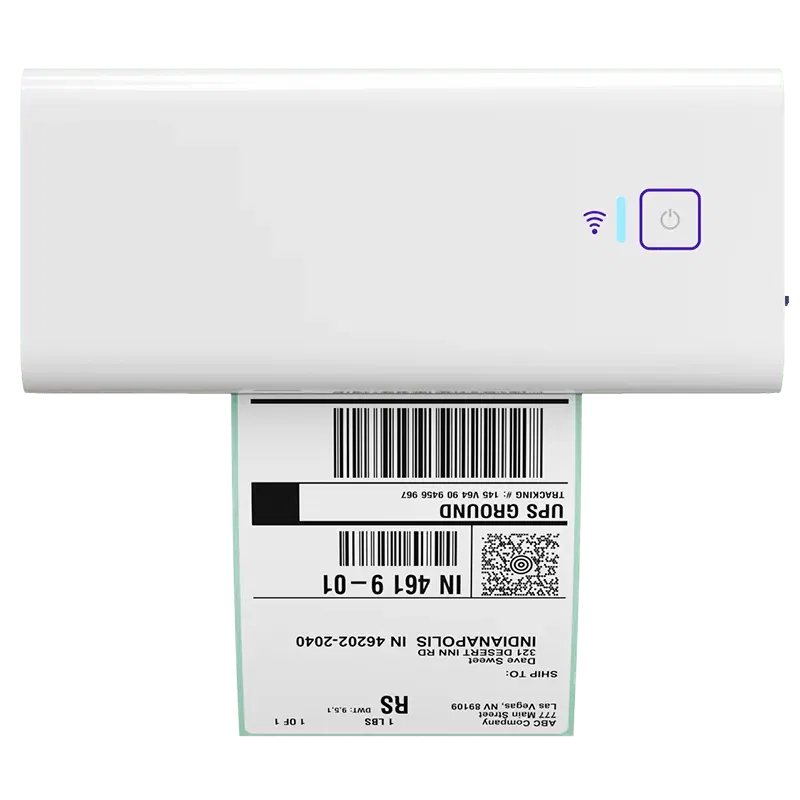
Rollo X1040 AirPrint label printer, a high-end wireless shipping label printer

If your team is ready to spend less time on one-by-one labels, the Rollo Wireless Printer can help simplify one of the most repeated steps in shipping. It is a practical next step for small teams that want faster label printing, fewer interruptions, and a setup that feels easier to manage as order volume grows.

Why No Monthly Subscription Matters for B2B Equipment Sellers

B2B equipment shipments are often lower in volume but higher in per-shipment value than typical B2C ecommerce. A flat monthly subscription fee — charged regardless of shipment volume — adds overhead cost on every label, whether you shipped 5 units or 50.

Rollo Ship has no monthly subscription. The per-label service fee applies only when a label is generated. There is no minimum shipment volume and no business verification requirement — which means the platform works for a specialist distributor shipping 10 high-value units per week as effectively as for a larger operation shipping hundreds.

A Note for Canadian B2B Sellers

Canadian sellers shipping robotics and security equipment domestically or cross-border face the same declared value and DIM weight considerations — with additional complexity. Cross-border shipments to the US require customs declarations, HS codes for equipment classification, and carrier eligibility confirmation for any units containing lithium batteries.

For the Cross-Border Seller, Rollo Ship’s combined U.S.–Canada carrier coverage and paperless customs support reduces the customs and duty friction that normally turns each shipment into a one-off project.

Rollo Ship supports both US and Canadian sellers — compare Canada Post, UPS Canada, FedEx Canada, and Purolator rates from one account. Canadian sellers do not need a separate tool or workflow for domestic vs cross-border equipment shipments.

Ready for a shipping workflow that protects high-value equipment?

If your team is juggling DIM checks, declared values, battery rules, and carrier choices in separate tabs, Rollo Ship pulls those steps into one structured workflow for U.S. and Canada. It centralizes order import, rate comparison, and label creation so B2B electronics and security sellers get clearer landed costs, fewer compliance surprises, and a repeatable process that still works when order volume spikes.

For the Electronics B2B Seller, this replaces improvised spreadsheets and carrier tabs with a repeatable workflow tied directly to margin protection on every shipment.

Mobile Interface Rollo Ship App 1

Who This Article Is For — and Who It Is Not For

This article is written for the Electronics B2B Seller and the Cross-Border Seller handling robotics, security, and other high-value equipment.

Not for

Sellers shipping lightweight consumer electronics at standard parcel rates with no declared value considerations. Also not for enterprise operations with dedicated logistics teams and established carrier contracts — those operations already have the infrastructure this article is building toward.

Written for

The B2B electronics seller or operations manager who ships high-value robotics or security equipment regularly, knows the shipments carry real financial risk, but has not yet built the workflow that catches declared value, DIM weight, and carrier eligibility issues before every label.

What to Do Before Your Next High-Value Equipment Shipment

Clipboard checklist for high-value equipment shipments listing declared value, DIM weight, battery rules, and carrier comparison.

The core message of this article is operational, not abstract. Every robotics and security equipment shipment represents a combination of financial exposure, regulatory compliance, and carrier selection decisions — all of which are made before the label is printed.

Sellers who control their shipping costs and liability in this category are not the ones who found the best base rate. They are the ones who confirm declared value, calculate DIM weight, check battery eligibility, and compare carrier options on every shipment — before printing.

That workflow does not require a freight consultant or a dedicated logistics team. It requires one system that surfaces the right information at the right step. Rollo Ship is a multi-carrier shipping platform built around that sequence — combining rate comparison, declared value options, DIM weight calculation, and order management in one place, so the decisions that protect every shipment happen before the label, not after the invoice.


Follow Rollo on:


Frequently Asked Questions: Equipment Shipping for Robotics & Security Businesses

📌 Q: What is declared value shipping, and why does it matter for high-value equipment?

💭 A: Declared value is the shipment’s stated monetary value at label creation. It sets the carrier’s maximum liability if the package is lost or damaged; without it, coverage is typically capped at about $100 for many services.

📌 Q: How does dimensional weight pricing affect robotics and security equipment shipping costs? 

💭 A: Dimensional weight charges based on package size when it exceeds actual weight. Bulky robotics and security equipment often gets billed at a higher weight than it physically weighs, so calculating DIM weight before choosing a carrier prevents unexpected costs.

📌 Q: What are the lithium battery shipping rules for robotics components?

💭 A: Lithium batteries are regulated as dangerous goods. Rules depend on battery type, watt-hour rating, and whether the battery is installed or shipped separately, and many air services are restricted, so carrier eligibility must be confirmed before you buy a label.

📌 Q: What is the best carrier for shipping high-value security equipment?

💭 A: There is no single best carrier. USPS can be cost-effective for lightweight parcels, UPS® is strong for heavier ground shipments, and FedEx works well for time-sensitive delivery, so the right choice depends on weight, value, destination, and required speed.

📌 Q: How do I avoid being underinsured on a high-value equipment shipment?

💭 A: Set declared value to the item’s replacement cost before printing the label. Confirm the carrier’s coverage limits, make sure documentation matches the declared value, and remember that you cannot add or increase declared value after the shipment is in transit.

📌 Q: What is the robotics shipping cost structure in 2026?

💭 A: In 2026, total cost typically includes the base rate, DIM weight adjustments, declared value fees, fuel surcharges, and any oversize or additional-handling charges, so the final landed cost is often higher than the first rate you see.

📌 Q: Is there a shipping platform for B2B electronics sellers with no monthly subscription?

💭 A: Yes. Rollo Ship is a multi-carrier shipping platform for the U.S. and Canada with no monthly subscription; you get an initial block of free labels and then pay a small per-label technology fee, while postage is paid directly to carriers such as USPS, UPS®, FedEx, Canada Post, UPS Canada, FedEx Canada, and Purolator.

📌 Q: How does Rollo Ship help with high-value equipment shipping?

💭 A: Rollo Ship compares real-time rates from USPS, UPS®, FedEx, Canada Post, UPS Canada, FedEx Canada, and Purolator, with DIM weight and declared value options visible before label purchase, so B2B electronics sellers can compare full landed cost and avoid underinsured or mispriced high-value shipments.


Seller reviewing a shipping invoice showing surcharge stack above base rate in 2026

Why Shipping Feels More Expensive Even When Rates Stay the Same

By Blog
TL;DR: Shipping costs in 2026 are rising for most US and Canadian sellers even when base carrier rates appear unchanged. The real drivers are surcharges—residential delivery fees, dimensional weight pricing, fuel adjustments, and zone-based rate structures—that stack quietly on every label. A single unreviewed surcharge can cost a scaling seller hundreds of dollars a month in silent margin leakage. Rollo Ship is a multi-carrier shipping platform—free to start, no monthly subscription, with a small per-label fee—that shows your full landed cost across USPS, UPS®, FedEx, Purolator, and Canada Post before you commit to a label—so the bill stops being a surprise.

What Are Shipping Rates? 

Shipping rates are the base prices carriers publish for delivering a package based on weight, distance, and service level. However, these rates do not include surcharges like fuel fees, residential delivery charges, or dimensional weight pricing—which means the final cost is often significantly higher than the quoted rate. For most mid-volume e-commerce sellers, shipping is one of the top three variable costs after product and advertising.

Shipping Rates in 2026 — At a Glance

  • Base carrier rates are only one line on your invoice—surcharges often cost more
  • Residential delivery fees apply to the majority of B2C e-commerce shipments in North America
  • Dimensional weight (DIM) pricing means a light but bulky package is billed at a higher weight
  • Fuel surcharges adjust weekly or monthly and are rarely visible at the point of label purchase
  • Zone creep—shipping to farther zones as your customer base grows—silently raises average cost per label
  • A seller absorbing just $0.80 in avoidable surcharges per label across 500 shipments loses $400 per month without a single rate increase
  • Rollo Ship is free to start—no monthly subscription, first 200 labels free, and a small per-label fee after that
  • Comparing landed cost across carriers before printing is the most actionable cost control available to sellers today

E-commerce sellers in the US and Canada are paying more to ship in 2026, and most of them cannot explain exactly why. The cost pressure is real and documented: transportation and warehousing worker wages rose 7.1% in 2023 alone, the largest single-year increase since 2001, according to the U.S. Bureau of Labor Statistics, while industry analysis puts 2025 trucking prices up another 2.6% year-over-year. Those upstream costs don’t stay with carriers. The pattern is consistent across borders: Canadian sellers report the same creeping cost increases on Canada Post and UPS® Canada shipments.

The frustrating part is that the base rate, the number carriers advertise, may not have changed dramatically. What changed is everything around it. Surcharges, weight calculation methods, delivery area classifications, and zone assignments all shift quietly, outside the headline rate announcement. Most sellers absorb the difference without understanding where it went.

This article breaks down exactly why shipping feels more expensive even when you think the rates stayed the same, and what a structured comparison workflow looks like before it costs you another year of margin.

Why Your Shipping Bill Keeps Growing (Even When You Ship the Same Things)

Why are shipping costs rising in 2026? 

Shipping costs are rising in 2026 primarily because of surcharges — fuel adjustments, residential delivery fees, dimensional weight pricing, and zone-based pricing — that compound on top of the base carrier rate. These fees change independently of published rates, which is why total shipping spend increases even when the headline rate appears stable.

Why shipping costs are rising in 2026 has less to do with carrier rate increases and more to do with the surcharge stack that sits on top of them. Carrier rate increases in 2026 are real — but they are not the whole story. The bigger driver is the compounding effect of fees that adjust independently, quietly, and without appearing in any headline announcement.

That is the core frustration. You check the carrier’s published rate. It looks familiar. You print the label. The charge posts a few days later, and it is higher than expected—again.

The problem is not the carrier. It is that the base rate and the landed cost are not the same number.

The Shipping Psychology Behind the Problem

What is shipping psychology?

Shipping psychology refers to the behavioral patterns (anchoring, status quo bias, and misdirected loss aversion) that cause sellers to consistently underestimate their true shipping cost, even when the data to calculate it correctly is available. It explains why most sellers overpay without realizing it.

There is a reason most sellers do not fix this on their own — and it is not laziness. It is a predictable behavioral pattern.

Shipping psychology explains why sellers consistently underestimate their true shipping cost even when the information to calculate it correctly is technically available. Three mechanisms drive it:

Anchoring to the base rate

Carriers publish a base rate. That number is what sellers see first, remember, and use as their mental benchmark. Surcharges that arrive later — on the invoice, days after the label is printed — register as anomalies rather than as the expected cost of that shipment. The anchor was set at the wrong number.

Status quo bias

Most sellers chose their default carrier once, early in their business, and have not revisited the decision since. Switching feels like effort and risk. Staying feels safe. The cost of staying — paying avoidable surcharges on every label — is invisible because it never shows up as a single decision. It shows up as a slowly rising monthly total.

Loss aversion misdirected

Sellers are highly sensitive to the idea of paying a visible fee for a new tool. They are much less sensitive to the invisible cost of not using one. The $400/month in avoidable surcharge leakage feels abstract. A 5¢ per-label service fee feels concrete. This asymmetry keeps sellers in workflows that cost them more.

Naming these patterns does not fix them automatically. But understanding that the problem is partly psychological — not just operational — changes how you approach the solution. The fix is not to become a shipping expert. It is to build a workflow that removes the information gap before the decision is made.

Why Published Shipping Rates Don’t Reflect What You Actually Pay

Published carrier rates are base rates — they do not include surcharges. Residential delivery fees, fuel adjustments, dimensional weight charges, delivery area surcharges, and peak-season fees are all applied on top of the base rate. The gap between the quoted rate and the landed cost is where most unexpected shipping expenses live.

What is Actually On Your Shipping Invoice?

Shipping invoice breakdown showing base rate plus stacked surcharges—residential fee, fuel surcharge, DIM weight, and peak charges

A shipping invoice is not a single number. It is a base rate with a stack of adjustments applied on top — and that stack has been growing taller every year for sellers in both the US and Canada.

The most common surcharges hitting e-commerce sellers right now:

Surcharge TypeWhat Triggers ItWho It Affects Most
Residential Delivery FeeShipping to a home addressAll B2C sellers
Fuel SurchargeApplied as a % of base rate, adjusted weekly/monthlyEvery shipper, every carrier
Delivery Area Surcharge (DAS)Remote or extended delivery zonesSellers with rural customers
Additional Handling FeeNon-standard package dimensions or weightApparel, art, electronics, sports gear
Peak/Demand SurchargeHigh-volume shipping seasonsQ4 sellers, subscription brands
Address Correction FeeIncorrect or incomplete address providedHigh-volume, multi-platform sellers

None of these appear in the headline rate. All of them appear on your invoice.

That is why two sellers shipping the same product to different addresses — or in different weeks — can pay meaningfully different amounts, even when the carrier and service tier are identical.

Peak season surcharges deserve a specific note. Between October and January, major carriers apply demand surcharges on top of all existing fees, including residential, fuel, and DIM adjustments. 

For sellers whose highest-volume shipping window is Q4, this means the period when margin pressure is already highest is also the period when every surcharge compounds at its steepest. Sellers who build their shipping budgets on Q1–Q3 rates and apply those numbers to Q4 volume consistently underestimate their actual cost per label during the months that matter most.

Which Carrier Handles Which Surcharge Scenario Best?

Each carrier (USPS, UPS®, FedEx, Canada Post, and Purolator) prices surcharges differently. USPS includes residential delivery in its base rate on Ground Advantage. UPS® is often more competitive on heavier ground shipments. FedEx pricing depends on your negotiated account rates. The right carrier changes per shipment, which is why comparing before printing matters more than picking a default.

How do shipping rates actually work across carriers in 2026? 

Not every carrier prices every surcharge the same way. That is the core opportunity for cost control—and the core reason defaulting to one carrier for all shipments is a structural inefficiency.

Here is a practical carrier-by-scenario reference for US and Canadian sellers:

ScenarioBest Starting CarrierWhy
Lightweight parcel, residential address, US domesticUSPSResidential delivery included in base rate on Ground Advantage
Heavier parcel, ground delivery, commercial or residentialUPS®Stronger ground economics on heavier shipments, zone-competitive
Seller with existing negotiated contract ratesFedExAccount-based rates via connected FedEx account
Canada domestic shipment, residentialCanada PostResidential pricing built into service structure by default
Canada domestic, heavier or commercial-destination parcelUPS® Canada or PurolatorZone-competitive for certain weight and distance combinations
Cross-border US to CanadaUSPS + Canada Post handoff, or UPS®Depends on weight, destination province, and declared value

This is not a fixed rule. The right carrier for any shipment depends on the specific package dimensions, destination zone, and current surcharge levels—which is why comparison at label purchase matters more than a blanket carrier preference.

USPS, UPS®, and FedEx all price differently on the same shipment. The gap between their landed costs on a single label can be meaningful—especially at residential addresses, in high zones, or during peak surcharge periods.

What Is a Residential Delivery Fee, and Why Does It Affect Almost Every E-commerce Order?

A residential delivery fee is a per-package surcharge applied when a carrier delivers to a home address instead of a commercial location. For B2C e-commerce—which covers the majority of Shopify, Amazon, eBay, and marketplace sellers—almost every shipment qualifies.

In the US, USPS, UPS®, and FedEx all apply residential surcharges, though the amounts and thresholds vary by carrier and service tier. USPS Ground Advantage includes residential delivery in its base rate structure, which is one reason it stays competitive for lightweight domestic B2C shipments.

In Canada, Canada Post builds residential delivery into its service pricing by default. UPS® Canada applies residential surcharges that can meaningfully affect per-label cost—particularly for sellers shipping to suburban and rural postal codes.

The problem is not that residential fees exist. The problem is that most sellers do not compare residential-inclusive rates across carriers before printing. They default to one carrier by habit and pay whatever that carrier’s residential fee happens to be on that shipment.

That habit costs real money at volume.

How Does Dimensional Weight Pricing Change What You Pay?

Side-by-side comparison of actual weight vs dimensional weight billing—same product, different box sizes, different shipping cost

Dimensional weight (DIM weight) pricing is a billing method where carriers charge based on the volume of the package, not just its actual weight, when the DIM weight exceeds the actual weight.

The formula used by most major carriers:

DIM Weight = (Length × Width × Height) ÷ DIM Divisor

The DIM divisor varies by carrier and service type. When your package’s DIM weight is higher than its actual weight, you are billed at the DIM weight.

Example: A lightweight apparel shipment packed in a large box may weigh 1.2 lbs on the scale but have a DIM weight of 4 lbs. You are billed for 4 lbs, not 1.2.

This pricing model was introduced to prevent carriers from filling trucks with large, light packages that consume space without generating proportional revenue. It is legitimate. It is also deeply confusing for sellers who do not run the calculation before choosing a box size or carrier.

Canadian sellers shipping domestically via Canada Post or UPS® Canada encounter the same DIM weight logic. Cross-border shipments, US to Canada or Canada to the US, are subject to DIM calculation at every leg.

The sellers most affected tend to be apparel brands, artists shipping framed pieces, sports equipment sellers, and resellers who grab whatever box is nearby.

What Are Fuel Surcharges, and Why Are They Hard to Budget For?

Fuel surcharges are percentage-based additions to your base shipping rate, adjusted by carriers on a weekly or monthly schedule based on fuel index data. They are applied after the base rate calculation and after DIM weight adjustment, which means they compound on an already inflated number.

The practical effect: two shipments that look identical on paper, same carrier, same service, and same destination, can cost different amounts if one was shipped in a high-fuel-index week and the other was not.

Most sellers have no visibility into the current fuel surcharge percentage when they are selecting a carrier. They see the final quoted rate only after they have already chosen a carrier and entered shipment details. By that point, the comparison work is essentially undone.

This is a structural problem, not a carrier problem. The solution is rate comparison infrastructure that shows landed cost, base rate plus surcharges, across multiple carriers simultaneously before label selection.

What is Zone Creep, and How Does it Raise Your Average Cost Over Time?

North America zone map showing how shipping cost increases by zone as customer base grows geographically—zone creep explained

Carrier zones are geographic pricing bands. The farther a package travels from your shipping origin, the higher the zone number, and the higher the rate.

Zone creep is the gradual increase in the average shipping zone as a seller’s customer base expands geographically. It is one of the most invisible cost drivers in e-commerce.

Here is how it happens: a new seller in Chicago ships mostly to nearby Midwest customers, Zones 2 and 3. As the brand grows, customers in California, Florida, and the Pacific Northwest start ordering. Those shipments land in Zones 6, 7, and 8. The seller’s average cost per shipment rises, not because rates changed, but because the customer base spread.

The same pattern affects Canadian sellers. A seller based in Toronto shipping primarily to Ontario customers may find that as their Shopify store attracts buyers in British Columbia or Alberta, their Canada Post Expedited Parcel costs rise per shipment. UPS® Canada zone pricing operates on a similar structure.

Zone creep cannot be eliminated—it is a function of growth. But it can be managed. Different carriers structure zones differently for the same origin-destination pair. Comparing rates per shipment, rather than defaulting to one carrier for everything, gives sellers a real chance to find a better rate on any given zone combination.

What A Correct Shipping Workflow Actually Looks Like

Most shipping cost problems are not carrier problems. They are workflow problems. The decision that costs the most money happens before the label is ever printed — when a seller grabs the nearest box, picks the carrier they always use, and prints without checking the landed cost.

A structured shipping workflow removes that guesswork from every shipment. Here is what it looks like when it is built correctly:

StepWhat happensWhere cost control lives
Order importOrders pulled automatically from connected storesConsolidated view prevents missed or duplicated shipments
PackagingBox size and weight confirmedDIM weight calculated before carrier is chosen
Carrier selectionRates compared across USPS, UPS®, FedEx, Canada PostLanded cost visible before committing—this is where savings happen
Label creationLabel generated for selected carrierPer-label fee applies here
Label printingLabel printed from dashboardNo tab-switching, no manual downloads
ShipmentPackage handed to carrierCorrect carrier confirmed before handoff
TrackingTracking synced to store automaticallyCustomer notified without manual update

Most sellers skip step three entirely. They move from packaging directly to printing—without ever comparing what the same shipment would cost with a different carrier.

That single skipped step is where most silent margin leakage lives.

Rollo Ship is a multi-carrier shipping platform built around this workflow—connecting order import, carrier comparison, label generation, and tracking in one place, so step three is no longer something sellers have to remember to do manually.

What Happens When Sellers Ship Without A Rate Comparison Workflow?

Most sellers absorb these costs passively. Here is what that looks like day to day.

A seller prints a label using the carrier they always use. The base rate looks familiar. They do not check the current fuel surcharge. They do not run the DIM calculation. They do not compare the residential rate across carriers. The label prints. The charge post came three to five days later—higher than expected, again.

Multiply that by 50, 200, or 2,000 shipments a month. The per-label leakage compounds into a real monthly cost problem.

What gets skippedWhat it costs
No DIM check before choosing a boxBilled at DIM weight instead of actual weight
No carrier comparison before printingPaying a higher residential or zone rate than necessary
No fuel surcharge visibilitySurprise cost variance across identical shipments
No landed cost view before label purchaseBudget built on base rate, not what you actually pay

Sellers without rate comparison infrastructure make carrier decisions on incomplete data. They choose by habit, not by landed cost. At any meaningful shipping volume, the difference between those two approaches is measurable — and it compounds every week.

Knowing where the cost is leaking is only useful if you have a system to stop it.

Rollo Ship multi-carrier rate comparison dashboard showing USPS, UPS, and FedEx rates before label purchase

A Real Scenario: What This Costs A Scaling Shopify Apparel Brand

Take a Shopify apparel brand shipping 300 orders per week—a volume that puts it squarely in the scaling range, past the point where platform default shipping is still a neutral choice.

Most orders are lightweight—hoodies, tees, and folded garments—shipped in poly mailers or mid-size boxes to residential addresses across the US. The brand has been using one carrier by default since it launched.

Here is what the cost stack looks like when no comparison workflow is in place:

  • Each order ships in a box that is slightly larger than necessary—DIM weight adds an estimated 0.8 lbs to the billed weight per label
  • The residential delivery surcharge applies to nearly every shipment—not factored in at the point of carrier selection
  • The fuel surcharge is running at its current index level—added to an already-inflated DIM-adjusted base
  • The brand is in Zone 5–6 for most of its California and East Coast orders, but has never compared whether a different carrier offers better zone pricing for those lanes

The result: an estimated $0.70–$1.20 in avoidable surcharge exposure per label—depending on the week, the destination, and the box choice.

At 300 shipments per week, that is $210–$360 per week in margin leakage. Over a month, that is $840–$1,440. Over a year, that is a real number with a real impact on whether the brand can afford its next hire, its next inventory run, or its next ad spend.

None of it required a carrier rate increase to happen. It was already there, quietly compounding, because the workflow did not include a comparison step before printing.

This is exactly the scenario Rollo Ship is built to solve. The platform’s rate comparison view surfaces the landed cost difference between carriers before any label is committed—not after.

The same cost logic applies to Amazon resellers using Fulfilled by Merchant (FBM). An Amazon seller shipping their own orders (rather than routing through FBA) faces every surcharge in this article on each label they generate outside Amazon’s system. Residential delivery fees, DIM weight calculations, fuel adjustments, and zone-based pricing all apply. Amazon’s Buy Shipping tool narrows carrier choice and may not reflect the best available rate for a given shipment. Rollo Ship connects directly to Amazon orders and surfaces multi-carrier rate options before each label is printed—so FBM sellers are not limited to whatever Amazon’s default surfaces at checkout. See the Amazon integration for how it connects.

This is your decision moment

Understanding the problem is step one. The question is what you do with that understanding.

Sellers who absorb this information and continue printing labels the same way they always have will continue paying the same avoidable costs. The surcharge stack does not fix itself. Zone creep does not reverse. Fuel adjustments do not become visible without a tool that shows them.

The decision to build a rate comparison step into your workflow — before every label, not just occasionally — is the structural change that separates sellers who control their shipping costs from those who guess at them.

That shift does not require a new carrier relationship, a renegotiated contract, or a warehouse-scale operation. It requires one workflow change: see the landed cost before you commit.

How Can a Multi-Carrier Platform Change the Shipping Decision?

Rollo Ship is a multi-carrier shipping platform that compares USPS, UPS®, FedEx, Purolator, and Canada Post rates in one dashboard before you commit to a label.

When you open a shipment in Rollo Ship, you see real-time rate options across carriers, inclusive of the service tier you select. That means the cost difference between carriers on that specific shipment to that specific destination at that specific DIM weight is visible before you print, not after.

For US sellers, Rollo Ship provides access to discounted USPS rates (up to 90% off retail USPS rates on select services) and discounted UPS® rates. FedEx accounts can be connected for rate comparison. For Canadian sellers, Rollo Ship supports Canada Post, UPS® Canada, FedEx Canada, and Purolator from the same account.

Rollo Ship is not a carrier. It is a carrier-integrated shipping platform that gives sellers carrier choice without carrier lock-in. Most shipping tools show you a rate. Rollo Ship shows you the full landed cost across carriers before you commit—so the comparison happens before the label, not after the invoice.

Here is what the platform handles in one workflow:

  • Automatic order import from connected storefronts — Shopify, Amazon, eBay, WooCommerce, Walmart, TikTok Shop, and more (see the full integrations list)
  • Real-time multi-carrier rate comparison before label purchase
  • DIM weight calculation per shipment
  • Batch label printing for high-volume orders
  • Tracking notifications synced to your store automatically
  • International shipping with paperless customs documentation
  • APO/FPO/DPO address support via USPS

Rollo Ship has no monthly subscription. The first 200 labels are free. After that, a small per-label service fee applies—starting at 5¢. Postage is always paid directly to the carrier. No business verification required. No minimum shipment volume.

This takes seconds — not minutes — and requires no change to your existing workflow.

*Discounts off UPS® daily rates. Rates limited to shipping from the U.S. only. Rates and discounts are subject to change without notice.

Want to take the cost out of printing labels, too?

Rollo X1040 AirPrint label printer, a high-end wireless shipping label printer

The Rollo Wireless Printer X1040 uses direct thermal technology — no ink, no toner, no cartridges — and prints one label per second. For thermal labels, poly mailers, and a digital shipping scale.

Why No Monthly Subscription Changes the Cost Equation

Most shipping platforms charge a flat monthly fee regardless of how much you ship. That model works against low-to-mid-volume sellers — you pay whether you ship 10 labels or 1,000.

Rollo Ship has no monthly subscription. The first 200 labels are free. After that, a small per-label service fee applies. Postage is always paid directly to the carrier. There is no business verification requirement and no minimum shipment volume.

That structure means your platform cost scales with your actual activity — not against it.

A Note for Canadian Sellers

Canadian sellers face the same surcharge stack as US sellers — with additional complexity layered on top. Canada Post rates vary by service tier, destination province, and package dimensions. UPS® Canada applies residential surcharges and zone-based pricing. Cross-border shipments add customs documentation, duties, and HS code requirements on top of domestic carrier costs.

Rollo Ship supports both US and Canadian sellers — compare Canada Post, UPS® Canada, FedEx Canada, and Purolator rates from one account. Canadian sellers shipping cross-border to the US can compare USPS, UPS®, and FedEx options for the US leg from the same dashboard.

Who This Article Is NOT For

This is not for sellers who ship a handful of packages per month with no growth plans. At very low volume, the per-shipment cost difference between carriers is real but small in absolute terms.

It is also not for sellers who already run DIM calculations on every package, compare rates across carriers before every label, and track average cost per zone monthly. If that is your current workflow, you already have the system this article is building toward.

This is for the seller who knows something is wrong with their shipping bill, suspects they are overpaying, but has not yet found where the leakage is or built the workflow to stop it.

A Simple Checklist for Catching Cost Traps Before You Print the Label

CheckWhat to confirm before printing
DIM weightHave you calculated the DIM weight for this package—not just weighed it?
Package sizeIs the box larger than it needs to be?
Carrier comparisonHave you compared landed cost across at least two carriers?
Residential feeDoes your rate include the residential delivery surcharge?
Zone checkIs this a high-zone shipment where a different carrier may be cheaper?
Fuel surchargeIs there a fuel adjustment applied to the current rate?
Label timingAre you printing before or after all of the above are confirmed?

The goal is not to make every label a ten-minute decision. It is to make sure the most common cost traps are caught before the label locks the shipment in.

Ready for a shipping workflow that scales without adding more chaos?

If your team is spending too much time on rate checks, label creation, and order handoffs, Rollo Ship can help bring those steps into one place. It is a practical next step for small teams that want more clarity, fewer repeated tasks, and a shipping process that feels easier to manage as order volume grows.

Mobile Interface Rollo Ship App 1

Why Shipping Feels More Expensive

The base rate is not the problem. The surcharge stack is.

Residential fees, fuel adjustments, DIM weight billing, and zone-based pricing all operate independently of the base rate, and they compound on top of each other on every label. Sellers who control shipping costs in 2026 are not necessarily the ones who negotiated the best base rates. They are the ones who see the full landed cost before printing and have a workflow that makes that comparison automatic, not manual.

Rollo Ship is a multi-carrier shipping platform that functions as a margin-optimization engine: compare landed costs across USPS, UPS®, FedEx, Purolator, and Canada Post before committing to a label. No monthly subscription. No carrier lock-in. The first 200 labels are free.


Follow Rollo on:


Frequently Asked Questions About Shipping Costs in 2026

📌 Q: Why are shipping costs rising in 2026 even when carrier rates appear unchanged?

💭 A: Carrier rate increases in 2026 are real but not the primary driver. The larger issue is the surcharge stack — residential delivery fees, fuel adjustments, dimensional weight pricing, and zone-based rates — that compounds on top of the base rate. Each can rise independently without a formal announcement, which is why the bill keeps growing even when the headline rate looks familiar.

📌 Q: What is shipping psychology and how does it affect what sellers pay? 

💭 A: Shipping psychology refers to the behavioral patterns that cause sellers to systematically underestimate their true shipping cost. The most common are anchoring to the base rate, status quo bias toward a default carrier, and loss aversion misdirected toward visible tool fees rather than invisible surcharge leakage. Understanding these patterns is the first step to breaking them.

📌 Q: Why does my shipping bill keep going up even when I ship the same products to the same places? 

💭 A: Base rates are only one part of your invoice. Fuel surcharges, residential delivery fees, and dimensional weight pricing all sit on top, and each can rise independently, without any formal rate increase announcement. Most sellers absorb the difference without knowing which line caused it.

📌 Q: What is the difference between a base rate and a landed cost in shipping? 

💭 A: The base rate is what the carrier publishes before adjustments. The landed cost is what you actually pay after fuel surcharges, residential fees, DIM weight, and any other applicable charges are added. Landed cost is the number that matters for margin—and it is what Rollo Ship shows you before you print.

📌 Q: Do Canadian sellers face the same shipping surcharge issues as US sellers?

💭 A: Yes. Canada Post, UPS® Canada, and Purolator all apply fuel surcharges, residential fees, and dimensional weight pricing. Cross-border shipments add customs and duty complexity on top. Rollo Ship supports Canada Post, UPS® Canada, FedEx Canada, and Purolator from one account alongside US carriers.

📌 Q: Is there a shipping platform that shows multi-carrier rates without a monthly subscription? 

💭 A: Rollo Ship has no monthly subscription. The first 200 labels are free. After that, a small per-label service fee applies starting at 5¢. Postage is paid directly to the carrier. No business verification or minimum shipment volume is required.

📌 Q: What is zone creep, and how does it affect shipping costs?

💭 A: Zone creep is the gradual rise in your average shipping zone as your customer base spreads geographically. Carriers price by distance from your origin—the farther the shipment, the higher the zone and the rate. As your brand grows, the average cost per label rises even without any carrier rate change.

📌 Q: How does dimensional weight pricing work?

💭 A: Dimensional weight is calculated by multiplying a package’s length, width, and height, then dividing by a carrier-specific DIM divisor. If the result exceeds actual weight, you are billed at the DIM weight. Sellers shipping lightweight products in large boxes—apparel, soft goods, art — are most commonly affected.

📌 Q: When should I start comparing rates across carriers instead of defaulting to one? 

💭 A: As soon as shipping costs are affecting your margin, it is worth comparing. Carriers price residential fees, zones, and DIM weight differently—the cheapest carrier for one shipment may not be the cheapest for the next. Multi-carrier comparison at label purchase takes seconds and often surfaces a meaningful difference.

📌 Q: Do I need to buy a Rollo printer to use Rollo Ship? 

💭 A: No. Rollo Ship works with any compatible printer. You do not need a Rollo printer to access carrier discounts, generate labels, compare rates, or connect your stores. The Rollo printer is an optional upgrade — not a requirement to use the platform.

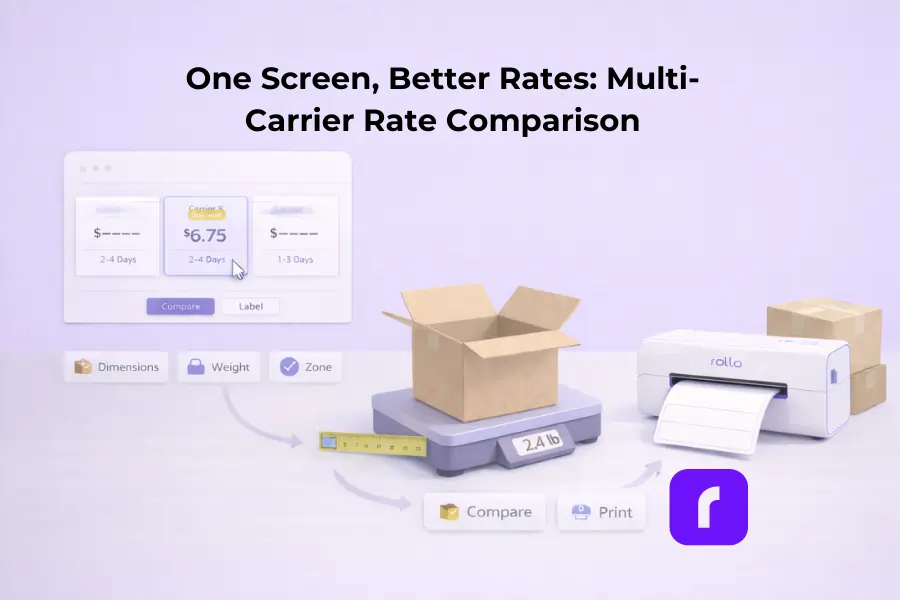
One Screen, Better Rates: Multi-Carrier Rate Comparison

By Blog

One screen, clearer choices. This guide breaks down multi-carrier rate comparison—what it shows, why quotes change after you buy a label, and how to avoid the most common cost surprises. Learn the quick inputs and shipping rules that keep rates accurate, deliveries on track, and your label workflow moving without reprints.

Read More

Why Printer Ink Costs for Small Business are a Hidden Tax

By Blog

Printer ink costs for small businesses can feel small at first—until order volume rises and the “extras” start stacking up. This guide breaks down the real total cost of printing (cartridges or toner, reprints, maintenance, and downtime), then shows how to compare setups using cost per label so you can protect margins and keep fulfillment moving without constant printer drama.

Read More

What Is Billable Weight? Calculate It in Minutes

By Blog

Billable weight is why a light package in a big box can ship like it’s “heavy.” In this guide, you’ll learn how carriers compare actual weight vs DIM weight, where rounding can bump you into the next billed pound, and how to measure your package the right way. You’ll also get simple packaging fixes—like right-sizing and mailer swaps—that keep shipping costs predictable and help you avoid surprise adjustments.

Read More

Dimensional Weight vs Actual Weight: Insider Box Rules

By Blog

Dimensional weight vs actual weight can be the difference between a fair label price and a surprise adjustment email. In this quick, seller-friendly guide, you’ll learn what billable weight really means, how DIM math works, and the “insider box rules” that keep shipping costs predictable. Get practical tips on right-sizing boxes, avoiding poly mailer bulges, and measuring fast—plus how to rate shop smarter before you buy the label.

Read More

Multi Carrier Shipping: Stop Overpaying to Ship

By Blog

Multi carrier shipping isn’t about juggling chaos—it’s about picking the best carrier for each package so you stop eating surprise fees and slow delivery times. In this guide, you’ll learn how rate shopping, simple shipping rules, and batch label creation help small businesses cut shipping costs, speed up fulfillment, and keep tracking in one place. We’ll also show when single-carrier shipping is fine—and when it quietly costs you more.

Read More

Save on Shipping with These 15 Proven Cost-Cutting Moves

By Blog

Save on shipping in 2026 with 15 practical, seller-tested moves that cut fees, reduce DIM surprises, and keep delivery fast. Learn when to use mailers vs boxes, how to compare total cost (not just the label), and the weekly routine that keeps shipping costs low—plus simple ways to batch print labels with less stress.

Read More

Do Tariffs Affect Shipping Costs in 2026? New Facts

By Blog

Tariffs can make shipping feel more expensive—but the biggest surprises often come after you buy the label. This guide breaks down tariffs vs duties vs brokerage fees, explains why “shipping” bills show up later, and shares simple ways to reduce disputes and delays. If you ship internationally and want more predictable costs in 2026, start here.

Read More

Why UPS Next Day Air Saver® is Essential for Online Retailers

By Blog

Fast, reliable, and affordable shipping is critical for online retailers striving to meet customer expectations. UPS Next Day Air Saver offers a cost-effective overnight shipping solution, delivering packages by the end of the next business day without the premium price tag. This article explores why it’s a game-changer for e-commerce businesses, highlighting practical strategies to maximize its benefits and how tools like Rollo’s wireless label printer and Rollo Ship app can streamline your shipping process. Discover how to save on costs, boost customer satisfaction, and simplify your logistics today!

Read More

Inventory Management Software for Ecommerce Entrepreneurs

By Blog

Inventory problems don’t show up until they cost you money—oversells, stockouts, and “sorry” emails. This guide breaks down what inventory management software for ecommerce actually does, which features matter most in 2026, what pricing really looks like, and how to choose the right tool for your stage. Plus: how to keep the handoff to shipping smooth so orders go out fast and tracking stays clean.

Read More
A minimalist 3D illustration showing a small e-commerce seller viewing the Rollo Ship dashboard on a desktop screen with real-time UPS, USPS, and FedEx international shipping rates. Floating pastel panels display carrier icons for speed, cost, and reliability. A Rollo Wireless Printer on the right prints a shipping label, with stacked parcels and a glowing globe icon representing global delivery. The title “Best International Shipping Solutions for E-Commerce” appears centered at the top against a soft lavender background.

Best International Shipping Solutions for E-Commerce

By Blog

Looking to ship orders overseas without breaking the bank? This guide to the best international shipping solutions for e-commerce breaks down which carriers are fastest, cheapest, and easiest to use. Learn how tools like Rollo Ship help small businesses automate customs, compare rates, and save up to 30% on global deliveries.

Read More

How to Make Custom Sticker Labels Like a Pro

By Blog

Turn every package into a branded moment. This guide shows you how to make custom sticker labels that look professional—from choosing materials to designing free with the Rollo Label Design App. Print fast, ink-free, and elevate your packaging with smart, budget-friendly label ideas.

Read More