
TL;DR: Shipping heavy building materials without freight can work when the finished package stays within parcel limits, total cost, and damage risk. For SMB sellers moving flooring, garden supplies, hardscaping products, or building materials, the key is knowing when to compare parcel rates, split boxes, or switch to freight before printing a label.
A customer orders flooring trim, garden supplies, hardscaping parts, or building materials, and suddenly a normal shipping label feels like a risky guess.
Shipping heavy building materials without freight can still make sense, but only when the package size, weight, carrier fit, and final cost work together. The hard part is knowing that before you print the label, not after a surcharge or adjustment hits your margin.
For small suppliers, the right move is not always “use freight.” It is knowing what to check first so each bulky order feels less like a gamble.
Here’s What You’ll Learn
Can You Ship Heavy Building Materials Without Freight?

Yes, some heavy items can ship without freight if the finished package still fits parcel carrier rules and the total shipping cost protects your margin. The better question is what to check before you buy the label: size, weight, package shape, carrier fit, damage risk, and whether freight would be safer.
What “without freight” means for small sellers
Shipping without freight usually means using parcel shipping instead of palletized freight or LTL. For an online seller, that often means sending the order through a carrier service that handles individual boxes rather than pallet loads.
This can work for some heavy products, especially if the item is:
- Heavy but compact
- Easy to protect in a regular box
- Not too long or awkwardly shaped
- Going to an address that can receive a standard parcel delivery
- Still profitable after the shipping cost is calculated
Why parcel acceptance is not the same as a smart shipping choice
A carrier may accept a heavy package, but that does not always mean parcel is the best path.
Before buying the label, ask:
- Will the box stay within carrier size and weight limits?
- Will dimensional weight raise the final cost?
- Will oversize or handling rules apply?
- Can the item survive normal parcel handling?
- Does the shipping cost still protect your profit?
That last question matters most. A package can be technically shippable and still be a bad deal.
What Should You Check Before Printing a Heavy Package Label?

Before printing a label, check the finished box’s weight, outside dimensions, packaging strength, carrier fit, surcharge risk, delivery address type, and total cost. This helps you avoid buying postage too early, choosing the wrong carrier, or finding out later that the package costs more than expected.
Use this as your pre-label workflow.
Check the finished, taped box
Do not rate the shipment based only on product dimensions. Rate it based on the actual box you are sending.
Measure the finished package after:
- Tape is applied
- Void fill is added
- Corners or edges are protected
- The box is fully sealed
- Any bulge or irregular shape is visible
A small difference in package dimensions can matter when the box is already close to a surcharge trigger.
Check the actual weight
Use a shipping scale when possible, especially for dense products like tile samples, hardware, tools, pavers, soil bags, or boxed garden supplies.
Do not guess the weight from the product listing. Packaging materials can add more weight than expected.
Check dimensional weight risk
Dimensional weight is billing based on package size, not just actual weight. It can make a large but not extremely heavy box cost more than expected.
This is common with:
- Long flooring trim
- Lightweight but bulky garden accessories
- Awkward home improvement products
- Large boxes with too much empty space
Check carrier fit before buying a label
A heavy package should be rated across more than one parcel option when possible, which is why multi-carrier rate comparison matters before you buy the label. Carrier rates can vary based on size, distance, service, and handling rules.
Brand Fit Moment: This is where Rollo Ship fits naturally. When a shipment is still parcel-eligible, Rollo Ship helps sellers compare parcel rates and print labels in one workflow, instead of jumping between tabs before every bulky order.
Check damage risk and packaging strength
Heavy items move differently than light products. A dense item can crush weak packaging. A long item can bend. A fragile item can crack if the box is too loose.
Before printing, check whether the packaging can handle the trip.
Check whether freight should be the backup plan
If the package feels hard to protect, hard to rate, or hard to deliver as a parcel, pause before printing. Freight may not be the first choice, but it should be part of the decision.
When Should Parcel Shipping Turn Into Freight?

Parcel shipping should start turning into freight when the order is too large, too heavy, too fragile, too costly, or too complex to ship confidently as a standard package. Freight may also make more sense when several heavy cartons go to one address or the shipment needs pallet-level handling.
| Decision factor | Parcel may still work | Consider freight |
|---|---|---|
| Package size | Fits cleanly in a normal parcel box | Long, bulky, or awkward shape |
| Weight | Heavy but manageable as one box | Too heavy or hard to handle safely |
| Product risk | Durable and easy to protect | Fragile, dense, or damage-prone |
| Order type | One item or a small order | Multiple heavy cartons to one address |
| Cost | Parcel rate still protects margin | Parcel cost becomes unpredictable |
| Workflow | Easy to label and track | Needs pallet, liftgate, or delivery planning |
Parcel may still work when…
Parcel can make sense when the item is boxed cleanly, protected well, and easy to rate. A compact hardware kit, small boxed tool, seed bundle, or lightweight trim piece may be fine as a parcel shipment.
Consider freight when…
Freight becomes more realistic when the shipment starts acting less like a box and more like a load. Think bulk pavers, multiple flooring cartons, large raised-bed kits, or fragile building materials that need more controlled handling.
The gray area: shippable, but not margin-safe
This is where many sellers get stuck. The package might be allowed by a carrier, but the total cost can still be too high.
If you are checking rates and thinking, “This wipes out the order profit,” that is a sign to compare other options before printing.
Why Do Heavy Items Cost More Than the First Quote?

Heavy items can cost more than the first quote because carriers may rate the package by dimensional weight, oversize rules, handling needs, distance, or corrected measurements. A bulky box can look affordable before the final dimensions are entered, then rate higher once the finished package is measured.
Actual weight vs dimensional weight
Actual weight is what the package weighs on a scale. Dimensional weight is based on how much space the package takes up.
For heavy and bulky products, both matter. A box can be light enough to lift but large enough to rate like a heavier shipment.
Oversize and handling-related costs
Some packages need extra handling because of their size, weight, shape, or packaging type. That can affect the final carrier rate.
Watch for products that are:
- Long
- Wide
- Dense
- Irregularly shaped
- Hard to stack
- Hard to protect in a regular box
Why finished-box measurement matters
A product may fit neatly on your desk, but the shipped package is what matters. Edge guards, padding, tape, and box bulges can change the final package size.
Measure what the carrier will receive, not what the product looked like before packing.
How quote mismatch happens
Quote mismatch often starts with rushed inputs:
- Estimated weight instead of scale weight
- Product dimensions instead of package dimensions
- No check for bulky size
- Wrong package type
- No comparison across parcel options
For heavy shipments, those small shortcuts can become expensive.
Which Heavy Products Are Riskiest to Ship by Parcel?

The riskiest parcel shipments are usually dense, long, fragile, irregularly shaped, or hard to protect without making the box much larger. Flooring trim, garden tools, pavers, tile samples, hardware kits, soil bags, and home improvement accessories can all create different cost and damage risks.
Flooring supplies: long boxes and edge protection
Flooring products often create long packages. Even if the box is not extremely heavy, the length can affect cost and handling.
Watch for:
- Trim pieces
- Planks
- Samples
- Edge strips
- Accessories packed in long cartons
Garden supplies: dense weight and residential delivery risk
Garden products can be surprisingly dense. Small bags, tools, and kits may look simple but add weight fast.
Pay attention to:
- Soil or mulch samples
- Metal tools
- Raised-bed hardware
- Heavy ceramic or clay items
- Bundled garden accessories
Building materials: fragile, bulky, or awkward shapes
Building materials can be hard to protect without adding size. Tile, fixtures, hardware, and trim may need extra padding, which can increase package dimensions.
Hardscaping products: when parcel may be a poor fit
Hardscaping products can be dense, heavy, and damage-prone. If the item feels more like a load than a package, parcel shipping may not be the right choice.
Should You Split a Heavy Shipment Into Multiple Boxes?

Splitting a heavy shipment can help when smaller boxes reduce oversize risk, make handling easier, or keep each package closer to parcel-friendly dimensions. It can also add more labels, packaging, tracking, and delivery complexity. Compare the total cost and risk before assuming two boxes are better than one.
When splitting can help
Splitting may help when one large box is causing the problem. Smaller boxes can sometimes be easier to pack, rate, lift, and deliver.
It may also reduce the chance of one oversized package becoming the most expensive option.
When splitting adds too much complexity
Splitting is not always better. It can create:
- More labels
- More packaging materials
- More tracking numbers
- More chances for partial delivery
- More customer service questions
What to compare before deciding
Before splitting, compare the full picture:
| Option | What to check |
|---|---|
| One box | Total parcel rate, package size, damage risk |
| Two boxes | Combined label cost, packaging cost, tracking complexity |
| Freight | Pallet handling, delivery needs, order value, product risk |
Brand Fit Moment: Rollo Ship can help when comparing one-box vs multi-box parcel rates before printing labels, especially when you need a clearer view of parcel costs.
What Packaging Choices Reduce Risk Before You Ship?

Packaging for heavy or awkward items should protect the product without creating unnecessary size. Strong boxes, reinforced tape, edge protection, controlled void fill, and accurate finished-box measurement can reduce damage risk and cost surprises. The goal is not just a stronger package, but a package that ships safely and rates correctly.
Right-size the box without under-protecting the product
A huge box can raise shipping costs. A tight box can increase damage risk.
Aim for a package that gives the item enough protection without wasting space.
Use stronger materials for dense or fragile items
For dense products, weak packaging is asking for trouble. Use materials that match the item’s weight and shape.
Helpful choices may include:
- Corrugated boxes
- Reinforced tape
- Edge protectors
- Corner protection
- Controlled void fill
Avoid irregular shapes when a regular box can work
Irregular shapes can make handling and rating harder. If a standard box can safely protect the item, it often creates a cleaner shipping workflow.
Measure after packing, not before
This is worth repeating because it prevents many mistakes. The packed box is the real shipment.
Measure after the item is protected, sealed, and ready to go.
Print Heavy Package Labels Without the Ink Hassle
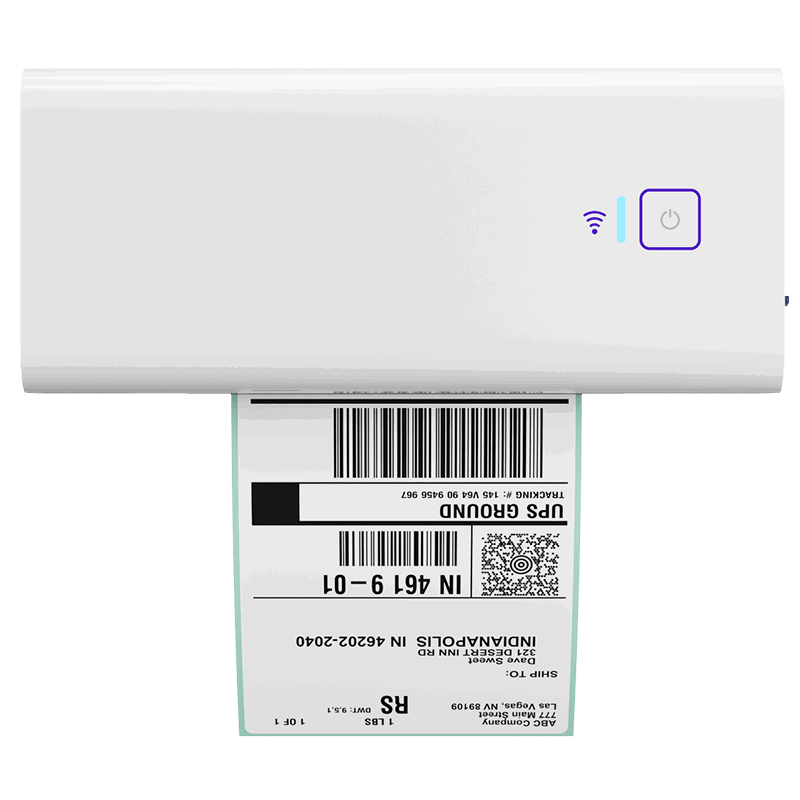
Once the box is measured, packed, and ready, the label should be the easy part. The Rollo Wireless Printer helps sellers print clean 4×6 shipping labels without ink, cartridges, or extra desk clutter.
How Rollo Ship Helps Before Freight Becomes Necessary

Rollo Ship fits best when the shipment is still parcel-eligible and the seller needs a simpler way to compare rates, print labels, and manage orders. It should not be framed as a freight replacement. Its role is helping SMB sellers make cleaner parcel decisions before freight becomes the better path.
Compare parcel rates before buying a label
Heavy parcel shipping can change based on size, weight, distance, and carrier fit. Comparing rates before buying a label helps you avoid guessing.
Rollo Ship gives sellers a practical way to compare parcel options before committing.
Print labels without extra tab-switching
When you are packing bulky orders, the last thing you need is a messy label workflow. Clean labels and fewer steps can make daily shipping feel less reactive.
Keep parcel-eligible orders in a repeatable workflow
A repeatable workflow matters when heavy orders show up more than once. The goal is to avoid rebuilding the process from scratch every time.
With Rollo Ship, sellers can manage parcel-eligible orders, compare rates, and print labels from one place.
Know when Rollo Ship is not the whole answer
Some shipments should move beyond parcel. Rollo Ship can help with the parcel side, but it does not replace freight planning when the order becomes too large, heavy, fragile, or complex.
That honesty matters. The right tool should help you make a better decision, not force every shipment through the same path.
Pre-Label Checklist for Heavy Parcel Shipments

A final pre-label checklist helps sellers avoid the most common heavy-shipping mistakes: wrong dimensions, wrong weight, weak packaging, missed surcharge risk, poor carrier fit, and no freight backup. Use it before buying postage so the label reflects the package you are actually sending.
Before you print, confirm:
- Finished box measured: Use the sealed package, not product-only dimensions.
- Actual weight confirmed: Weigh the full box with packing materials included.
- DIM and oversize risk checked: Look for bulky size, long sides, or awkward shape.
- Carrier rate compared: Do not assume your usual carrier is best for every heavy order.
- Packaging strength reviewed: Make sure the box can handle the item.
- Freight backup considered: Pause if parcel feels risky, costly, or hard to deliver.
If the package passes these checks, parcel may still be practical. If it fails several, freight may deserve a closer look.
Compare Rates Before You Print
Heavy parcel shipments leave less room for guesswork. With Rollo Ship, you can compare parcel rates, create labels, and keep orders moving from one simple workflow before freight becomes necessary.

Final Words
Shipping heavy building materials without freight is not about guessing which carrier might work. It is about slowing down before the label is printed and checking the package size, weight, cost, packaging strength, and freight risk. For sellers shipping flooring, garden supplies, building materials, or other bulky products, that extra review can protect margins and reduce surprises. When parcel shipping still makes sense, comparing rates before committing gives you a clearer path forward.
Follow Rollo on:
Frequently Asked Questions About Shipping Heavy Building Materials
📌 Q: Can you ship heavy building materials without freight?
💭 A: Yes, if the finished package stays within parcel carrier rules and the total cost still makes sense. If the item is too large, too heavy, too fragile, or too expensive to ship by parcel, freight may be the better option.
📌 Q: What should I check before printing a heavy package label?
💭 A: Check the finished box’s weight, dimensions, packaging strength, carrier fit, surcharge risk, delivery address type, and total cost. Do this before buying the label.
📌 Q: When should a small business switch from parcel shipping to freight?
💭 A: Consider freight when the order is pallet-worthy, exceeds parcel practicality, involves multiple heavy cartons, or creates too much damage or surcharge risk. Freight can be more realistic when parcel shipping no longer protects the order.
📌 Q: How do DIM weight and oversize fees affect heavy packages?
💭 A: DIM weight can make a bulky package rate higher than its actual weight suggests. Oversize fees can also apply when the finished box crosses carrier size or handling thresholds.
📌 Q: Can USPS work for flooring, garden, or building-supply orders?
💭 A: USPS may work for lighter accessories such as seeds, small tools, labels, or trim pieces. It is less likely to fit heavy flooring cartons, dense garden materials, or large building-supply shipments.
📌 Q: Is it cheaper to split a heavy shipment into multiple boxes?
💭 A: Sometimes. Splitting can reduce oversize or handling risk, but it can also add more labels, more packaging, and more tracking complexity. Compare total cost before deciding.
📌 Q: Does Rollo Ship replace freight shipping?
💭 A: No. Rollo Ship helps with parcel-eligible shipments by supporting rate comparison, label printing, and order workflow. Freight may still be needed when a shipment becomes too large, heavy, or complex for parcel.
📌 Q: Why did my heavy package cost more than expected?
💭 A: The final cost may change because of dimensional weight, oversize rules, corrected dimensions, handling needs, delivery distance, or carrier adjustments after the package enters the network.


