
TL;DR: Medical device shipping costs are driven more by DIM weight, declared value, and compliance rules than by the base carrier rate. Every shipment combines high device value, bulky packaging, and FDA/Health Canada documentation, so pre-label decisions carry both cost and regulatory risk. A single misstep—underinsuring a device, choosing the wrong carrier for lithium batteries, or missing customs details—can wipe out margin on an order. Rollo Ship is a multi-carrier shipping platform for high-value equipment sellers in the U.S. and Canada that shows DIM weight, declared value options, and carrier rates before you print a label, so clinics and labs can control costs without risking compliance.
Shipping medical supplies is the process of packaging high‑value clinical equipment, selecting compliant carriers, and generating labels that account for DIM weight, declared value, and FDA/Health Canada rules on each shipment.
This article is written for healthcare operations managers and lab managers who already think about shipping as a system, not a daily task, and for cross‑border device sellers managing US–Canada shipments without a dedicated logistics team.
Shipping Medical Supplies Overview
Multi-site clinic directors and lab managers often discover DIM weight gaps only after the invoice. Cost control becomes reactive, not structural.
Cross-border US–Canada shipments add Health Canada import rules on top of FDA compliance. Each shipment becomes a documentation and landed cost decision, not just a label.
Carrier default liability caps at around $100 — medical devices are rarely worth that little. DIM weight on bulky device packaging can double or triple the billed weight vs. actual. Lithium batteries in wearables and monitors trigger carrier eligibility restrictions—ground vs. air rules differ.
Temperature-sensitive shipments (dry ice and gel packs) carry DOT/IATA classification requirements.
Cross-border shipments require Health Canada-compliant documentation for regulated device classes. For the cross-border seller, each one layers customs, brokerage, and carrier rules onto FDA and Health Canada classifications.
Table of Contents
Medical Equipment Shipping Services in 2026
- Shipping medical supplies in 2026 hinges on DIM weight, declared value, and compliance—not base carrier rates alone.
- Healthcare shipments often combine high value, bulky packaging, lithium batteries, or temperature control.
- Pre‑label checks prevent underinsurance, ineligible carriers, and customs delays on US–Canada routes.
- A multi‑carrier shipping platform exposes DIM weight, declared value options, and landed cost before labels.
- No‑subscription, per‑label pricing fits uneven clinical shipping patterns better than flat software fees.
What Is Medical Device Shipping in 2026?

Medical device shipping is the workflow clinics, labs, and manufacturers use to package high‑value devices, choose compliant carriers, and generate labels that factor in DIM weight, declared value, and FDA or Health Canada rules on every shipment.
Operations directors at multi-site clinics, lab managers shipping diagnostic analyzers, and small medical device manufacturers selling direct to providers all share the same structural problem: their shipments are high-value, often bulky, sometimes regulated, and frequently time-sensitive — but the shipping workflows most of them use were not built with any of that in mind.
How Do Clinics and Labs Control Medical Device Shipping Costs?

Clinics and labs control medical device shipping costs by turning pre‑label decisions—DIM weight, declared value, carrier eligibility, and documentation—into a repeatable workflow instead of relying on ad hoc carrier habits and post‑invoice corrections.
The cost consequences are predictable. Declared value left at the carrier default. DIM weight is calculated after the label is printed rather than before. Carrier selected by habit rather than by landed cost comparison. Documentation prepared reactively rather than at label creation. Each of these is a pre-label decision that, once made incorrectly, is locked in for the life of that shipment.
For the healthcare operations manager and the medical device manufacturer, this is the same structural problem faced by any high-value electronics shipper: one mis-set declared value, one oversize DIM miscalculation, or one misclassified lithium battery can erase the margin on an entire order.
This is the core tension for the healthcare operations manager—the director or manager responsible for shipping devices, supplies, and specimens across a clinic network or lab: “We need to cut shipping costs, but every time we try, we worry we’ll break FDA or Health Canada rules, void a device warranty, or miss documentation.”
For example, a lab shipping a loaner analyzer to a Canadian clinic might rely on a familiar carrier and skip a DIM check. When the crate bills at a higher dimensional weight and the declared value defaults near $100, a single damaged shipment can erase the margin on the entire deployment.

If you already think about shipping as a system and not just as a daily task, this article is designed to turn that system into a repeatable, pre-label workflow instead of a collection of manual checks.
This article also breaks down where medical device shipping costs actually come from in 2026, what the compliance requirements are that constrain carrier and service choices, and how a structured pre-label workflow — rather than a reactive one — is the most reliable way to reduce freight spend without creating regulatory or financial risk.

Pre-label decisions that drive medical device shipping cost
| Pre‑label decision | What can go wrong | Cost / risk impact |
|---|---|---|
| DIM weight calculation | Using actual weight for a bulky crate | Unexpected billed weight and oversize surcharges |
| Declared value | Leaving carrier default liability at ~$100 | Underinsured high‑value devices and margin loss |
| Carrier eligibility | Choosing air for ineligible lithium batteries | Refused shipments or re‑routing fees |
| Documentation | Missing FDA/Health Canada‑aligned customs details | Border holds, brokerage delays, and extra charges |
Once clinics and labs see that their biggest shipping costs come from pre‑label decisions, the next question is how to make those checks automatic instead of manual.
What Happens Without a Structured Medical Device Shipping Workflow
Without a pre-label workflow, three operational patterns repeat across high-value device shipments:
- Cost leakage on every shipment. Carrier default declared value caps near $100, DIM math runs after the label prints, and oversize surcharges land on the invoice 7–14 days after fulfillment.
- Compliance ambiguity at the border. US–Canada device shipments cleared without HS code verification face brokerage delays that compound across multi-unit deployments.
- Operational drag on the team. Switching between carrier portals for rate lookups, declared value entry, and customs forms consumes hours per week that scale linearly with shipment volume — not with team size.
A clinic shipping 8 high-value devices per week without this workflow can absorb several hundred to several thousand dollars per month in surcharges and underinsurance gaps that never appear on a single invoice line item.
Awareness of where your shipping margin leaks isn’t a system. A repeatable pre-label workflow is. Here is how that workflow runs.
How Does Rollo Ship Support Healthcare and Medical Device Sellers?

Rollo Ship is a multi-carrier shipping platform that helps users compare carrier rates, generate shipping labels, and manage shipments across the United States and Canada without a monthly subscription.
Rollo Ship is rated 4.8★ on Capterra and is trusted by 500,000+ sellers across the U.S. and Canada, including operators in healthcare, electronics, and other high-value verticals.
Rollo provides the shipping infrastructure healthcare operations teams and medical device sellers need to manage carriers, labels, declared value, and documentation in one integrated system across the U.S. and Canada.
Rollo Ship is not a carrier. Rollo is a carrier-integrated platform that connects shippers to USPS, UPS®, FedEx, Canada Post, and Purolator from one dashboard. The full cost and compliance picture for each shipment is visible before any label is committed.
Free inventory management for device SKUs. Track loaner equipment, supply kits, and serialized devices in USD and CAD without paying for a separate inventory tool.
iOS and Android mobile apps. Process device shipments from a field service site or a clinic floor with the same features available on desktop.
For medical device and healthcare shipments specifically, Rollo Ship provides:
- Rollo Ship’s AI-powered rate selection groups similar orders, applies your shipping rules, and recommends the cheapest eligible service before the label prints—so cost control happens at the pre-label step, not after the invoice.
- Real-time rate comparison across carriers—including DIM weight calculation per shipment—before label purchase, so oversized device crates do not trigger surprise DIM charges after the fact.
- Declared value options visible at label creation for high-value devices and loaner equipment, so carrier liability caps no longer silently default to levels that are below the device replacement cost.
- International shipping with paperless customs documentation for cross-border device shipments, helping align customs declarations with declared value for regulated device classes between the US and Canada.
- Landed cost visibility — base rate plus surcharges plus declared value fee — before committing to a label.
- Automatic order import from connected storefronts — Shopify, Amazon, eBay, WooCommerce, and more.
- Batch label printing for multi-unit device orders and supply kit fulfillment.
- Tracking notifications synced across carrier handoff points—including cross-border transitions.
Rollo is a shipping system—combining rate comparison, label generation, declared value control, customs documentation, and order management across U.S. and Canadian carriers in one integrated workspace.
For high-value device manufacturers, Rollo Ship functions as a margin-optimization engine: every shipment’s landed cost is visible before label commitment, so DIM surcharges and underinsurance gaps stop appearing only after the invoice.
How Is Rollo Ship Priced for Medical and Clinical Shippers?

For US sellers, Rollo Ship provides access to discounted USPS rates — up to 90% off retail USPS rates on select services — and access to discounted UPS® rates when shipping with UPS on Rollo Ship. FedEx accounts can be connected for rate comparison.
For Canadian sellers, Rollo Ship supports domestic shipments through Canada Post, UPS® Canada, FedEx Canada, and Purolator, as well as cross-border shipments between the U.S. and Canada from a single platform.
Rollo Ship is free to download and has no monthly subscription or setup fees. The first 200 labels have no Rollo service fee. After that, a small per‑label service fee applies—starting at 5¢ per label and decreasing to as low as 1¢ at the VIP tier through Rollo Rewards.
There is no business verification requirement and no minimum shipment volume — which means the platform works for a clinic shipping 8 high-value devices per week as effectively as a distributor shipping hundreds of supply kits.
For healthcare operations teams comparing software costs to what they already lose in surcharges, this breakdown of shipping platform fees explained shows how per-label pricing stacks up against silent margin leakage.
This per‑label pricing model aligns platform cost with actual clinical shipping patterns: spikes during device deployments or trial rollouts cost more only when shipments increase, and quiet periods do not carry a fixed software fee. As shipping volume grows, Rollo Rewards reduces the per-label service fee from 5 cents down to as low as 1 cent at the VIP tier.
Discounts off UPS® daily rates. Rates limited to shipping from the U.S. only. Rates and any applicable discounts are subject to change at any time without notice.
See how Rollo Ship handles your next device shipment →
★ Rated 4.8 on Capterra · Trusted by 500,000+ sellers · No subscription · No card required
Why No Monthly Subscription Matters for Medical and Clinical Shippers
No monthly subscription matters for medical and clinical shippers because their device and supply volume are uneven, so flat software fees become inefficient overhead during low-shipment periods.

For medical and clinical shippers, uneven shipment volume makes flat subscription software structurally inefficient because the fee is the same whether you ship 5 devices or 500. Medical device and clinical supply shipments are frequently uneven in volume — a distributor may ship heavily during a product launch, then have weeks of low activity during a clinical evaluation period.
A flat monthly subscription fee adds overhead regardless of shipment volume, making it a structurally poor fit for the variable shipping patterns common in healthcare operations. Rollo Ship’s per-label pricing means the cost of the platform scales with actual shipping activity. A clinic shipping 10 high-value devices per month pays the same per-label rate as a distributor shipping 500 supply kits—with no fixed cost floor when volume is low.
Shipping software cost model
| Workflow approach | Pre-label cost visibility | Cross-border medical devices | Cost model |
|---|---|---|---|
| Carrier-native portals | Limited — one carrier at a time | Manual customs entry per portal | No platform fee, retail or contract rates |
| Subscription shipping software | Available—but cost is fixed | Often paywalled at higher tiers | Flat monthly fee regardless of shipment volume |
| Manual workflows (spreadsheets) | None — invoice reconciliation only | High error rate | High labor cost, hidden surcharges |
| Rollo Ship | DIM, declared value, landed cost — visible before label print | Paperless customs across U.S.–Canada from one workflow | No monthly fee • per-label fee from 5¢ to as low as 1¢ via Rewards |
For a healthcare operations manager whose device shipments spike during deployments and slow during evaluation periods, a per-label pricing model aligns software cost with real clinical activity instead of charging the same fee every month.
Make label printing the easiest part of your workflow
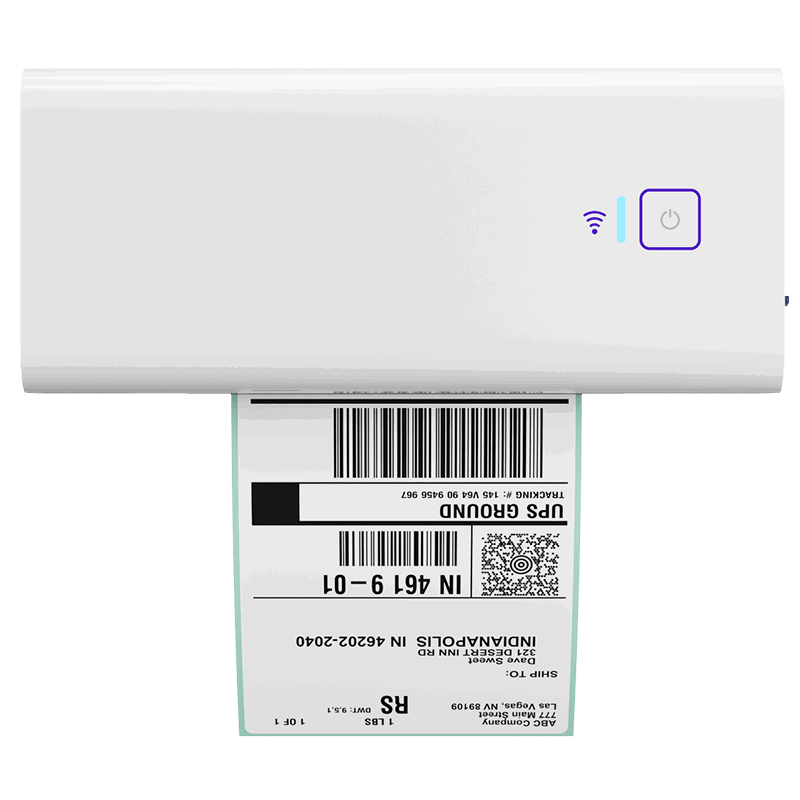
If your team is ready to spend less time on one-by-one labels, the Rollo Wireless Printer can help simplify one of the most repeated steps in shipping. It is a practical next step for small teams that want faster label printing, fewer interruptions, and a setup that feels easier to manage as order volume grows.
Who Should Use This Medical Device Shipping Workflow?
This medical device shipping workflow is designed for healthcare operations managers, lab managers, and mid-sized device manufacturers who ship high-value devices regularly but lack a structured pre-label process for cost and compliance.
Who this workflow is not for
- Large hospital systems with in‑house logistics, GPO‑negotiated carrier contracts, and dedicated compliance teams.
- Enterprises already running a TMS or WMS that centralizes multi‑carrier rate shopping and device shipping SOPs.
Written for
This article is written for the Healthcare Operations Manager at a clinic network; the Medical Device Manufacturer shipping analyzers or wearables to providers; and the Cross-Border Seller managing US–Canada device shipments who is still relying on carrier portals and manual checks instead of a structured pre-label workflow.
If you are still shipping from individual carrier portals or spreadsheets, this workflow is designed as your first structured system—not a replacement for enterprise freight software.
The Bottom Line on Medical Device Shipping
Medical device shipping costs are driven by pre‑label decisions—DIM weight, declared value, carrier eligibility, and documentation—not just by base rates. Clinics and device manufacturers that standardize these checks on every shipment see more predictable costs and fewer compliance issues.
The shippers who control costs are not the ones who simply find the lowest posted rate. They are the ones who confirm declared value, calculate DIM weight, check compliance requirements, and compare carrier options before printing the label, using one system that surfaces the right information at the right step.

In practice, that means every device shipment in your clinic or lab runs through the same structured checklist for DIM weight, declared value, carrier eligibility, and documentation—regardless of whether it ships via USPS, UPS® (U.S. and Canada), FedEx, Canada Post, or Purolator.
For the healthcare operations manager and medical device manufacturer, this replaces improvised carrier tabs and reactive billing surprises with a repeatable pre-label workflow tied directly to cost control and compliance on every shipment.
Because Rollo Ship reduces its per‑label service fee as shipment volume grows, the economic model is structurally aligned with shippers who move more devices over time instead of charging a flat subscription that never changes.
Medical device shipping cost is decided at the pre-label step—not at the carrier comparison step. Sellers who control declared value, DIM weight, and documentation before label print see structurally lower freight spend than sellers who reconcile at invoice.
Ready for a Medical Device Shipping Workflow That Controls Cost and Compliance?
Rollo Ship lets clinics, labs, and device manufacturers compare carrier rates, set declared value, calculate DIM weight, and generate compliant customs paperwork before a single label is created.
★ Rated 4.8 on Capterra • Trusted by 500,000+ sellers across the U.S. and Canada • No subscription • No card required

Follow Rollo on:
Frequently Asked Questions About Shipping Medical Supplies
📌 Q: How do I ship medical devices safely and compliantly?
💭 A: Ship medical devices by following FDA labeling rules, using packaging suited to device fragility and temperature needs, setting declared value at replacement cost, and choosing a carrier/service that supports the device type and required documentation.
📌 Q: What are the biggest cost drivers in medical device shipping?
💭 A: Major cost drivers are DIM weight on bulky equipment, declared value fees, fuel and residential surcharges, oversize penalties, and expedited services, so comparing landed cost across carriers before printing is more effective than looking at base rates alone.
📌 What documentation is required for medical device shipping?
💭 A: Most domestic US shipments require at least a packing list and commercial invoice, lithium battery devices need DOT hazmat documentation, and US–Canada shipments must meet Health Canada import rules with correct HS codes and customs values.
📌 How does DIM weight pricing affect medical equipment shipping costs?
💭 A: DIM weight pricing bills based on package volume when it exceeds actual weight, so oversized protective packaging for medical equipment can push an 8 lb device into an 18 lb billing bracket unless dimensions are checked before carrier selection.
📌 Which carrier is best for medical device shipping?
💭 A: There is no single best carrier for medical device shipping; the right choice depends on weight, urgency, and destination, so comparing landed cost across multiple carriers per shipment is more reliable than defaulting to one.
📌 What is declared value shipping and why does it matter for medical devices?
💭 A: Declared value is the shipment value set at label creation that caps carrier liability, and it matters for medical devices because default liability is often around $100, well below typical replacement costs.
📌 How do I ship temperature-sensitive medical supplies or specimens?
💭 A: Ship temperature-sensitive items using insulated or refrigerated packaging with the right coolant (such as gel packs or dry ice), and treat dry ice as hazardous material under DOT/IATA with proper labeling, quantity limits, and carrier approval.
📌 How does cross-border medical device shipping work between the US and Canada?
💭 A: US–Canada device shipments require accurate customs declarations, HS codes, and compliance with Health Canada import rules, and some device classes need import permits, so checking brokerage and paperless customs options beforehand helps prevent delays and surprise charges.
📌 How do I track a medical shipment to ensure it arrives on time?
💭 A: Track a medical shipment using the carrier tracking number created with the label. Monitor each scan from pickup through delivery. For US–Canada shipments, watch the customs and carrier-handoff points, where delays most often appear. Rollo Ship syncs tracking notifications across carriers and cross-border handoffs, so updates do not require checking separate portals.
📌 Do I need shipping software for medical device shipping?
💭 A: Shipping software is not mandatory, but a multi‑carrier shipping platform makes it easier to standardize DIM checks, declared value, and documentation across carriers, especially when clinics and labs ship high‑value or cross‑border devices regularly.


