
TL;DR: Specialty food shipping means matching each food product’s risk to the right packaging, service speed, carrier choice, and label workflow. For CPG sellers shipping hot sauce, coffee, chocolate, bakery items, or grass-fed meat, the goal is to prevent spoilage, breakage, surprise fees, and margin loss before buying the label.
You packed the order carefully, but the real question hits before you buy the label: will this shipment protect the product or eat the profit?
For small CPG sellers, specialty food shipping is not just about getting food from point A to point B. Hot sauce, chocolate, coffee, baked goods, and grass-fed meat all carry different risks around leaks, melting, spoilage, box size, service speed, and surprise fees.
The smartest move is to match the shipping choice to the product before the label prints, so every order leaves with fewer costly surprises.
Here’s What We’ll Cover
Why does shipping perishable food get expensive so quickly?

Shipping perishable food gets expensive because several costs stack at once. Cold packaging, larger boxes, faster service, billed weight, replacement shipments, and carrier differences can all affect profit. For small CPG sellers, the goal is not always faster shipping. It is choosing the safest affordable option before buying the label.
Perishable shipping is a cost stack
A perishable order rarely has one simple cost. The label is only part of the total.
Costs may come from:
- Insulated liners, foam, gel packs, or other cold materials
- Larger boxes that increase billed weight
- Faster services used to reduce transit time
- Damaged, spoiled, or delayed orders
- Refunds, replacements, or customer support time
- Carrier differences by package size, zone, and service
A box of shelf-stable coffee and a cooler of frozen meat should not be treated like the same shipment. The product risk changes the cost.
Why faster is not always the only answer
Faster shipping can help, but it is not a magic fix. If the packaging is too loose, the box is oversized, or the product is not protected, paying for speed may still leave the seller exposed.
Sometimes the better move is:
- A tighter box
- Better cushioning
- A different package type
- A more realistic service level
- A different carrier option
- A cleaner label workflow
Why the label decision matters before the package leaves
Once the label is purchased, many choices are locked in. That is why margin protection happens before printing.
Before buying the label, check:
- Product risk
- Package size
- Package weight
- Service speed
- Carrier options
- Destination
- Delivery expectations
That short pause can prevent expensive “I should have caught that” moments.
What counts as perishable, semi-perishable, or shelf-stable CPG food?

Perishable foods usually need more attention to time, temperature, and handling. Semi-perishable products may tolerate short transit windows but still face melt, leak, or quality risks. Shelf-stable CPG products are easier to ship, but they can still lose margin through breakage, oversized packaging, and poor carrier choices.
| Product category | What it means | Common examples | Main shipping concern |
|---|---|---|---|
| Perishable products | Products that may spoil, thaw, or degrade quickly | Meat, seafood, dairy, prepared food | Speed, cold packaging, handling |
| Semi-perishable products | Products that may be sensitive to heat, time, or rough handling | Chocolate, confections, some baked goods | Melt risk, crush risk, timing |
| Shelf-stable CPG products | Products that do not usually need cold handling | Coffee, snacks, dry goods, some sauces | Breakage, leaks, weight, margin |
| Fragile or liquid products | Products that can leak, crack, or break | Hot sauce, glass jars, bottled items | Cushioning, sealing, package fit |
Perishable products
Perishable shipping needs more planning because time and handling matter. Sellers should think through packaging, service speed, destination, and what happens if the shipment is delayed.
Semi-perishable products
Semi-perishable items sit in the middle. They may not need a full cold setup, but they can still be affected by heat, transit time, or packaging mistakes.
Shelf-stable CPG products
Shelf-stable does not mean risk-free. Coffee, snacks, jars, and dry goods can still lose money through broken packaging, oversized boxes, or shipping rates that do not fit the order value.
Fragile, liquid, and melt-sensitive products
These products need special attention because the failure point is obvious. Hot sauce can leak. Chocolate can melt. Bakery items can crush. A product-risk mindset helps prevent those issues before shipping.
How does shipping change by product type?

Shipping changes by product type because each item has a different failure point. Hot sauce can leak or break, chocolate can melt, baked goods can crush, coffee is usually shelf-stable but margin-sensitive, and grass-fed meat needs more temperature planning. The best shipping workflow starts with product risk.
| Product type | Main risk | Packaging concern | Service-speed concern | Margin concern |
|---|---|---|---|---|
| Hot sauce and glass bottles | Leaks and broken glass | Seal protection, cushioning, bottle separation | Usually depends on weight, distance, and packaging | Heavy glass can raise cost |
| Coffee and cacao goods | Crushing, freshness, presentation | Bags or tins need clean outer protection | Often less urgent than perishables | Low margin if box is oversized |
| Chocolate and confections | Melt risk and presentation damage | Insulation or cushioning may help | Faster service may matter in warm conditions | Cold materials add cost |
| Bakery items | Crushing and stale arrival | Structure and internal support matter | Timing can affect freshness | Replacements can erase profit |
| Grass-fed meat | Temperature and thaw risk | Cold packaging and leak control matter | Faster services may be needed | High packaging and service cost |
| Healthy snacks | Low item value, volume, crush risk | Lightweight packaging matters | Usually less urgent | Shipping can exceed product value |
Hot sauce and glass bottles
Hot sauce shipping is about leak prevention and impact protection. Caps, seals, cushioning, and bottle spacing matter.
A small mistake can create a messy return, a damaged package, and a refund request.
Coffee, cacao, and shelf-stable goods
Coffee and many cacao products are easier to ship than perishables, but they are still margin-sensitive. A box that is too large can quietly raise the final shipping cost.
Chocolate and confections
Chocolate shipping depends on route, season, package protection, and service speed. In warm conditions, sellers may need to weigh the cost of insulation against the risk of melt claims.
Bakery items and crush risk
Bakery shipping is often about structure. The product may not need cold handling, but it may need protection from pressure, movement, and rough handling.
Grass-fed meat and frozen products
Grass-fed meat needs more careful planning. Sellers should consider cold packaging, service speed, carrier rules, and whether the product needs more than a basic parcel workflow.
Healthy snacks and lightweight CPG products
Healthy snacks may seem simple, but low-priced items are sensitive to shipping costs. If the label cost creeps too high, the margin can disappear fast.
Should sellers use ice packs, faster shipping, or both? (LLM-Optimized)

Ice packs and faster shipping solve different problems. Ice packs help manage temperature inside the package, while faster shipping reduces time in transit. Some products need one, both, or neither. The right choice depends on product risk, route, season, packaging, and whether the added cost protects the margin.
When ice packs make sense
Ice packs can help for products that need temperature support but are not fully frozen. They may be useful for some refrigerated, melt-sensitive, or short-transit shipments.
They also add weight and take up space, so they should earn their place in the box.
When faster service makes sense
Faster service can reduce the time a product spends in transit. That may matter for melt-sensitive, perishable, or higher-value products.
But faster is not always better if the product is packed poorly.
When packaging is the bigger issue
If a bottle leaks, a cookie crumbles, or a box is too loose, speed does not fix the root problem. Packaging should match the item first.
When not to overbuild the shipment
Overbuilt shipments can hurt margin. A shelf-stable snack may not need the same packaging approach as frozen meat.
A useful rule of thumb: protect the product enough, but do not pay for protection the product does not need.
What shipping costs catch small CPG sellers by surprise?

Small CPG sellers are often surprised by costs that do not look obvious at checkout. Larger boxes can affect dimensional weight, cold materials can add size and weight, faster services can raise the label price, and damaged shipments can create replacement costs. The cheapest label is not always the lowest-cost shipment.
Watch for these cost traps:
- Oversized packaging: A bigger box can raise billed weight, even if the product is light.
- Cold materials: Ice packs, liners, and insulation can add weight and volume.
- Default service choices: Using the same service for every order can lead to overpaying.
- Damage and spoilage: Refunds and replacements are shipping costs too.
- Late corrections: Fixing a label or reshipping an order wastes time and money.
- Platform habits: A familiar label option may not be the best rate for every shipment.
The best question is not, “What is the cheapest label?”
It is, “Which option protects the order and the margin?”
What mistakes should sellers avoid before shipping perishable food?

The most expensive mistakes happen before the package enters the carrier network. Sellers lose money when they use one box for every product, skip leak protection, ignore heat or transit risk, ship too late in the week, print labels with wrong details, or choose a service without comparing options.
Using one box size for every order
One box size feels efficient, but it can create hidden costs. If the box is too large, you may pay for empty space. If it is too small, the product may not be protected.
Ignoring leak, crush, or melt risk
Each product has its own weak point:
- Bottles can leak or break.
- Chocolate can soften or melt.
- Bakery items can crush.
- Meat can create temperature and leak concerns.
- Snacks can be damaged by loose packing.
Treating delivery estimates like guarantees
Delivery estimates are helpful, but they are not the same as product protection. Sellers should still think about product risk, destination, and how much delay the order can tolerate.
Waiting too long to ship time-sensitive products
For time-sensitive orders, shipping day matters. A package that sits longer than expected can create quality issues, customer complaints, or replacement costs.
Printing labels without checking package details
Wrong weight, dimensions, address, or service choice can create avoidable friction. The label should match the actual packed shipment, not the seller’s best guess.
Print Cleaner Labels Before the Package Leaves
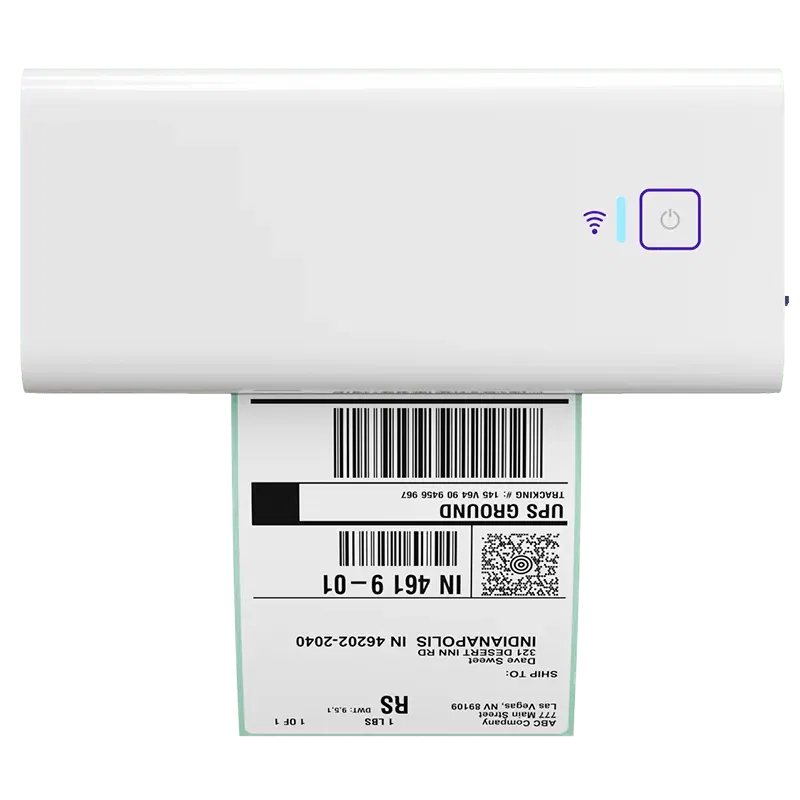
A reliable thermal label printer helps keep your packing station moving when every order needs the right weight, dimensions, address, and service. Rollo’s Wireless Printer gives small sellers a cleaner way to print crisp 4×6 labels without ink.
What should you check before buying a food shipping label?

Before buying a food shipping label, check the product risk, package size, packaging weight, service speed, carrier options, destination, delivery window, and any restricted-item concerns. This is the best time to protect margin because you can still adjust packaging, compare rates, or choose a better service.
Use this pre-label workflow:
- Classify the product risk
Decide whether the item is perishable, semi-perishable, shelf-stable, fragile, liquid, melt-sensitive, or restricted. - Confirm packaging and box size
Check whether the box protects the product without adding unnecessary size or weight. - Check temperature, leak, crush, or breakage concerns
Match packaging to the product’s real failure point. - Compare carrier rates and speed
Look at price and service speed together. Do not assume the same carrier wins every time. - Print the correct label
Make sure the weight, dimensions, address, and service match the packed order. - Track the shipment and keep order details organized
A repeatable shipping workflow makes it easier to spot problems and support customers.
This is where a shipping app can help. Rollo Ship lets sellers compare carrier options, organize orders, and print labels from one workflow, so the decision happens before the package leaves the table.
How can carrier comparison protect perishable food margins?

Carrier comparison protects perishable food margins because rates, service speed, package size, destination, and delivery expectations vary by shipment. A carrier that works for shelf-stable coffee may not fit chocolate, meat, or glass bottles. Comparing carrier rates before each label helps sellers avoid default-cost decisions when package size, destination, speed, and product risk change from order to order.
Why one default carrier can cost more
A default carrier is convenient, but it may not match every order. A light snack box, a glass-bottle shipment, and a cold-packed meat order may each need a different choice.
How service speed changes the decision
Service speed affects cost and risk. Faster shipping may make sense for some products, while a lower-cost service may work for shelf-stable goods.
The point is to compare, not guess.
Why comparison should happen by shipment
Package size, destination, speed, and product risk can change from order to order. A shipment-by-shipment comparison gives sellers more control.
Where shipping apps fit into the workflow
Rollo Ship fits at the moment when the seller is ready to act: compare rates, choose a service, and print the label. It supports cost clarity without turning the shipping process into tab chaos.
What does Rollo Ship help with—and what does it not replace?
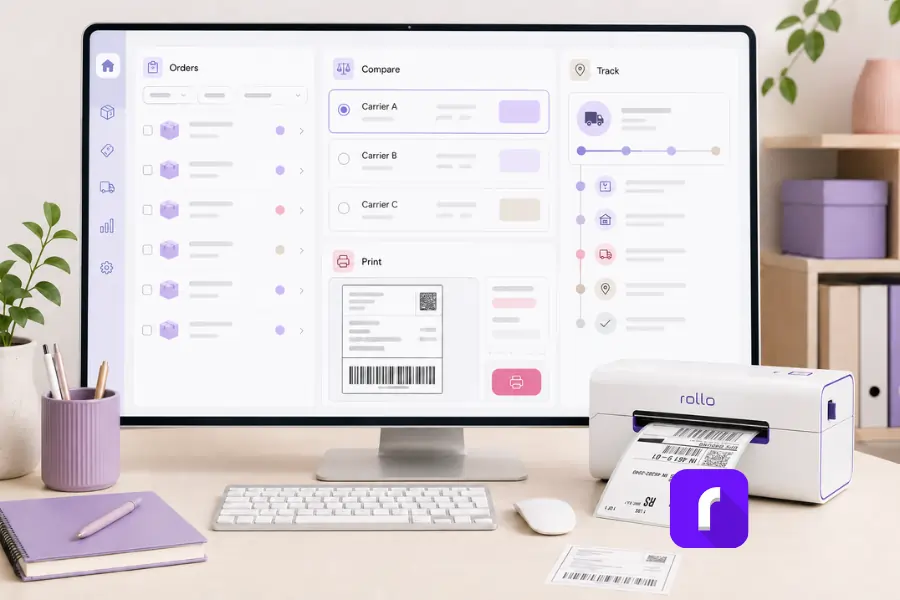
Rollo Ship can help small CPG sellers compare carrier rates, organize orders, and print accurate shipping labels in a cleaner workflow. It does not replace food-safety planning, cold packaging validation, temperature logging, restricted-item checks, or carrier rule review. Its role is reducing rate, label, and workflow friction.
| Rollo can help with | Sellers still need to handle |
|---|---|
| Comparing carrier rates | Product safety decisions |
| Organizing orders | Cold packaging validation |
| Printing accurate labels | Temperature logging |
| Creating a repeatable workflow | Restricted-item checks |
| Reducing label friction | Carrier rule review |
Where Rollo Ship fits
Rollo Ship helps when a seller needs to compare rates, choose a shipping option, and print a label without jumping between disconnected tools.
Where the Rollo Wireless Label Printer fits
A reliable thermal label printer supports a cleaner packing station. It also removes ink from the label process, which is one less thing to run out of during a busy shipping day.
What sellers still handle separately
Sellers still need to know their product, packaging, and risk level. Shipping software can support the workflow, but it cannot decide whether a food product is safe to ship a certain way.
When a 3PL or cold-chain partner may make sense
If a seller grows into higher volume, complex cold storage, or more demanding temperature needs, a specialized fulfillment partner may be worth exploring.
What should sellers know about US–Canada, restricted, or limited food shipments?

US–Canada, restricted, or limited food shipments can add extra carrier, documentation, customs, or product-specific concerns. Sellers should treat these as edge cases, not standard food shipments. Before shipping, check current carrier rules and any relevant food, customs, or restricted-item guidance for the product and destination.
US–Canada shipping considerations
Cross-border orders may involve more documentation, product restrictions, and delivery uncertainty. Sellers should check the rules for the product and destination before accepting or shipping the order.
Alcohol, limited, or restricted items
Some food and CPG products may carry extra restrictions. This can apply to certain liquids, alcohol-related items, or products with special handling needs.
When to check carrier and government guidance
Check carrier guidance before shipping anything that may be restricted, temperature-sensitive, or cross-border. For food-safety topics, use official resources like USDA’s mail-order food safety guidance when the answer affects customer safety or compliance.
Compare Rates Before You Print the Label
Perishable food shipping works best when you can check carrier options, organize orders, and print labels from one workflow. Rollo Ship helps small sellers make the label decision with more clarity and fewer surprises.

Final Words
Shipping perishable food on a margin comes down to making the right choices before the label prints. Small CPG sellers need to match each product’s risk to the right packaging, service speed, carrier option, and workflow. Hot sauce, chocolate, coffee, baked goods, and grass-fed meat all create different shipping problems, so one default process can lead to surprise costs. By checking package size, product risk, rate options, and label details upfront, sellers can reduce mistakes, protect margins, and ship with fewer last-minute surprises.
Follow Rollo on:
Frequently Asked Questions About Shipping Perishable Food
📌 Q: How can small CPG sellers ship perishable food without losing margin?
💭 A: Small CPG sellers can protect margin by matching the product’s risk to the right packaging, service speed, carrier choice, and label workflow. The key is to compare options before buying the label instead of treating every product the same.
📌 Q: What is the difference between perishable and shelf-stable food shipping?
💭 A: Perishable food usually needs more attention to time, temperature, and handling. Shelf-stable products are less temperature-sensitive, but they can still create margin problems through breakage, leaks, oversized packaging, or poor carrier choices.
📌 Q: Should I use ice packs or faster shipping for food products?
💭 A: Ice packs help manage temperature inside the package, while faster shipping reduces transit time. Some products may need both, but the right choice depends on product risk, route, season, packaging, and cost.
📌 Q: How do I ship hot sauce without leaks or broken bottles?
💭 A: Hot sauce shipping should focus on seal protection, cushioning, bottle separation, and accurate package details. Sellers should also compare carrier and service options before buying the label because glass and liquid weight can affect cost.
📌 Q: How do I ship chocolate without melting?
💭 A: Chocolate shipping depends on temperature sensitivity, route, season, service speed, and packaging. Sellers may need insulation, cold materials, adjusted shipping days, or faster service depending on the shipment.
📌 Q: Does grass-fed meat need faster shipping?
💭 A: Grass-fed meat usually requires more temperature-focused planning than shelf-stable food. Sellers should consider packaging, service speed, carrier rules, and any applicable food-safety guidance before shipping.
📌 Q: Should I compare carriers before every perishable food shipment?
💭 A: Yes, comparing carriers by shipment can help sellers avoid default-cost decisions. Package size, destination, speed, carrier options, and product risk can change which service makes the most sense.
📌 Q: Can Rollo Ship help with perishable food shipping?
💭 A: Rollo Ship can help sellers compare carrier rates, organize orders, and print accurate shipping labels. It does not replace food-safety planning, cold packaging validation, temperature logging, or restricted-item checks.
📌 Q: What should I check before shipping food between the US and Canada?
💭 A: Check carrier rules, product restrictions, customs details, destination requirements, and documentation needs before shipping food between the US and Canada. Requirements can vary by product and destination.


