
TL;DR: A Shopify shipping workflow is the system you use to rate-shop, print labels, and move orders from checkout to carrier pickup. If your setup still works but feels too manual or too expensive, the real question is whether native Shopify shipping is still enough before you switch tools or consider a 3PL.
Your orders are still getting out the door, but your shipping process is starting to feel more expensive and more manual than it should. A Shopify shipping workflow can work well for a while, then quietly turn into a source of extra clicks, uneven carrier choices, and hard-to-explain label costs.
That is usually the moment when the real question changes. It is no longer “How do I ship with Shopify?” It is “Is my current setup still enough, or am I ready for a smarter way to handle rates, labels, and fulfillment before I need a 3PL?”
The goal is not to make shipping more complex. It is to make the next decision with more clarity, more control, and fewer surprises.
What This Article Covers
When is it time to upgrade your Shopify shipping workflow?
A Shopify shipping workflow usually needs an upgrade when it still functions, but no longer feels clean, predictable, or efficient. If shipping decisions take too long, costs are harder to explain, or busy days expose too many manual steps, the issue is often workflow fit rather than simple growth.

| If this sounds like your setup | What it usually means |
|---|---|
| Orders are fairly simple and predictable | Your current workflow may still be enough |
| One person can move from order to label without much friction | Your process is probably still manageable |
| Labels take longer than they should | Your workflow may be getting too manual |
| Costs are harder to explain from one order to the next | You may need better rate visibility |
| The team keeps defaulting to the same carrier just to move faster | Convenience may be hiding better shipping choices |
| Busy days turn the packing station into bottlenecks | Your workflow may need more structure before a 3PL |
What “good enough” still looks like
Native Shopify shipping may still be enough when your orders are simple, your package mix is consistent, and the process feels boring in a good way. A stable workflow does not have to be fancy. It just has to be easy to repeat.
What changes when convenience starts costing you time
The turning point usually is not dramatic. It is more like death by a thousand clicks. Labels take longer, carrier choices get rushed, and the packing station feels fine on normal days but strained when order volume jumps.
Why this is usually a pre-3PL decision first
A lot of sellers assume the next move is a fulfillment center. Often, it is not. Many brands first need a better pre-fulfillment-center workflow that improves rate visibility, label flow, and daily consistency while keeping shipping in-house.
What is a Shopify shipping workflow, really?
A Shopify shipping workflow is the process that moves an order from checkout to carrier pickup. It includes rate selection, label creation, package choices, and tracking updates. For a growing brand, the real question is not just what the workflow is, but whether it still fits the way your team actually ships each day.

The basic flow from checkout to pickup
A typical Shopify shipping workflow looks like this:
- An order comes in through your Shopify store.
- The order appears in your dashboard and gets reviewed for fulfillment.
- A shipping service gets selected based on the package, destination, and timing.
- A label gets created and printed for the order.
- The item gets packed and prepared for pickup or drop-off.
- Tracking gets updated so the shipment can be followed after it leaves.
That flow sounds simple because it is simple. Until the small decisions inside it start taking more time than they should.
What native Shopify shipping handles well
Native Shopify shipping works well when your store has a fairly simple order flow and your team does not need a lot of extra decision-making around each shipment.
It is especially useful when:
- your package types are fairly consistent
- shipping choices do not vary much from order to order
- one person or a small team can handle fulfillment without much friction
- the process from order to label still feels clear and manageable
That is why many sellers start there. It keeps everything close to the order source and feels straightforward at the beginning.
Where the workflow starts stretching as you grow
The workflow usually starts stretching when the same basic process still exists, but the effort around it gets heavier.
Common signs include:
- more orders to process in less time
- more package variation from one shipment to the next
- more rate decisions that need quick judgment
- more repeated clicks between order, label, and packing steps
- more chances for different team members to handle similar orders differently
At that point, the problem is not whether Shopify works. The problem is whether the workflow still matches the way your team ships now.
Why can Shopify shipping feel convenient but still expensive?
Shopify shipping can feel easy because it is built into the platform, but easy does not always mean cost-aware. As stores grow, default carrier habits, uneven package choices, and limited rate comparison can make a simple process feel more expensive than it first appeared, even when orders are still shipping on time.

| Cost trap | What it looks like in real life | Why it matters |
|---|---|---|
| Default carrier habits | The team keeps choosing the same service because it feels fastest | Easy choices can become more expensive choices |
| Weak rate comparison | Nobody checks alternatives during busy fulfillment windows | Small cost differences can add up over time |
| Inconsistent packaging | Similar orders get packed in different boxes or mailers | Label costs become harder to predict |
| Rushed shipping decisions | The goal becomes speed first, not cost clarity | The workflow starts hiding preventable waste |
| Limited visibility | Costs feel different from one order to the next, but nobody can explain why | It becomes harder to control shipping spend with confidence |
Where hidden label costs usually come from
Sometimes the label cost itself is not the surprise. The surprise is how often nobody stops to question it.
If the team keeps choosing the same service, using the same package type, or skipping quick comparisons because fulfillment is busy, small differences can stack up. You may not notice it on one order. You notice it when shipping costs start feeling inconsistent across a full week.
How weak rate comparison raises costs quietly
A lot of overpaying for labels comes from habit, not disaster. When carrier comparison feels slow or awkward, people stop doing it. They choose what looks familiar and move on.
That keeps the line moving in the moment, but it can reduce cost control over time. The workflow starts rewarding speed in the wrong place, which is why a clearer multi-carrier rate comparison process can make shipping decisions easier to evaluate.
Why package details matter more than they seem
Package dimensions and package weights are not just setup chores. They shape how clearly your team can make shipping decisions and how consistently similar orders get handled. For example, USPS notes in its dimensional weight guidance that some large, lightweight packages may be priced by size as well as weight, which helps explain why package details can affect shipping costs more than they seem.
If packaging choices change from person to person, label costs can drift even when the item being shipped looks almost the same. That is when “Why was this one more expensive?” starts showing up more often than it should.
What are the first signs your shipping workflow is getting too manual?
The first warning signs are usually small: more repeated clicks, more labels created one order at a time, and more shipping decisions based on memory instead of rules. If busy days make fulfillment feel fragile, your workflow is already becoming too manual for a growing team.

Common warning signs include:
- Labels are created one order at a time instead of in a smoother flow
- The packing station feels slower than it should
- Shipping choices depend on memory more than clear rules
- Different team members handle similar orders differently
- Busy days create bottlenecks much faster than normal days
- The workflow works best only when the “right” person is there
Label click fatigue at the packing station
When label creation starts feeling like admin work instead of part of a smooth shipping flow, that is a sign. The person at the packing station should not feel like they are fighting the screen more than moving orders out the door.
Click fatigue is real. It slows people down and makes shortcuts more tempting.
When shipping choices depend too much on one person
If one team member “just knows” which service to choose, which package works best, or what to do when an order looks unusual, that is not efficiency. That is tribal knowledge.
Tribal knowledge works until that person is out, busy, or training someone new. Then the workflow starts wobbling.
Why spike days reveal the real bottlenecks
A quiet day can make a weak process look fine. A spike day tells the truth.
If order batching breaks down, labels pile up, or the team starts making inconsistent decisions just to keep up, your small-team shipping setup is telling you it needs a more repeatable daily fulfillment routine.
Native Shopify shipping vs a smarter pre-3PL workflow: what actually changes?
What changes is not just software. It is how clearly the team sees costs, how quickly labels get created, and how repeatable daily fulfillment becomes. Native Shopify shipping works well when the process is simple. A smarter pre-3PL workflow matters when control, speed, and consistency start affecting margins and daily output.

| Area | Native Shopify shipping | Smarter pre-3PL workflow |
|---|---|---|
| Cost visibility | Familiar, but easier to gloss over shipping differences | Easier to compare rates and spot patterns |
| Label flow | Often more one-by-one | More streamlined and repeatable |
| Daily fulfillment | Works well when volume is simple | Better suited for growing in-house teams |
| Decision-making | Can rely more on habit | Gives the team more structure and clarity |
| Readiness for growth | Fine for earlier stages | Better for higher volume before a 3PL |
Convenience vs cost visibility
Native Shopify shipping wins on familiarity. A smarter pre-3PL workflow often wins on visibility.
That difference matters because convenience can keep you moving, while better rate visibility helps you make clearer choices. One feels easy. The other helps you understand what the easy option is costing you.
One-by-one shipping vs a repeatable daily flow
A simple workflow often means handling each order as it comes. A stronger workflow makes the day feel more organized.
That does not mean turning your shop into a warehouse. It means creating a system where shipping label creation, service selection, and order handling feel more consistent from start to finish.
Pre-3PL workflow vs full 3PL readiness
Not every shipping problem means you are ready for outsourced fulfillment. Sometimes you just need shipping operations that support higher volume without giving up control.
That is the middle stage many articles skip. You may need a workflow upgrade before 3PL, not a full handoff before you are ready.
What does a smarter Shopify shipping workflow look like before a fulfillment center?
A smarter pre-fulfillment-center workflow keeps Shopify as the order source but adds more structure to shipping decisions, label handling, and fulfillment routines. The goal is not to build a heavy stack. It is to create a cleaner process that gives a small team better visibility, faster execution, and fewer avoidable mistakes.

A smarter pre-3PL workflow usually looks like this:
- Orders come in through Shopify and are reviewed in one clear place.
- Rates are easier to compare before labels get created.
- Labels are printed with less friction and fewer repeated clicks.
- Packing follows a more repeatable routine instead of changing from order to order.
- Tracking becomes part of the workflow instead of an afterthought.
Where rate comparison should happen
Rate comparison should happen at the point where it helps the team decide, not at the point where it slows everything down. The best workflow makes that comparison easier to see and easier to repeat.
That is what better rate visibility really means. Not endless checking. Better decision support.
What label operations should feel like
Label work should feel fast, clear, and boring. You want fewer moments where someone stops and wonders what to click next.
Faster label printing is not just a nice speed boost. It reduces drag across the whole order workflow and can save real time during fulfillment.
Make label printing the easiest part of your workflow
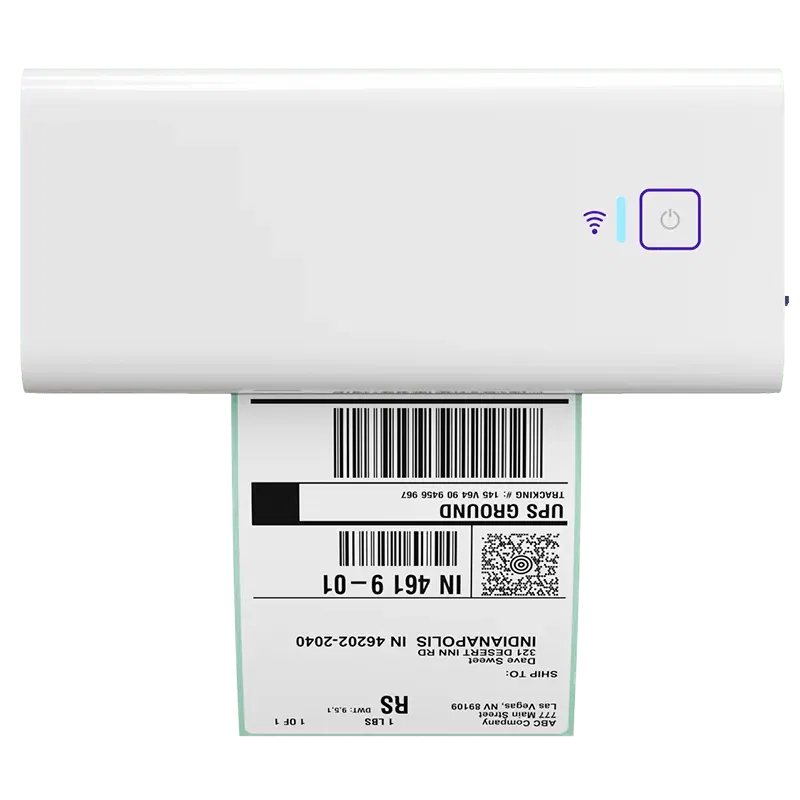
If label work is slowing the team down, a better printer setup can remove friction without making your workflow more complicated. The Rollo Wireless Label Printer helps keep your packing station fast, clean, and ready for busy days.
How packing and tracking become more repeatable
A stronger workflow also cleans up what happens around the label. The packing station feels more organized. Order batching makes more sense. Tracking updates are less of an afterthought.
That kind of repeatability is what gives a small team more confidence before scaling, especially when they are figuring out how small teams ship like big companies without overcomplicating the workflow.
How should you decide what to change first in your shipping setup?
Start with the part of shipping that creates the most daily friction. If costs feel hard to explain, improve visibility first. If label work slows the team down, fix label operations first. If the workflow depends too much on one person, build more repeatable rules before adding more complexity.

| If this is your main problem | Start here | Why it matters |
|---|---|---|
| Costs feel hard to explain | Improve rate visibility | Clearer comparisons help you make more confident shipping decisions |
| Label work slows the team down | Improve label flow | Small time savings add up quickly in the most repeated task |
| The workflow depends too much on memory | Build more repeatable rules | A stronger process reduces inconsistency and training stress |
| You want to stay in-house longer before a 3PL | Upgrade the workflow before outsourcing | Better structure can extend what your current team can handle |
If cost visibility is the main problem
Look at where decisions feel fuzzy. Are similar orders getting treated differently? Are shipping choices happening too fast to evaluate? If so, clearer carrier rate comparison and better visibility may do more than adding another layer of process.
If label speed is the main problem
If the team spends too much time moving from order to label, focus there first. Time saved during order fulfillment often comes from reducing friction in the most repeated task, not from redesigning everything else.
If your process depends too much on memory
When the workflow only works because a few people know how to handle exceptions, the system needs more structure. A repeatable daily fulfillment routine lowers stress and makes training easier.
If you want to stay in-house longer before a 3PL
That usually means you need more control, not necessarily more complexity. Improve the workflow so it supports the way your team ships now, and let that smoother handoff before 3PL happen later if and when it makes sense.
Where does Rollo Ship fit if you want faster label operations without jumping to a 3PL?
Rollo Ship fits best when the problem is not “I need full outsourcing,” but “my current shipping process is too slow, too manual, or too hard to compare clearly.” It makes sense for small teams that want smoother label operations, better workflow visibility, and more confidence before they are ready for a fulfillment center.

| Situation | Rollo Ship may be a good fit | You may not need it yet |
|---|---|---|
| Label work feels slow or repetitive | Yes | |
| The workflow feels too manual for a growing team | Yes | |
| You want better rate visibility before a 3PL | Yes | |
| Your current setup still feels steady and manageable | Yes | |
| Orders are simple and the process is still easy to repeat | Yes |
When Rollo Ship is a practical fit
Rollo Ship fits naturally when native Shopify shipping no longer feels efficient enough, but a 3PL still feels too early. It can help create a cleaner path from order to label with less friction around the daily work.
That is especially useful when the pain point is workflow relief, not enterprise-level complexity.
What kind of workflow relief it can create
The biggest value here is usually clarity, speed, and less guesswork in the middle of the workday.
For a small team, that can mean:
- better label flow
- easier rate comparison visibility
- less confusion at the packing station
- fewer “Why did we do it this way?” moments after the fact
- a shipping process that feels more organized without becoming heavier
Try a clearer shipping workflow
on Shopify
If your current setup still works but feels too manual, Rollo Ship can help you compare rates, create labels faster, and make daily shipping decisions feel easier to manage. It is a practical next step before a 3PL becomes necessary.

When native Shopify shipping may still be enough
If your orders are simple, your label work still feels manageable, and the workflow is not creating regular surprises, you may not need a change yet. The point is not to switch tools just to switch tools.
The point is to upgrade when the current workflow stops supporting the way your team actually ships.
Final Words
A Shopify shipping workflow does not need to be perfect to be useful, but it does need to match the way your team actually ships. If your current setup still feels clear, steady, and easy to repeat, you may not need to change much yet. But if costs feel harder to explain and daily shipping work keeps getting more manual, that is usually your sign to upgrade the workflow before bigger problems show up. The right next step should give you more clarity, more control, and fewer surprises.
Follow Rollo on:
Frequently Asked Questions About Shopify Shipping Workflows
📌 Q: Should I keep using Shopify shipping or switch tools?
💭 A: If your orders are still simple, label work is manageable, and shipping choices feel predictable, native Shopify shipping may still be enough. If cost visibility, speed, or repeated manual work are becoming daily problems, it may be time to improve the workflow.
📌 Q: What is a Shopify shipping workflow in plain English?
💭 A: It is the system you use to move an order from checkout to carrier pickup. That usually includes rate selection, label printing, package choices, and tracking updates.
📌 Q: Why does Shopify shipping feel convenient but still expensive?
💭 A: Convenience can hide weak rate comparison habits, default carrier choices, and uneven package decisions. The workflow may still work while costing more than it should.
📌 Q: What are the first signs my shipping workflow is too manual?
💭 A: Repeated clicks, one-by-one label processing, inconsistent shipping choices, and slowdowns on busy days are common signs. If the process depends too much on memory, it is already getting fragile.
📌 Q: Can I improve my shipping workflow before I am ready for a fulfillment center?
💭 A: Yes. Many growing brands benefit from better rate visibility, faster label operations, and a cleaner in-house process before outsourcing fulfillment makes sense.
📌 Q: Do I need a 3PL as soon as shipping gets harder?
💭 A: Not always. Often the next best move is a smarter pre-3PL workflow that improves shipping speed, consistency, and clarity while you stay in-house.
📌 Q: What should I change first if my shipping setup feels messy?
💭 A: Start with the part creating the most daily friction. For most teams, that is cost visibility, label speed, or a workflow that depends too much on one person.
📌 Q: Where does Rollo Ship fit in this decision?
💭 A: Rollo Ship fits when the main issue is workflow friction, label speed, and day-to-day shipping efficiency, not full logistics outsourcing. It is a practical option for teams that want a cleaner shipping process before a 3PL.


