
TL;DR: Discount shipping means paying less than a carrier’s public rate for the same service by using platforms, programs, and smarter packaging choices. Small e-commerce brands get the best discount shipping rates by combining multi-carrier shipping software, marketplace-negotiated pricing, and regionally optimized services in the US and Canada. The cheapest approach usually is not one “magic service” but a system that chooses the lowest carrier-calculated rate for each order, while rewards and cashback loops further cut effective cost per label over time. Platforms like Rollo Ship turn this into a repeatable workflow by aggregating discounted carrier pricing, automating rate comparison, and returning savings as Rollo Rewards.
Discount shipping for small e-commerce brands
- Discount shipping is about paying less than standard published carrier prices for the same service level by using software, carrier programs, and optimized packaging.
- Small brands unlock discounts fastest with shipping platforms that aggregate multi-carrier rates and marketplace-negotiated pricing.
- USPS, UPS®, Canada Post, and regional carriers can all be surfaced through carrier-calculated rates via shipping software.
- US shipping often benefits from dense zones and more regional carriers, while Canada leans on Canada Post plus couriers.
- Rollo Ship provides discounted rates, automatic rate comparison, and Rollo Rewards to lower the effective cost per label over time.
Jump To:

What is Discount Shipping?
Discount shipping is any rate lower than a carrier’s standard published price for the same service level, destination, and package. These lower prices come from negotiated access pricing, volume-based programs, or shipping software that aggregates carrier-calculated rates. For e-commerce, discount shipping protects margins while keeping delivery times competitive.
How does discount shipping work?
Discount shipping works by using carrier programs, marketplace-negotiated rates, and multi-carrier software to surface lower carrier-calculated prices at label time for the same service level, destination, and package. For e-commerce brands, this system protects margins while keeping delivery times aligned with what you promise at checkout.

In practice, discount shipping for a Shopify apparel brand or an eBay decor seller means:
- Carrier “program” discounts (e.g., USPS Commercial Pricing or small-business programs) surfaced via software tools that print labels.
- Marketplace-negotiated rates when you buy labels inside platforms such as Shopify, eBay, PayPal, Squarespace, WooCommerce, Walmart, or Amazon, which often beat walking into a post office or depot.
- Access pricing through multi-carrier shipping platforms that negotiate at scale and then pass lower carrier-calculated rates to many merchants at once.
Discount shipping works best as a system: orders flow from your store into a platform that compares real-time carrier options (USPS, UPS®, Canada Post, regional carriers where available), then automatically picks the lowest qualifying rate that still hits the promised delivery window.
How can small businesses get discount shipping rates?
Small businesses usually access discount shipping rates through three main paths: multi-carrier shipping software, volume-based programs from carriers, and marketplace-negotiated rates on platforms like Shopify, BestBuy or Amazon. The fastest route is often a shipping platform that aggregates discounted carrier pricing without requiring you to negotiate your own contracts.

For a small US-based Shopify T‑shirt brand:
- Buying labels at retail counters nearly always means paying standard published rates, which are the highest tier.
- Printing labels through e-commerce-aware tools exposes you to commercial or platform-specific discounts baked into the label price, no negotiation required.
- As your volume grows, software can automatically route certain heavier internal-US shipments to UPS® or other ground options that show lower carrier-calculated rates than postal services for those zones.
For a Canadian eBay seller shipping handmade lamps, connecting your shop to a platform that shows Canada Post rates alongside services from couriers lets you pick the cheapest option per parcel, instead of guessing at the counter. Over time, consistently using discounted labels through software can materially reduce average shipping cost per order, especially as parcel prices respond to fuel and service changes.
What are the best ways to get discounted shipping rates from US carriers?
The best ways to get discounted shipping rates from US carriers are using shipping software with built-in negotiated access pricing, connecting marketplaces that already include carrier-calculated discounts, and optimizing package dimensions to hit cheaper tiers. Combining these with occasional carrier programs for growing businesses helps you reach materially lower rates over time.

Key tactics for US small brands:
- Use multi-carrier platforms that surface USPS, UPS®, and other carrier-calculated rates side by side, so you see when a discounted UPS® Ground or postal option is cheaper for a specific route.
- Keep packages below critical weight and dimensional thresholds—for example, designing apparel mailers to stay under common ounce or pound cutoffs significantly reduces unit cost.
- Ship from locations closer to customers when possible (e.g., splitting inventory, using 3PLs) to lower zones and reduce surcharges, a strategy that has become more important as transportation-related price adjustments roll out.
Because carriers regularly adjust base rates and peak surcharges, relying on static charts quickly becomes inaccurate. Using live carrier-calculated pricing via software keeps you aligned with the latest schedules without manual recalculation.
How to get discounted USPS rates without high volume
Discounted USPS rates are usually available through online tools, marketplaces, and multi-carrier platforms, even if you are not a high-volume shipper. Instead of negotiating your own contract, you access commercial-like pricing by buying labels through e-commerce-aware software, where USPS options appear alongside other carrier-calculated services for each shipment.
What shipping platform gives the biggest discounts on UPS® Ground?
No single shipping platform can guarantee the biggest UPS® Ground discount in every scenario, because rates depend on your shipment mix, lanes, and any underlying carrier programs. The most reliable approach is using a multi-carrier platform that surfaces UPS® Ground alongside USPS and other services as live carrier-calculated options, then chooses the lowest suitable rate for each order.
What is the cheapest shipping option for e-commerce businesses?

There is no single universally cheapest shipping option for e-commerce businesses; costs depend on weight, distance, and speed. However, using discounted postal services for light parcels, regional carriers for nearby zones, and software that automatically picks the lowest carrier-calculated rate at label time is usually the most cost-efficient overall structure.
For a US Shopify apparel brand shipping mostly under 1–2 lb:
- Discounted USPS services often win for lightweight domestic shipments, especially when accessed through software that passes through commercial-like pricing.
- UPS® or other ground options can become cheaper for heavier cartons or certain zones, particularly when using platform-provided discounts and consolidated pickups.
For a Canadian eBay decor seller:
- Canada Post is often the baseline for domestic shipments, but platforms that integrate Canada Post alongside couriers help identify when a courier service offers a lower effective cost for a specific province or metro area.
- Cross-border shipments to the US can be optimized by choosing services and label sources that reduce brokerage surprises and take advantage of cross-border programs that bundle fees into clear rate structures.
The cheapest approach is to design packaging and workflows so that every order routes through a rate-comparison step, rather than committing to a single service by habit.
What are the best e-commerce shipping solutions for reducing costs?

The most effective e-commerce shipping solutions for reducing costs combine real-time multi-carrier rate comparison, negotiated or platform-based discounted pricing, and automation that reduces fulfillment errors. Centralizing orders from multiple marketplaces and carts into one dashboard lets you consistently choose cheaper labels while keeping your packing, picking, and handoff workflows efficient.
Cost-cutting capabilities to prioritize:
- Order aggregation: Pull Shopify, eBay, Amazon, and other channels into one queue so staff can batch labels, pick runs, and carrier pickups.
- Automatic rate shopping: Let the platform compare USPS, UPS®, and other supported carriers for each order, factoring in service level, weight, and delivery promise.
- Error reduction: Address validation, customs automation, and rules-based shipping profiles reduce returned packages and re-shipments that silently inflate shipping spend.
Solutions that add analytics—such as reports on average cost per shipment by service, weight band, and destination—help you identify when to adjust packaging or change the default service on your store checkout.
What should you look for in a shipping platform to get shipping discounts?

A discount-focused shipping platform should offer multi-carrier rates in one view, transparent carrier-calculated pricing, negotiated access discounts, and strong marketplace integrations. Look for automated rate comparison at label time, clear fees, and optional rewards or cashback-style programs that reduce your effective cost per label as your shipment volume grows.
Evaluation checklist for small e-commerce brands:
- Coverage: USPS, UPS®, and other relevant carriers for US shipments; Canada Post and key couriers for Canadian and cross-border shipments.
- Discount structure: Access to negotiated discounts and carrier-calculated rates via the platform interface, not just “estimate tools.”
- Workflow fit: Direct integrations to Shopify and eBay, rules for automating common label decisions (e.g., “under 1 lb, default to postal; heavier into ground options”), and easy pickup scheduling.
- Rewards: Programs that return value on each label—through credits, points, or cash-like rewards—can meaningfully lower effective cost per shipment across the year when used consistently.
Rollo Ship fits in this category as a multi-carrier shipping software and label platform that aggregates discounted carrier pricing across USPS, UPS®, and others, then lets merchants compare and buy labels from a single dashboard in the US and Canada. It’s not a carrier; it’s a rate aggregation system and workflow tool.
Is shipping software worth it for small businesses
For most small e-commerce brands, shipping software becomes worthwhile once you ship more than a handful of parcels each week because it exposes discounted carrier-calculated rates, reduces errors, and saves manual time that would otherwise be spent comparing services one by one.
Comparison: Where the shipping discount comes from
| Source of discount | How it works | Typical user | Pros | Considerations |
|---|---|---|---|---|
| Carrier programs (USPS, UPS®) | Carrier offers non-retail pricing via online tools and APIs. | All shippers | Reliable, official pricing; often better than retail. | Requires using supported tools; less cross-carrier visibility. |
| Marketplace-negotiated rates | Platforms like Shopify/eBay bake discounts into label tools. | Marketplace sellers | Easy, native to selling workflow, and no extra accounts needed. | Limited to that marketplace; less control over service mix. |
| Multi-carrier shipping software | Aggregates carrier-calculated and negotiated access rates in one place. | Growing e-commerce brands | Cross-carrier comparison; single workflow; analytics. | Requires setup; value depends on integrations and pricing. |
| Reward programs | Credits or rewards reduce the effective cost per label. | Frequent shippers | Turns volume into compounding savings over time. | Impact grows with volume; must be used consistently. |

How do shipping costs differ between the US and Canada?
Shipping costs in the US and Canada differ because of carrier mix, geography, and competition. US shippers generally benefit from more regional carriers and dense zones that lower per-parcel costs, while Canadian shippers often face higher base prices but can offset them with Canada Post, regional couriers, and software-based rate optimization.

Key structural differences:
- Carrier environment: The US has USPS plus multiple national and regional parcel carriers competing for e-commerce volume, which can keep certain lanes more price-competitive. Canada relies heavily on Canada Post, with couriers filling in, especially for time-definite or business-to-business lanes.
- Geography and density: The Canadian population is more spread out relative to size, increasing linehaul and last-mile costs, especially to remote or rural destinations.
- Indexing and surcharges: Both markets see periodic transportation-related adjustments, but the mix of fuel, residential, and remote-area surcharges can differ by country and carrier; staying current via online rate tools is essential.
For a Shopify apparel brand that sells to both US and Canadian customers, using a multi-carrier platform that supports USPS, UPS®, and Canada Post and understands cross-border workflows simplifies choosing the right service per region.
How to get cheaper Canada Post rates for e-commerce
Cheaper Canada Post rates for e-commerce usually come from using online tools, small-business programs, and shipping platforms that integrate Canada Post directly into their label workflows. When you print labels through these tools, you can access discounted parcel services, compare them with courier options for each province, and pick the most economical service that still meets your delivery promise.
Best shipping discounts for Canadian Shopify sellers
For Canadian Shopify sellers, the best shipping discounts typically come from combining Shopify’s own negotiated rates with a multi-carrier platform that adds Canada Post and courier options in one screen. This setup lets you compare discounted services for domestic and cross-border shipments, then automatically route each order to the cheapest suitable option.
US vs Canada shipping cost drivers
| Factor | United States | Canada |
|---|---|---|
| Primary postal operator | USPS has multiple service tiers. | Canada Post has national coverage. |
| Regional carriers | Many regional parcel carriers operate in dense metros. | Fewer regional options; more reliance on national networks. |
| Population density | Higher density in many corridors lowers per-stop cost. | Large geography with a sparser population increases cost. |
| Cross-border focus | Heavy outbound to Canada and global destinations. | Significant cross-border trade to the US; duties/taxes are key. |
| Price signals | Frequent public updates on rates and surcharges. | Parcel price indices show ongoing upward pressure. |

What are the best ways to lower parcel shipping charges?
The best ways to lower parcel shipping charges are reducing package size and weight, using software to compare discounted rates across carriers, and matching service level to actual customer expectations. Over time, batching labels, validating addresses automatically, and using rewards or cashback loops can further reduce your effective cost per parcel.
Tactical moves for a Shopify apparel brand or eBay decor seller:
- Packaging: Use right-sized mailers or boxes and lighter protective materials where safe—shipping data consistently shows that weight and dimensional changes materially affect cost.
- Service level: Offer realistic delivery windows at checkout so you can pick economical ground or postal services for most orders, reserving faster options for rush scenarios.
- Batching: Print labels and schedule pickups in batches by carrier to cut handling time, reduce missed cutoffs, and gain consistency that supports lower-cost services.
- Rewards: Use a platform that returns value on each label (e.g., rewards points) and track that separately; over hundreds or thousands of shipments, this can offset a meaningful portion of shipping spend.
Without a system like this, small brands often overpay by:
- Defaulting to one service for all orders.
- Over-boxing items for “safety,” pushing many shipments into higher-priced tiers.
- Ignoring cross-border optimization, leading to surprise duties and re-ships.

US and Canada
California Electronics, a Shopify brand shipping lithium batteries to Texas
A small Shopify brand in California selling phone accessories ships many parcels containing batteries to customers in Texas. Regulations and carrier rules mean they must select services that allow battery shipments and apply correct labeling. With a multi-carrier platform, they can:
- Store product-level rules so battery shipments automatically filter to compliant services.
- Compare discounted USPS and UPS® ground options for each Texas zone to balance cost and speed.
- Use right-sized packaging to keep shipments within favorable dimensional thresholds, lowering both base rate and surcharges.
Here, discount shipping is not just price—compliance and automation protect the brand from costly delays or returns.
Ontario beauty brand shipping fragile glass packaging within Canada and to the US
An Ontario-based beauty brand ships serums in glass bottles to customers across Canada and into the US. Domestically, Canada Post may be the baseline; for certain routes, courier services accessed via software could offer competitive rates or better transit times.
Their discount shipping system might:
- Use thicker but lighter protective materials (e.g., molded pulp vs. heavy bubble) to protect glass without pushing weight into the next tier.
- Automatically compare Canada Post and available cross-border solutions for US orders, choosing services that bundle duties and reduce unexpected charges for buyers.
- Batch labels and pickups to keep workflows efficient, which indirectly reduces the need to pay premiums for last-minute services.
Vancouver eBay seller of handmade decor shipping domestically
A Vancouver eBay seller ships handmade decor items—like wall art and lamps—within British Columbia and to other provinces. By connecting eBay to a shipping platform, they see Canada Post and courier rates on one screen.
They can:
- Default to more economical Canada Post services for nearby urban deliveries where transit time is naturally shorter.
- Route heavier or more distant shipments through discounted courier options when software shows a lower total cost with an acceptable delivery time.
Quebec chocolatier shipping temperature-sensitive chocolates

A Quebec chocolatier ships temperature-sensitive chocolate boxes within Canada and sometimes to US customers. They use insulated packaging and may need services with predictable transit times to avoid spoilage.
Discount shipping here involves:
- Choosing services and days of the week that minimize time in transit, even if the per-label cost is somewhat higher.
- Using software rules to prevent low-cost but slow services from being selected for temperature-sensitive products.
- Negotiating or accessing discounted rates through platforms that support these service levels and factoring the savings back into product pricing.
Make label printing the easiest part of your workflow
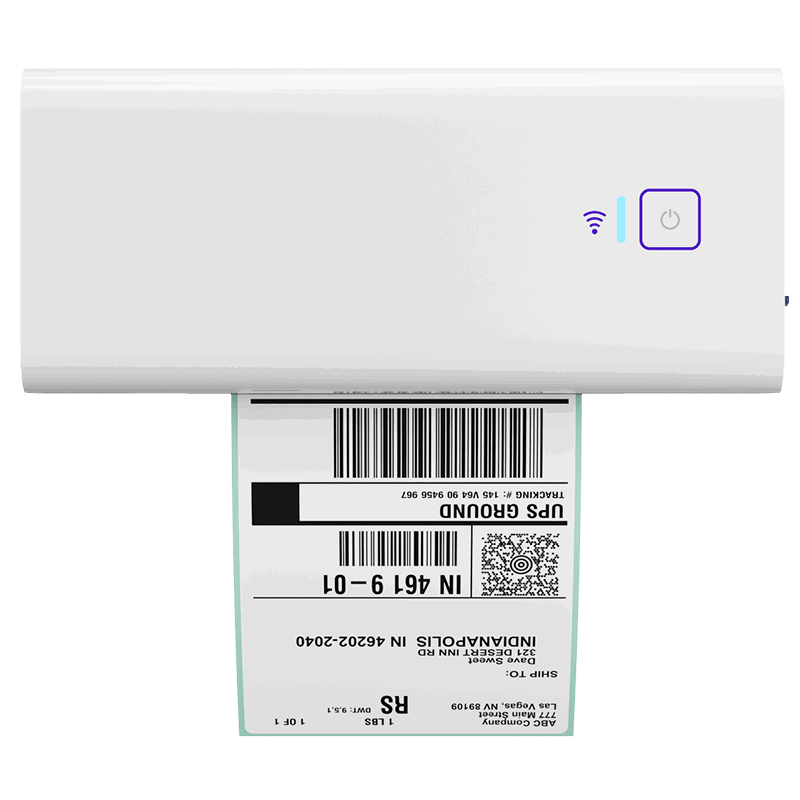
If your team is ready to spend less time on one-by-one labels, the Rollo Wireless Printer can help simplify one of the most repeated steps in shipping. It is a practical next step for small teams that want faster label printing, fewer interruptions, and a setup that feels easier to manage as order volume grows.
Who this guide is NOT for
This approach is not ideal if:
- You ship only a few parcels per month and don’t mind paying walk-in retail rates for the convenience.
- Your business relies on heavy freight pallets or specialized logistics that require bespoke contracts and dedicated account management.
- You operate as an enterprise shipper with in-house logistics teams and direct carrier contracts already negotiated at scale.
For those profiles, direct relationships with carriers, 3PLs, or freight forwarders—and tools designed for enterprise—are often a better fit.
Understanding where the cost leakage is happening is only useful if you can act on it. That’s where a structured shipping platform becomes more powerful than one-off rate checks.
Rollo Ship: Turning discount shipping into a structural system
At the point where a merchant wants more than ad-hoc savings, a structured shipping system becomes the main lever. This is where Rollo Ship enters the picture.
Rollo Ship is a multi-carrier shipping software and a label platform, not a carrier, that
- Aggregates discounted carrier-calculated rates across USPS, UPS®, and other carriers like FedEx in the US, plus supported carriers like Purolator and Canada Post in Canada.
- Connects to Shopify, eBay, Amazon, PayPal, and other major marketplaces so small brands can manage all orders, compare rates, and print labels from one interface.
- Automates rate comparison at label time, so each order gets the most affordable option that still meets the promised delivery window.

Rollo Ship uses negotiated access pricing through software tools to surface discounted carrier pricing, then layers in workflow features such as batch label printing, pickup scheduling, and tracking updates. This combination addresses both the “Where do discounts come from?” question and the “How do I make this sustainable as I grow?”challenge for small Shopify apparel and eBay decor brands.
Try Rollo Ship for free—connect your Shopify, eBay, and other stores and start comparing carrier-calculated rates for every order from a single dashboard. You can begin with no long-term commitments and see how the workflow fits your day-to-day shipping operations.
Rollo Rewards: Shipping discounts as a savings loop
Rollo Rewards is a cost-offset mechanism built into Rollo’s ecosystem. It works as:
- A rewards loop where each label contributes to an accumulated pool of value.
- A way to reduce the effective shipping cost per label over time, especially as volume grows.
For a small brand:
- In month one, rewards may offset a modest share of total shipping, but as label volume increases, those rewards can fund future labels, label printers, or related shipping tools.
- When viewed at year-end, the combination of discounted rates plus Rollo Rewards can materially lower the average shipping cost per order compared with paying retail or relying on one carrier’s standard web tools.
This structure makes discount shipping less about chasing isolated promo codes and more about installing a system that continuously pushes spend downward.

Rollo Rewards tiers reduce your per-label service fee from 5¢ for new shippers down toward 1¢ as your points accumulate and you move up through the program levels.
Rollo Ship is free to start, with 200 labels included when you first connect your stores. After that, labels are 5¢ each, and Rollo Rewards can bring that effective fee down toward 1¢ per label as your volume grows.
Start earning Rollo Rewards on every label you create so your per-label service fee effectively drops as you ship more. You can view your rewards balance inside the dashboard and apply credits toward future shipments as they accumulate.
What happens without a system like this?

Without a structured discount-shipping setup:
- A Shopify apparel brand may overpay on most orders by buying labels at the post office or using only one service level, even when others are cheaper for specific weights and zones.
- An eBay decor seller may undercharge or overcharge buyers for shipping because they don’t have a consistent way to estimate discounted rates, leading to cart abandonment or margin erosion.
- Both may waste hours on manual rate checks, re-shipping due to address errors, and ad-hoc cross-border handling—time that could be spent on product and marketing.
A shipping platform like Rollo Ship, combined with Rollo Rewards, is a structural improvement: it doesn’t remove all shipping costs, but it makes them predictable, lower on average, and easier to manage as the business scales.
Ready for a shipping workflow that scales without adding more chaos?
If you are shipping dozens or hundreds of parcels a month, connecting your stores to Rollo Ship is the fastest way to move from reactive shipping to a structured system. Start with your 200 free labels, see your actual carrier-calculated rates side by side, and let Rollo Rewards turn every shipment into a small future discount.

Follow Rollo on:
Frequently Asked Questions:
📌 Q: What is discount shipping for small businesses?
💭 A: Discount shipping for small businesses means paying less than standard published carrier rates by using carrier programs, marketplaces, or shipping software to access lower carrier-calculated prices for the same services. It’s about systemic savings, not one-time promo codes.
📌 Q: How do e-commerce platforms like Shopify and eBay help with shipping discounts?
💭 A: E-commerce platforms often negotiate shipping discounts with carriers and make those rates available when you buy labels through their interfaces. When connected to a shipping platform, these marketplace-negotiated rates can be compared alongside other carrier options for each order.
📌 Q: Are USPS and UPS® rates always cheaper through shipping software?
💭 A: Not always, but shipping software frequently exposes commercial or access-level rates that are lower than retail counter prices. The main advantage is seeing these carrier-calculated options together, so you can choose the cheapest suitable service for each parcel.
📌 Q: How can Canadian small businesses get discount shipping rates?
💭 A: Canadian small businesses can access discount rates by using platforms that integrate Canada Post and couriers, participating in small-business programs, and optimizing packaging and routes. Cross-border services to the US can also offer savings when accessed through software that understands international options.
📌 Q: Are there shipping discounts for small businesses in Canada?
💭 A: Yes. Small businesses in Canada can access shipping discounts through Canada Post small-business programs, marketplace-negotiated rates, and multi-carrier platforms that integrate Canada Post and couriers. Using these tools to buy labels online often yields lower effective rates than paying retail counter prices for the same services.
📌 Q: What is the role of rewards or cashback in discount shipping?
💭 A: Rewards or cashback programs turn each shipment into a small future discount, effectively lowering the average shipping cost per label as you accumulate and redeem value over time. They work best when paired with already discounted carrier rates surfaced via a shipping platform.
📌 Q: Is flat-rate shipping always cheaper for e-commerce businesses?
💭 A: Flat rate shipping is sometimes cheaper for heavy, compact packages traveling long distances, but for light or short-distance shipments, weight-based discounted services often cost less. Comparing options through a rate-shopping tool is the best way to avoid overpaying.
📌 Q: How often do shipping rates change, and how should I keep up?
💭 A: Major carriers regularly adjust base rates and may implement temporary surcharges, especially around peak seasons. Using shipping software that relies on carrier-calculated rates keeps your label prices in sync with current schedules without manual updates.


