
TL;DR: Electronics shipping insurance is only one part of a smarter pre-label decision, not the whole call. Before you buy the label, line up declared value, lithium battery service fit, packaging, signature needs, and likely fees. Carrier liability is not the same as insurance, included coverage usually stops at $100, and one wrong service on a $400 device can wipe out an order's margin. The fix is comparing the full decision in one place before the label prints, not after.
Electronics Shipping Insurance At a Glance
- USPS Priority Mail, Priority Mail Express, and Ground Advantage include up to $100 of insurance; extra coverage runs to $5,000 (Registered Mail to $50,000).
- UPS® and FedEx provide declared value, a liability cap, not insurance, and usually exclude packages already marked delivered.
- Canada Post includes up to CAN$100 liability on most parcel services; added coverage of $200+ requires a signature.
- From Jan 1, 2026, lithium-ion batteries packed in or with a device must ship by air at a state of charge of 30% or less.
- About 104 million U.S. packages were stolen last year, a roughly $37 billion problem.
Here’s What We’ll Cover
This guide is for electronics sellers and B2B shippers moving phones, laptops, consoles, and other high-value devices who want to stop one shipping mistake from turning into a costly return.
Electronics shipping insurance feels like the safety net, but it is only half the decision. You buy the label and add protection. Then the doubt creeps in. Did one wrong detail just turn a $400 device into a denied claim: a battery rule, a service mismatch, or a missed fee? The risk is not theoretical.
An estimated 104 million U.S. packages were stolen in the past year, a roughly $37 billion problem, and the USPS Office of Inspector General names last-mile delivery as the most vulnerable point in the journey.
For expensive devices, the real job is protecting your margin before the package leaves your hands. That means knowing where declared value, signature confirmation, packaging, and carrier restrictions fit into one workflow. When those pieces line up, shipping feels less like a gamble and more like a decision you can defend.
Do you need electronics shipping insurance on every high-value device?

Not on every shipment. Electronics shipping insurance helps, but it is not a switch that makes every package safe. The smarter first move is to read the shipment itself: item value, fragility, battery setup, delivery risk, and how much a loss would actually hurt. The right question is not “should I insure this?” but “what could go wrong here, and which steps lower that risk?”
When a workflow mistake is the bigger problem
Sometimes the real risk is not missing coverage. It is the wrong service, a missed battery requirement, or packaging that makes a damage claim hard to defend later. Smart shipping starts with the full setup, not just the coverage box.
Declared value vs. shipping insurance: what’s the real difference?

Declared value and shipping insurance are connected but not the same. Shipping insurance reimburses loss or damage up to a covered amount. Declared value is a liability cap. It limits what a carrier pays if found at fault. And it usually will not pay on a package already scanned as delivered. USPS provides true insurance; Priority Mail, Priority Mail Express, and Ground Advantage all include up to $100. UPS® and FedEx use declared value instead.
What carrier liability usually means
Carrier liability is the baseline responsibility a carrier may accept when something goes wrong. It is a starting point, not a full safety net. Many sellers assume it matches the device’s value. Often it does not.
What declared value changes, and what it does not
Declared value can raise the stated value of a shipment for liability purposes. It is not broad, all-purpose insurance. A pricey device can still face exclusions, documentation gaps, or service-fit issues that declared value alone will not solve.
A simple comparison for electronics sellers
Coverage by carrier: what’s included and what it actually is
| Carrier | Included coverage | Raise it to | Insurance or declared value? |
|---|---|---|---|
| USPS | Up to $100 (Priority, Priority Express, Ground Advantage) | $5,000; Registered Mail $50,000 | True insurance |
| UPS® | $100 declared value | Up to $50,000 | Liability cap, not insurance |
| FedEx | $100 limit of liability | Up to $100,000 (specialty items) | Liability cap, not insurance |
| Canada Post | Up to CAN$100 | $5,000 domestic / $1,000 US-intl | Liability coverage |
| Purolator | Weight-based default (~$2.00 CAD/lb) | Declared value to CAD $5,000 | Liability increase, not insurance |
Only USPS sells true insurance. The others cap liability and pay only if the carrier is found at fault. USPS included coverage needs a tracking barcode; buy added coverage at label time, and you cannot add it after handoff. Canada Post requires a signature once added coverage reaches $200.
Sources: USPS, UPS®, FedEx, Canada Post, and Purolator. Coverage limits change; confirm at label time.
What should you check before buying the label for electronics?

Before checkout, confirm five things: the device’s real risk, the battery setup, the destination and delivery sensitivity, the packaging and signature plan, and service fit. That short review prevents the surprise fees and risky label choices that create most claim problems, and it pairs well with knowing how to avoid common shipping mistakes and delays.
Step 1: Confirm the device’s real risk
Start with the item. Is it high-value, fragile, easy to resell, or costly to replace? A cheap cable and a premium laptop should not share the same checklist.
Step 2: Identify the battery setup first
If the shipment includes lithium batteries, even inside the device, that affects service choice and route fit. Review the battery rules before the label prints, not after.
Step 3: Check value, destination, and delivery sensitivity
Ask whether the shipment is domestic or international. Ask whether theft or delivery disputes are a concern. Ask whether a missed delivery would force a replacement you want to avoid.
Step 4: Decide on packaging, signature, and proof
Think through how the device will be packed, whether a signature makes sense, and what proof to keep before handoff. These choices work together.
Step 5: Compare services before checkout
This is where guesswork costs money. Instead of grabbing the first familiar option, compare services against the shipment’s real risk. A multi-carrier comparison view makes that easier because it shows cost, service fit, and coverage side by side before you commit.
The easiest way to run that comparison is in one place. A multi-carrier view puts USPS, UPS®, FedEx, Canada Post, and Purolator side by side, so you weigh service, coverage, and cost before the label prints.
To sanity-check what a carrier will actually bill, the dimensional weight calculator, the billable weight calculator, and the shipping zone map show how weight and distance change the real total—the same forces behind how dimensional weight affects your cost.
How do lithium battery rules change which shipping service you can use

Lithium battery rules decide which services and routes a shipment can legally use, and they tightened in 2026. As of January 1, 2026, the IATA Dangerous Goods Regulations require lithium-ion batteries packed in or shipped with a device to move by air at a state of charge (SoC) of 30% or less—a limit that previously applied only to loose batteries.
For the full carrier eligibility and battery rules breakdown, see our guide to shipping equipment with lithium batteries.
The takeaway here: battery setup changes the service decision, so confirm it before you pick coverage.
Why battery configuration changes the decision
A device with a built-in battery is not always handled like a shipment with batteries packed separately. That is why battery details matter early. Even a repeat product can carry different risks on a new route or return.
Ground vs. air: where service fit can shift
Some electronics shipments fit ground more cleanly than air, depending on battery setup and route. Speed is not the only factor. The fastest option does not help if it adds friction or a rejection later.
Domestic vs. international differences
International shipping adds handoffs, documentation, and service restrictions. That usually means more reason to slow down and confirm the setup before purchase.
When is signature confirmation worth it for electronics?

Signature confirmation earns its fee when loss, theft, or a dispute would cost more than the surcharge. That bar is met often: roughly 104 million U.S. packages were stolen in the past year per the SafeWise 2025 Package Theft Report, and carrier declared-value coverage usually will not pay once a package is marked delivered. For a resellable device, a signature creates the proof-of-delivery record a “marked delivered” claim otherwise lacks.
Orders where a signature adds real value
If the item is expensive, theft-prone, or likely to trigger a dispute, a signature is often worth the step. It also helps on higher-stakes B2B orders. In Canada, added liability coverage of $200 or more requires a signature anyway, so for higher-value parcels the choice is often already made.
Orders where it may not be worth it
For lower-risk shipments, the added cost and friction may not pay off. Match signature confirmation to shipment risk instead of applying it the same way every time.
How should you package electronics to prevent damage and denied claims?

Good packaging lowers breakage and makes a damaged shipment easier to defend. Strong outer boxes, better internal protection, and a clean packing record reduce both transit risk and claim friction. USPS damage claims can be denied for inadequate packaging, so the box is part of your coverage strategy, not separate from it.
Why rigid outer packaging matters
Electronics do better in packaging that handles pressure and rough handling without collapsing. A weak outer box can turn a manageable trip into a damaged delivery.
How to reduce movement and pressure points
The device should not shift inside the box. Movement creates impact risk, and pressure points make fragile parts more vulnerable in transit.
Example: a laptop vs. a small accessory
A laptop calls for stronger packaging and a tighter record of condition than a low-value accessory. Treating both the same is where many sellers create avoidable risk.
Print labels with less friction
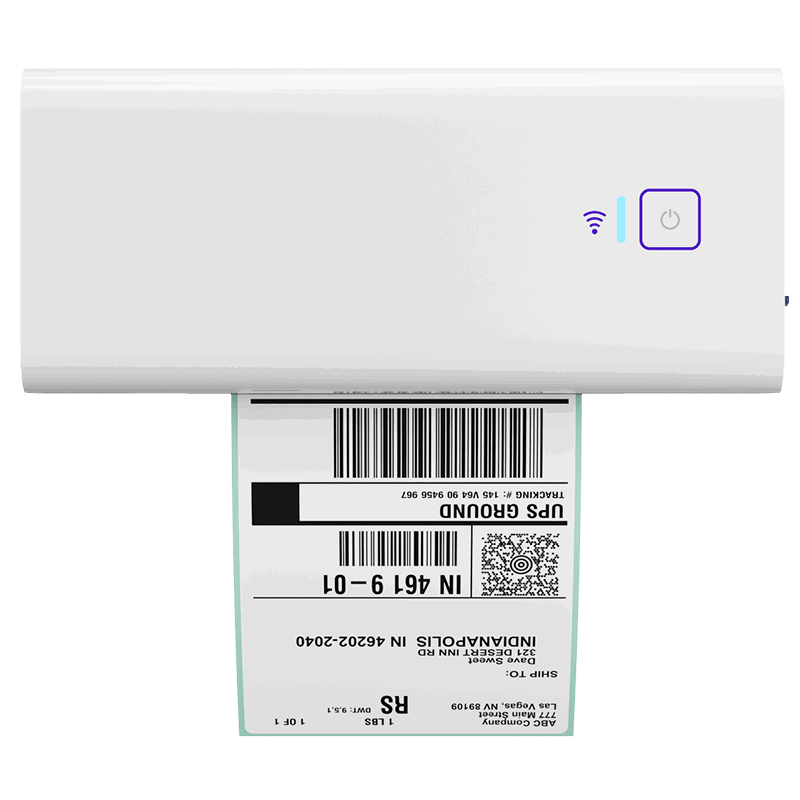
Once your packaging is dialed in, the next step is keeping fulfillment simple and consistent. The Rollo Wireless Printer helps you print shipping labels quickly, so your workflow feels smoother from packing table to handoff.
What proof should you keep to defend a claim?

If something goes wrong, clear evidence matters as much as the coverage choice. Before handoff, keep simple proof of item condition, packaging quality, value, and shipment tender. Then a claim starts with documentation instead of gaps.
Photos to capture before shipment
Take a few clear photos before packing, during packing, and after the label is applied. It does not need to be elaborate. It needs to be consistent.
Value and ownership records that help
Keep the order record or invoice showing what the item was worth and what shipped. If a claim is challenged, those records support your side.
Handoff proof to keep
A drop-off receipt, scan confirmation, or shipment history shows the package was tendered and moved through the network.
What it costs to skip the comparison step
Picture a seller shipping 40 devices a month at an average value of $300. Skip the pre-label comparison, and a few predictable leaks add up.
A service that did not fit the battery setup forces a reship. A declared-value claim is denied because the package showed delivered. Coverage gets bought at the wrong tier.
One denied $400 claim plus two re-ships can erase a week of margin—none of it visible on the label price. The leak is not the postage. It is the decisions made around the label, repeated across every order.
How do you compare carrier cost, restrictions, and risk before you buy the label?

The lowest label price is not always the smartest choice for electronics. A better comparison weighs service eligibility, battery fit, delivery speed, likely fees, coverage options, and signature needs together. That is how you use electronics shipping insurance smarter: by comparing the full decision, not just the price.
A simple pre-purchase comparison
| What to compare | Why it matters |
|---|---|
| Service eligibility | Avoids an option that does not fit the shipment |
| Battery fit | Prevents avoidable friction, rejections, or returns |
| Coverage type (insurance vs. declared value) | Decides whether a claim is paid or denied |
| Signature need | Adds proof where delivery disputes matter |
| Likely extra fees | Improves cost visibility before checkout |
Here is where the decision gets easier to make in one place. Comparing declared value, service fit, battery rules, fees, and signature needs across separate carrier tabs is exactly where mistakes creep in. A multi-carrier platform puts that comparison on one screen before the label prints.
Insurance protects the shipment. Rollo Ship helps you make the shipping decision correctly before you buy the label, including whether to add coverage.
Rollo Ship is a free multi-carrier shipping platform that compares real-time rates and service options across USPS, UPS®, FedEx, Canada Post, and Purolator for sellers in the U.S. and Canada. Because all five carriers sit in one free account, you can weigh a device’s real risk, coverage, service fit, signature, and total cost, without bouncing between portals. Rollo Ship’s AI-powered rate selection groups similar orders, applies your shipping rules, and recommends the cheapest service before the label is printed.
FedEx access on a free multi-carrier account is the part most “free” shipping tools cannot match, and it matters for electronics: more carriers compared means fewer forced service mismatches on high-value, battery-powered devices. Rollo is not a carrier; postage is always paid directly to the carrier, so you are comparing real carrier services, not a markup. Rollo Ship is rated 4.8★ on Capterra and is trusted by 500,000+ sellers across the U.S. and Canada.
If you want to weigh cost, restrictions, and shipment fit without juggling tabs, you can compare carrier rates and services before you commit to a label.
How do you insure high-value electronics for secure shipping?
For high-value electronics, secure shipping means matching real coverage to the device, not relying on the included $100. USPS builds insurance into the service. UPS®, FedEx, and Purolator use declared value, a liability cap. Canada Post uses liability coverage. The safe move is deciding coverage at label time, alongside service fit and signature.
Shipping insurance for high-value items
Secure shipping of high-value items comes down to three moves: set coverage above the included $100, add a tracking barcode, and require a signature where the value warrants it. The bigger the replacement cost, the more each of these matters.
Which carriers include coverage, and which is real insurance?
All five include a baseline, but only USPS sells true insurance. UPS®, FedEx, and Purolator provide declared value, a cap that pays only if the carrier is proven at fault. For a resellable $400 device, that gap is the whole risk. Above the included amount, you declare a higher value or add coverage.
Add shipping insurance in Rollo Ship
In Rollo Ship, you can add shipping insurance at label time. It is available for UPS® and Canada Post shipments and for FedEx when you connect your FedEx account. The coverage decision then happens in the same place you compare rates and services, before the label prints, not after a claim is denied. For sellers moving volume across stores, that same account also tracks multi-item electronics orders and stock in USD or CAD.
Why tracking is key for expensive shipments
Tracking is not optional for expensive electronics. USPS included insurance only applies to packages with a tracking barcode. A tracked shipment also builds the delivery record that supports a claim if a package is lost or disputed. For high-value orders, tracking plus signature turns “it never arrived” into a documented event.
What changes for international electronics shipments and return labels?

International shipments and return labels add complications, because routes, handoffs, documentation, and battery handling all change. The safe move is to re-check service fit, coverage logic, and setup instead of assuming the original outbound plan still works. Rollo Ship’s cross-border and customs workflow covers paperless customs, HS codes, and U.S.↔Canada routing in one place.
Why cross-border shipments add complexity
More handoffs and documentation mean more places for confusion or delay. That is one reason international electronics shipments deserve a slower, careful review.
Why buyer returns can create new battery issues
A return may arrive in different packaging, with a different label flow and less control over preparation. That can create new risk even when the original order shipped cleanly.
When to recheck service and coverage choices
If the route, destination, or direction changes, re-check the setup. A reused assumption is not always a safe one.
Who this guide is not for
This is not for every seller, and that is fine.
- If you ship low-value accessories that already fit inside the included $100 coverage, most of this is optional.
- If you only ever ship with one carrier and never compare services, a multi-carrier workflow adds little.
- If you drop ship and never touch the package, packaging and proof steps belong to your supplier, not you.
For everyone moving high-value, battery-powered electronics across the U.S. and Canada, the pre-label decision is where margin is won or lost.
Your pre-label checklist for expensive electronics
Using electronics shipping insurance smarter means treating it as one input into a better decision, not the whole decision. Separate the declared value from insurance, confirm the battery service fit, package the device well, keep proof, and compare services before checkout. That creates fewer surprises and better label choices.
The five-question recap
Before you buy the label, ask:
- How risky is this device to lose, damage, or dispute?
- Am I confusing declared value with insurance?
- Does the battery setup affect service fit?
- Is the packaging strong enough to protect the item and support a claim?
- Have I compared the real cost and risk, not just the base rate?
- Is the shipment tracked, with a signature where the value warrants it?
Compare shipping options before you commit
Expensive electronics deserve more than a quick label decision. Rollo Ship helps you compare rates and choose a shipping option that better fits the shipment, so you can check cost, service fit, and risk before checkout.

Final words
Electronics shipping insurance works best as one input into a smarter pre-label decision, not a substitute for one. Once you are checking service fit, battery rules, packaging, proof, and total risk together, the next step is doing all of that comparison in one place instead of across carrier portals.
That is the structural job Rollo Ship is built for: one free account comparing USPS, UPS®, FedEx, Canada Post, and Purolator across the U.S. and Canada, with AI-powered rate selection that recommends the cheapest service before the label prints. The first 200 labels are free, then a small per-label fee starts at 5¢ and drops to as low as 1¢ through Rollo Rewards.
Try Rollo Ship free and compare cost, service fit, and coverage on one screen before your next high-value label.
Follow Rollo on:
Frequently Asked Questions About Electronics Shipping Insurance
📌 Q: What’s the best way to ship electronics?
💭 A: The best way to ship electronics is to match the setup to the device’s risk. Use rigid double-boxing with no internal movement, confirm lithium battery rules before choosing a service, and add a tracking barcode. Compare carrier coverage before buying the label. For high-value devices, add signature confirmation and coverage above the included $100.
📌 Q: Do I need shipping insurance for electronics on every order?
💭 A: Not always. USPS Priority Mail, Priority Mail Express, and Ground Advantage already include up to $100 of insurance, so a sub-$100 device may be covered without adding anything. For items worth more, easy to resell, or hard to replace, added coverage usually costs far less than absorbing a loss. Match the protection to the shipment’s real risk, not a fixed habit.
📌 Q: What is the difference between declared value and shipping insurance?
💭 A: Shipping insurance reimburses loss or damage up to a covered amount. Declared value is a liability cap that only pays if the carrier is found at fault, and it usually excludes packages marked delivered. USPS sells true insurance; UPS® and FedEx use declared value. For a $400 laptop, that distinction decides whether a claim is paid or denied, so confirm which one your label includes.
📌 Q: How much does shipping insurance cost for electronics?
💭 A: USPS includes the first $100 free on most services, then charges by declared value, with added coverage rising up to a $5,000 limit. Canada Post includes up to CAN$100 and sells more in $100 increments. Third-party coverage is often priced per $100 of value. Confirm the exact premium at label time, then weigh it against the cost of a denied claim.
📌 Q: Are there insurance options available for mailing expensive items?
💭 A: Yes. USPS includes up to $100 of insurance and sells more up to $5,000. UPS®, FedEx, and Purolator use declared value, a liability cap you raise by declaring a higher amount. Canada Post includes up to CAN$100 and sells more. In Rollo Ship, you can add shipping insurance to UPS® and Canada Post shipments and to FedEx when you connect your account.
📌 Q: Does Canada Post include insurance, and how much?
💭 A: Most Canada Post parcel services include up to CAN$100 of liability coverage against loss or damage. You can buy additional coverage in $100 increments, up to $5,000 for many domestic shipments and up to $1,000 for U.S. and international, and a signature becomes mandatory once added coverage reaches $200. Small Packet services are generally excluded.
📌 Q: How do lithium battery rules change which shipping service I can use?
💭 A: Battery setup decides which services and routes are allowed. As of January 1, 2026, IATA rules require lithium-ion batteries packed in or with a device to move by air at a 30% state of charge or less, not just loose batteries. That can push a shipment toward ground or change documentation, so confirm battery details before choosing a service or coverage.
📌 Q: What documents do I need to file a shipping insurance claim?
💭 A: Most carriers want proof of value, proof of the coverage purchased, and evidence of loss or damage. Keep the order or invoice, the tracking and mailing record, and clear photos of the item and packaging taken before and after packing. USPS generally requires claims within 60 days, and damage claims may require the original packaging for inspection.


