
TL;DR: The cheapest way to ship heavy items depends less on weight than most sellers expect. Carriers bill the greater of actual and dimensional weight, then add size-triggered surcharges on top of that. Every carrier sets its own length, girth, and weight thresholds, so the same parcel can be priced as standard at one and oversized at another. Measuring girth correctly and comparing carriers before printing keeps avoidable fees off the invoice.
Heavy and Oversized Shipping: At a Glance
- Carriers bill the greater of actual weight and dimensional weight.
- Girth is 2 × (width + height), measured at the widest points.
- Length-plus-girth limits trigger surcharges independently of weight.
- Additional handling can apply to packaging type, not just size.
- Oversize thresholds differ by carrier, so one parcel gets five different answers.
- Above carrier maximums, freight replaces parcel shipping entirely.
Table of Contents
Finding the cheapest way to ship heavy items is harder than it looks. The scale gives you one number. The invoice gives you another. This is written for sellers moving heavy, bulky, or irregular goods by parcel across the US and Canada—marine hardware, industrial parts, auction lots, and marketplace one-offs.
A 40-pound crate of stainless fittings and a 40-pound box of packing foam weigh the same. They rarely cost the same to ship. Shape, packaging, and destination all move the price. Here is how carriers actually build that number.
What makes the cheapest way to ship heavy items so hard to find?

Heavy parcels get priced on two clocks at once. Carriers bill the greater of actual weight and dimensional weight. On top of that sit size-triggered fees that ignore weight entirely. A 40-pound box and a 40-pound crate can cost very different amounts. Shape decides as much as mass.
Dimensional weight, also called volumetric weight, converts a parcel’s volume into a billable figure. Divisors differ by carrier and service. UPS® divides cubic inches by 139 in both the US and Canada, rising to 115 for Canadian domestic air packages. USPS uses 166 above one cubic foot, as set out in its parcel size and fee standards.
If the dimensional figure exceeds the actual weight, the carrier bills the larger number. Our dimensional weight vs actual weight guide covers the math in full.

The second clock is size. Carriers publish maximum dimensions per service. Cross one of those lines and a surcharge attaches regardless of what the scale said. This is where heavy-item sellers lose margin quietly.
Weight tells you part of the story. The rest lives in the tape measure.
When does a package officially become “oversized”?

Oversized is not a feeling. Each carrier publishes its own length limit, length-plus-girth limit, and weight ceiling. Cross one and a surcharge may attach; cross the outer limit and the parcel may be refused at intake. Thresholds differ by carrier, so one parcel can be standard with one carrier and oversized with another.
Shipping oversized items has no shared industry standard. Each carrier draws its own lines and uses different names for its fees. The real question is not “Is this oversized?” but “Oversized according to whom?”
Hard limits: where each carrier stops
| Carrier | Max weight | Max length | Max length + girth |
|---|---|---|---|
| USPS | 70 lb | No separate limit | 108 in; 130 in Ground Advantage |
| UPS® | 150 lb | 108 in | 165 in |
| FedEx | 150 lb | 108 in | 165 in |
| Canada Post | 66 lb (30 kg) | 6 ft 7 in (2 m) | 9 ft 10 in (3 m) |
| Purolator | 150 lb (68 kg) | 108 in (274 cm) | 165 in girth (419 cm)—girth only, not length + girth |
Purolator publishes its outer limit as girth alone, not length plus girth. The two are not interchangeable, so a Purolator quote is checked against a different measurement than a UPS® or FedEx one.
Past these figures, the parcel is refused, returned, or reclassified as freight.
Where the first surcharge attaches
| Carrier | Called | Triggers at | Min. billable weight |
|---|---|---|---|
| USPS | Oversized Price | Over 108 in L+G | None applied |
| UPS® | Additional Handling | Over 50 lb · 105 in L+G · 48 in length · 30 in second side · 10,368 cu in | 40 lb on size triggers |
| UPS® | Large Package | Over 130 in L+G · 96 in length · 110 lb · 17,280 cu in | 90 lb |
| FedEx | Oversize Charge | Over 96 in length or 130 in L+G | 90 lb |
| Canada Post | Oversize | Any dimension over 39.4 in or second side over 30 in | None applied |
| Purolator | Oversized | Over 50 lb or longest side over 48 in | None published |
| Purolator | Large Package | Girth over 130 in | None published |
Verified against the UPS® US Rate and Service Guide effective July 7, 2026, the UPS® Canada Rate & Service Guide dated May 31, 2026, USPS guidance updated July 11, 2026, and Canada Post guidance updated October 7, 2025. FedEx and Purolator publish these limits without a revision date. Carriers revise limits annually, so confirming the current rules before quoting a shipment is worth the minute it takes.
Packaging can trigger a surcharge on its own
Packaging alone can trigger a surcharge, independent of weight and size. Four of the five carriers, UPS®, FedEx, Canada Post, and Purolator, publish container-based triggers: anything not fully encased in corrugated cardboard, anything shrink-wrapped or banded, and cylindrical items like drums, pails, and tires. A small, light parcel can be surcharged on its container alone.
| Carrier | Packaging or item characteristics that can trigger a surcharge |
|---|---|
| UPS® | Not fully encased in corrugated cardboard; canvas, leather, metal, wood, or plastic outers; shrink or stretch wrap; metal, plastic, or cloth banding; wheels, casters, handles, or straps; cylindrical items including barrels, drums, mailing tubes, pails, and tires |
| FedEx | Not fully encased in an outer container; metal or wood outers; length over 48 inches |
| Canada Post | Not fully encased; excessively loose packaging; irregular, cylindrical, or round items such as tires and carpets; contents protruding past the packaging |
| Purolator | Unboxed or high-risk items, including pails, crates, drums, tires, and shrink-wrapped goods |
| USPS | Nonstandard characteristic fee |
Four of the five carriers specifically name cylindrical items. A drum or tire can trigger a surcharge because of its packaging or shape, even when it is relatively small and light.
What the tables don’t show
Surcharges do not stack the way sellers expect. UPS® assesses only one Additional Handling charge even when a package meets several criteria, taking them in a set order: weight, length plus girth, length, width, cubic size, packaging. It also drops Additional Handling entirely when a Large Package Surcharge applies. Purolator charges only the highest-value special handling surcharge per piece. Canada Post never combines its Oversize and Unpackaged Items surcharges — pay one and the other is waived.
Four of the five carriers cap the stack in some form. Restructuring a parcel to dodge a second fee often saves nothing.
Minimum billable weight can matter more than the surcharge. A UPS® Large Package bills at a minimum of 90 pounds regardless of what it actually weighs. A 55-pound parcel that trips the threshold gets billed as 90 pounds, plus the surcharge. FedEx applies the same 90-pound floor on oversize.
Weight carries its own obligations. UPS® requires a heavy package sticker on any parcel over 70 lb, with the weight written on it. Canada Post requires an overweight parcels sticker above 50 lb (22.7 kg). Neither is a fee, and both are easy to overlook.
How to ship heavy items without triggering avoidable fees

Most avoidable cost sits in three places. Measurement error, packaging that fails the carrier’s rigidity test, and quoting a single carrier without checking the others. Measuring girth correctly takes under a minute. Rigid corrugated packaging keeps a parcel out of handling surcharges. Comparing carriers happens before the label, not after the invoice.
Packaging-based fees are the ones sellers hit without understanding why. UPS® lists them in detail in its US rate guide: anything not fully encased in corrugated cardboard, anything wrapped in shrink or stretch film, anything bound with banding, and any package with wheels, casters, handles or straps. Cylindrical items are named specifically — barrels, drums, mailing tubes, pails, tires.
Purolator applies Additional Handling on similar grounds, naming pails, crates and unboxed items. The trigger at both carriers is the container, not the contents.

USPS approaches the problem differently. It charges a nonstandard fee on parcels over 22 inches long, a higher one above 30 inches, and a cubic fee above 2 cubic feet. Weight plays no part in either calculation.
FedEx recommends a different lever entirely: splitting a shipment into several boxes rather than sending one oversized parcel. Paying standard rates on three boxes sometimes beats one surcharged box. Sometimes it does not. The comparison is worth running.
Right-sizing is the other lever in large package shipping, and cubic size is the reason. A UPS® parcel over 10,368 cubic inches triggers Additional Handling on volume alone. Over 17,280 cubic inches it becomes a Large Package. A rigid box two inches smaller on each side can drop a parcel below both. The billable weight calculator shows where that crossover sits.
Packing tighter costs nothing. It just takes a rethink of the box.
How to measure girth on an awkward item

Package girth is 2 × (width + height), measured at the widest points. On an irregular item, measure the smallest box the item fits inside, not the item itself. A propeller, a bracket, or a framed panel is priced by its packed footprint. Carriers measure the parcel, not the contents.
Both USPS and Canada Post state the rule explicitly. Canada Post says measurements on odd-shaped non-rectangular items are taken at the widest points. USPS defines girth as the distance around the thickest part of the non-length sides.
Cylinders follow a different rule. For a tube, USPS treats girth as the circumference and applies a 0.785 adjustment factor to the volume. Canada Post applies a surcharge to cylindrical mailing tubes outright, and UPS® treats tubes as an Additional Handling trigger regardless of size.
FedEx publishes its girth formula as L + 2W + 2H, the same calculation stated differently. The result is identical either way.
FedEx also states the irregular-shape rule outright. For an oddly shaped package, or one with hollow or open spaces, it instructs shippers to assume the item is enclosed in a six-sided rectangular container and measure that. Three carriers describe the same method in three different ways.
Round up, not down. UPS® and USPS both round to the next whole inch. A quarter-inch under a threshold is not a threshold you cleared.
What to check before you quote a heavy parcel

| Step | What you measure | Why it changes the price |
|---|---|---|
| 1 | Actual weight of the packed parcel | Sets the floor the carrier bills against |
| 2 | Longest side | Compared against the carrier’s maximum length |
| 3 | Girth: 2 × (width + height) | Feeds the length-plus-girth calculation |
| 4 | Length + girth combined | Triggers oversize surcharges independently of weight |
| 5 | Packaging type and rigidity | Can trigger additional handling on its own |
| 6 | Destination zone | Multiplies every figure above |
Use a calibrated scale for step one. Bathroom scales drift, and a heavy parcel amplifies the error.
Steps three and four are where the arithmetic goes wrong most often. Two free calculators handle it:
- Dimensional weight calculator—applies the right divisor per carrier and service.
- Billable weight calculator—shows which number the carrier will actually bill, actual or dimensional.
Run both before the box is taped. Re-measuring after the label prints costs more than the minute it saves.
Comparing carriers on the same heavy parcel
The same heavy parcel prices differ at every carrier because thresholds, zone maps, and surcharge triggers all differ. A 60-pound crate can be standard at one carrier, oversized at the next, and out-of-spec at a third. Running one set of dimensions against all five before printing turns a guess into a comparison.

The cheapest way to ship large heavy items is carrier-dependent
The same box rarely prices the same across carriers. Thresholds differ, zone maps differ, and surcharge triggers differ. One parcel can be standard at one carrier, oversized at the next, and refused at a third. Checking several quotes on one screen turns a guess into a comparison before any money is committed.
Take a 60-pound crate of marine fittings measuring 50 × 20 × 20 inches. Girth is 2 × (20 + 20) = 80 inches. Length plus girth comes to 130 inches. Cubic size is 20,000 cubic inches. One box, five different answers:
| Carrier | How this parcel classifies |
|---|---|
| USPS | 130 in sits at the Ground Advantage ceiling. Oversized price applies. Still mailable at 60 lb. |
| UPS® | Large Package—not on length or girth, but on cubic size, which exceeds 17,280 cu in. Minimum billable weight becomes 90 lb. |
| FedEx | No oversize charge, 50 in is under the 96 in trigger, and 130 in L+G sits on the threshold rather than past it. Additional handling applies on the 48 in length trigger. |
| Canada Post | 50 in exceeds the 39.4 in oversize trigger. 130 in L+G also exceeds the 3 m maximum, making it out-of-spec. |
| Purolator | 60 lb exceeds 50 lb and the 50 in side exceeds 48 in. Oversized applies. Girth 80 in stays under Large Package. |
Habit is the expensive part. Most sellers quote the carrier they already have open. On a standard parcel that costs little. On a heavy or irregular one, it can be the whole margin.
The comparison takes the same thirty seconds whether the answer changes or not.
Shipping heavy items within Canada and cross-border

Canadian sellers face a separate threshold set. The cheapest way to ship heavy items in Canada depends on limits that sit lower than their US equivalents. Canada Post and Purolator publish their own size and weight ceilings. Cross-border parcels add customs documentation on top. A parcel that ships cleanly within Canada may need a different service heading south.
Canada Post caps domestic parcels at 66 lb (30 kg), with maximum dimensions of 6 ft 7 in (2 m) on any side and 9 ft 10 in (3 m) length plus girth. Its oversize surcharge triggers early by US standards: any dimension over 39.4 inches (1 m), or a second-longest side over 30 inches (76 cm).
That second trigger catches parcels US sellers would consider ordinary. A box 40 inches long is oversize at Canada Post and unremarkable at USPS.
Flat rate boxes are a domestic tool only. Canada Post flat rate boxes ship anywhere in Canada with postage included, capped at 5 kg, with the largest box measuring 40.3 × 29.8 × 18.7 cm. Additional liability, coverage and signature options cannot be added. For heavy goods, the 5 kg ceiling rules them out quickly.
Parcels heading to the US carry the same 30 kg weight ceiling. Packets are separate and much smaller: 1 kg to the USA, 2 kg international, 500 g for a Light Packet.
UPS® applies nearly identical thresholds on both sides of the border. Its Canadian rate guide sets Additional Handling at 50 lb (22 kg) for domestic and export, 105 inches length plus girth, 48 inches length, and 30 inches on the second-longest side. Large Package and Over Maximum Limits match the US figures exactly.
Purolator’s tiers sit differently again. Oversized starts at 50 lb or a longest side over 48 inches. Large Package applies where girth runs between 130 and 165 inches. Above 150 lb, girth over 165 inches, or a longest side over 108 inches, Purolator will not carry the item.
Canada Post also charges an Unpackaged Items Surcharge separately from oversize. It applies to anything not fully encased in an outer container, anything loosely packaged, and irregular or round items such as tires and carpets. Contents protruding past the packaging count too. Only one of the two surcharges is charged, never both.
FedEx ships within Canada and between Canada and the US. Its Canadian parcel limits mirror the US set at 150 lb and 165 inches length plus girth, with one regional exception worth knowing.
In Newfoundland and Labrador, Nunavut, Yukon and the Northwest Territories, the FedEx maximum drops to 70 lb (32 kg). A parcel that ships normally to Toronto may be over the limit to Whitehorse. Sellers shipping heavy goods north should check the destination before quoting.
Cross-border heavy parcels carry a second cost layer. Duties, taxes, and brokerage sit on top of the shipping rate. Those charges scale with declared value, not with weight.
Domestic and cross-border are different problems. Price them separately.
When parcel shipping stops making sense

Past a certain weight and dimension, parcel networks stop being the cheaper option. Freight and less-than-truckload (LTL) shipping take over. Three of the five carriers draw that line at the same number.
FedEx classifies a shipment as freight above 150 lb or beyond 165 inches length plus girth. UPS® treats anything over 150 lb as freight. Purolator refuses parcels above 150 lb, girth over 165 inches, or a longest side over 108 inches. USPS sets a much lower ceiling: nothing over 70 lb or 130 inches length plus girth enters its network at all.
Above 150 pounds, no parcel network in this set will carry the item. Two of the five stop well before that.
Parcel surcharges escalate steeply near the upper limits. Stack two or three on one shipment, and freight often wins on price. It usually wins on damage risk too.
This article stays on the parcel side of that line. For the freight transition, see our guide to shipping heavy building materials.
What happens without a system like this

Heavy-item sellers rarely lose money in one visible place. It leaks.
An auction house re-measures every consignment because no two lots are alike. A parts supplier re-measures the same recurring SKU each time, because nobody wrote the dimensions down.
Another quotes the carrier they logged into first on a parcel where a second quote would have cleared a threshold. A third discovers additional handling on the monthly invoice, weeks after the item shipped and the price was already set.
None of those feel like errors in the moment. Each one is small. On a heavy or irregular catalogue they repeat on every order, and the margin absorbs them silently.
The pattern is the same across all three. The cost becomes visible after the decision instead of before it.
Where a five-carrier view changes the answer

Correct measurement answers half the question. The other half is seeing what all five carriers would charge for the same box before committing. That is a workflow problem, not a math problem — the thresholds are published and the rates are available, but most sellers have no single screen showing them side by side.
That comparison is a workflow problem, not a math problem. The thresholds are published. The rates are available. What is missing for most sellers is a single screen showing all of them against the same set of dimensions.
Rollo Ship is a free multi-carrier shipping platform covering USPS, UPS®, FedEx, Canada Post, and Purolator from a single account. UPS® and FedEx are accessed through a connected account. Rollo is not a carrier. Postage is paid directly to the carrier, and Rollo’s per-label fee is separate.
For heavy and irregular parcels, that carrier spread is where the value sits. The
cheapest way to ship big packages is rarely the same carrier twice, because
thresholds diverge most at the upper end.
FedEx access on a free plan matters specifically here. On heavy parcels, FedEx and UPS® thresholds diverge most at the top of the range, the 96 in versus 105 in triggers in the tables above are a live example, so a comparison set missing FedEx is missing the carrier that most often clears the line. A parcel a few inches over one carrier’s line may sit comfortably under another’s.
On Rollo Ship, dimensional weight, billable weight, and the applicable oversize classification are shown against all five carriers on the same quote screen before the label is generated—so the threshold a parcel crosses is visible at quote time rather than on the monthly invoice.
Rollo Ship’s AI-powered rate selection groups similar orders, applies the seller’s shipping rules, and recommends the cheapest qualifying service before the label is printed. The shipping calculator runs the same comparison for a one-off parcel.
Run your next 50-inch crate against all five carriers before you print. Free to start, no monthly subscription; the first 200 labels are fee-free.
Canadian sellers get the same five-carrier view from a Canadian origin. Canada Post and Purolator sit alongside the US carriers on the Rollo Canada page. Cross-border shipments run from the same account.
Rollo Ship is free to start, with no monthly subscription. The first 200 labels are fee-free. The per-label fee starts at 5¢ and drops to as low as 1¢ through Rollo Rewards.
Rollo Ship holds a 4.8★ rating on Capterra, based on 23 verified Capterra reviews. Separately, more than 500,000 sellers across the US and Canada ship on Rollo.
Who This Is NOT For
This guide is not for shipments that belong on a pallet. If the item exceeds carrier parcel maximums, freight is the right lane, and this article stops being useful.
It is not for sellers who need freight class, bill of lading generation, or LTL quoting. Rollo Ship does not provide those.
It is not a packaging-supply guide or a damage-claims walkthrough. Both matter for heavy goods, and both sit outside this article.
And it adds little for sellers shipping bulky items that stay inside one carrier’s standard size range. Multi-carrier comparison pays off where thresholds diverge. Below those lines, the spread narrows.
Print the Label Without
Slowing Down the Workflow
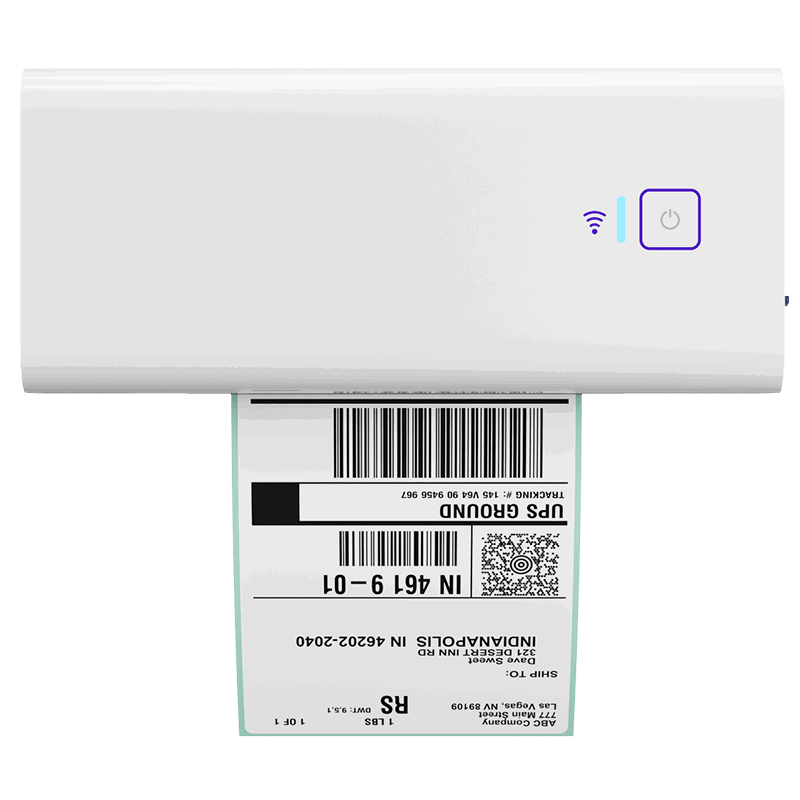
Once you know which shipping path makes the most sense, the next step should feel simple. Rollo’s Wireless Printer helps you print crisp 4×6 labels quickly, so your packing station keeps moving without adding extra friction to the order.
How to price a heavy parcel before you print
Heavy and irregular parcels reward the seller who checks before printing rather than after invoicing. The thresholds are knowable. The comparison takes seconds once the dimensions are in hand.
Rollo Ship puts USPS, UPS®, FedEx, Canada Post, and Purolator on one screen, with dimensional and billable weight visible before you commit. Free to start, no monthly subscription; the first 200 labels are fee-free.
Join Rollo Ship free. Enter the dimensions once and see which of the five carriers prices your parcel as standard, before the label prints.
Price
Heavy Parcels
Before
You Print
If you are tired of bouncing between tabs, second-guessing label choices, and dealing with surprise-fee fallout later, Rollo Ship gives you one place to compare rates, manage label flow, and make clearer shipping decisions before you buy.

Follow Rollo on:
Frequently Asked Questions About Heavy and Oversized Shipping
📌 Q: Are there specific carriers recommended for shipping big items?
💭 A: No single carrier wins on every heavy parcel. A 50-inch box is oversized at Purolator and Canada Post and clears FedEx’s oversize threshold while still drawing additional handling. Each carrier publishes its own length, girth, weight, and volume thresholds, and each applies surcharges at different points. Comparing the same dimensions across carriers before printing is more reliable than defaulting to one.
📌 Q: What is the cheapest way to ship heavy items?
💭 A: Two levers move the cost most: reduce billable weight, then avoid size-triggered surcharges. Right-size the box so dimensional weight does not exceed actual weight. Keep length, girth, and cubic size under the carrier’s thresholds where the item allows. Then compare quotes across carriers rather than accepting the first rate.
📌 Q: How much does it cost to ship a 50- or 100-pound package?
💭 A: Cost depends on more than the scale reading. At 50 pounds, UPS® and Purolator additional handling thresholds are already in play, and Canada Post is close to its 66 lb domestic ceiling. At 100 pounds, USPS is out entirely at 70 lb, and a UPS® Large Package classification would bill at a 90 lb minimum. The same weight prices differently at each carrier, so a quote comparison is more reliable than a per-pound estimate.
📌 Q: Is it cheaper to ship one heavy box or several smaller ones?
💭 A: Sometimes. FedEx explicitly recommends splitting an oversized shipment across multiple boxes rather than sending one surcharged parcel. Three boxes at standard rates can beat one box carrying an oversize charge and a 90 lb minimum billable weight. It does not always win, because each box carries its own base rate and zone charge. Price both configurations before deciding.
📌 Q: How do I properly weigh and measure an oversized shipment?
💭 A: Weigh the fully packed parcel on a calibrated scale. Measure length as the longest side, then calculate girth as 2 × (width + height) at the widest points. Add length and girth together for the combined figure carriers use. Check the second-longest side separately, since UPS® and Canada Post both trigger at 30 inches.
📌 Q: When should I use freight instead of parcel shipping?
💭 A: Freight takes over above 150 pounds, 108 inches of length, or 165 inches of length plus girth. UPS® will not accept packages past those limits, FedEx reclassifies them as freight, and Purolator refuses them. USPS stops much earlier, at 70 pounds or 130 inches length plus girth.
📌 Q: Do I need a special label on a heavy parcel?
💭 A: Two carriers require one. UPS® asks for a heavy package sticker on any parcel over 70 pounds, with the weight written on it. Canada Post requires an overweight parcels sticker above 50 pounds. Neither is a fee, but both are easy to overlook, and both help the parcel get handled correctly.
📌 Q: What is minimum billable weight on an oversized package?
💭 A: Some surcharges reset the weight a parcel is billed at. A UPS® Large Package bills at a minimum of 90 pounds regardless of actual weight, and FedEx applies the same floor on oversize. UPS® size-based Additional Handling carries a 40-pound minimum. A light but bulky parcel can be billed at several times its scale weight.
📌 Q: Can I compare oversize surcharges across carriers before printing a label?
💭 A: Yes. Rollo Ship is a free multi-carrier shipping platform showing USPS, UPS®, FedEx, Canada Post, and Purolator rates from one account, with dimensional and billable weight visible at quote time. UPS® and FedEx are accessed through a connected account. Rollo is not a carrier; postage is paid directly to the carrier.


