
TL;DR: Apparel shipping costs are driven by more than postage—they change with returns, package dimensions, and whether you ship in a poly mailer or a box. If your margins feel unpredictable, the key is to compare packaging, carrier, and return-label decisions before you buy the label, not after costs stack up.
You sell a lightweight shirt, print the label, and wonder why the cost feels too high again. Apparel shipping costs get confusing fast when returns, package size, and small label decisions start pulling against already tight margins.
That is why light orders can still get pricey. A soft item does not always mean a low final shipping cost, especially when a box adds space, a return changes the math, or the default label option is not the smartest one.
The goal is not to overthink every shipment. It is to make clearer choices before small costs turn into bigger surprises.
Article Highlights
Why do light apparel orders get pricey?

Light apparel orders get pricey when the final shipping cost reflects more than the garment’s weight. Package size, packaging choice, service selection, and return risk can all raise what looks like a simple label purchase. That is why a lightweight order can still put pressure on already tight margins.
Why light weight does not always mean low shipping cost
A light shirt or pair of leggings may look cheap to ship on paper. But shipping cost is rarely about the item alone.
The package matters. The service matters. The route matters. And the way you handle returns matters too.
That is why two similar-looking orders can land at very different costs. One fits neatly into a compact mailer and moves through a basic service. The other goes into a roomy box, gets upgraded in speed, and suddenly stops feeling like a “light” shipment at all.
The difference between a quoted label and the real cost outcome
A quoted rate is useful, but it is still only one part of the decision. It tells you what the label may cost at that moment, not whether the shipment was packed the smartest way or whether that service choice makes sense for the order.
For apparel sellers, that gap matters. A cheap-looking label can still be the wrong move if the package is larger than it needs to be, the order value is tight, or the return is likely to come back and add another shipping event.
The most common reasons clothing orders feel overpriced
Most expensive light-order moments come from a few repeat issues:
- using a box when a poly mailer would work
- choosing a faster service than the order really needs
- treating every order the same, even when item type changes
- ignoring how returns affect the full shipping margin math
- relying on a default label option without comparing alternatives
If your shipping costs feel unpredictable, it is usually because the workflow is making hidden choices for you.
How does DIM weight make lightweight clothing more expensive?

DIM weight makes lightweight clothing more expensive when the package takes up more space than the item itself suggests. A soft garment may weigh very little, but if it ships in a larger box, the billed cost can rise fast. For apparel sellers, that often explains the most frustrating label surprises.
Actual weight vs billed weight
| Term | What it means | Why it matters |
|---|---|---|
| Actual weight | What the order weighs on a scale | This is what many sellers expect to drive the cost |
| Billed weight | What the carrier uses to price the shipment | This can be higher when the package is bulkier than the item seems |
Those two numbers are not always the same. That is what catches clothing brands off guard. A hoodie may not feel heavy in your hand, but the box around it may still push the shipment into a more expensive outcome.
Why boxes create more DIM risk than many sellers expect
Boxes can be useful, but they also create more DIM risk for a few simple reasons:
- They add more volume around soft goods.
- They leave more empty space if the item could have been compressed.
- They can turn a light order into a bulkier shipment.
- They often raise cost without improving the shipment enough to justify it.
Soft goods usually compress well. A shirt, dress, or leggings set can often fit into a smaller, flatter package than many sellers first assume. That is why packaging choice is not a small detail. It is one of the biggest cost-control decisions in the apparel shipping workflow.
The common DIM trap with hoodies, bundles, and branded packaging
DIM issues tend to show up faster with orders like these:
- Hoodies and heavier knits: soft, but bulkier than basic tees
- Bundles: multiple items add volume quickly, even when weight stays moderate
- Gift-ready orders: presentation can lead to larger packaging than the item really needs
- Branded boxes: nice unboxing experience, but not always worth the added shipping cost
A branded package may still be worth it in some cases. But if it adds size without adding enough value, the brand may be paying more for presentation than the margin can comfortably support.
This is also where pre-label visibility starts to matter. If small packaging changes can change the label outcome, you want to catch that before you print, not after—especially if you still need a clearer way to calculate billable weight for soft-goods orders.
Poly mailer or box for clothing: which keeps costs lower?

For many standard clothing orders, a poly mailer keeps costs lower because it is lighter, more flexible, and less likely to inflate billed shipping cost. A box can still make sense for structure, presentation, or protection, but using one by default often makes a light order more expensive than it needs to be. Packaging is one of the easiest cost traps to control once you stop treating every order the same.
When a poly mailer is usually the better call
A poly mailer is often the better choice for standard soft goods because it keeps the shipment simpler and more compact.
A poly mailer usually works well when the order is:
- lightweight and flexible
- easy to fold without damage
- unlikely to need rigid protection
- better served by a faster packing workflow
- more margin-sensitive, where extra package size can hurt
For many everyday items like tees, tanks, leggings, and similar apparel, a mailer keeps the package small and the decision straightforward.
When a box still earns its cost
A box is not automatically the wrong choice. It may be worth the added cost when it is solving a real shipping or brand need.
A box may make more sense when:
- the item needs more structure or protection
- the fabric wrinkles easily
- the order includes multiple bulky items
- the presentation is part of the customer experience
- the package is doing a job a mailer cannot do well
The key is to make that choice on purpose. If the box is doing real work, the added cost may be justified. If it is just habit, it may be one of the easiest ways to overpay.
A simple packaging comparison by order type
| Order type | Usually the better starting point | What to check |
|---|---|---|
| Single lightweight item | Poly mailer | Whether the item can ship safely without extra structure |
| Thicker knit or hoodie | Compare both | Whether a compact mailer works or a small box is worth it |
| Multi-item order | Depends on bulk | Whether the bundle still compresses well |
| Gift-style presentation order | Box may make sense | Whether the customer experience truly justifies the added cost |
The goal is not to ban boxes. It is to stop paying for them when a lighter package would do the job just as well.
How do returns turn a shipping problem into a margin problem?

Returns make apparel shipping more expensive because they add a second shipping event plus more handling and resale pressure. An order that looked fine on the way out can become much less profitable once return shipping, processing effort, and delayed resale enter the picture. That is why apparel margins feel fragile so quickly.
Outbound cost, return cost, and the hidden handling layer
A return is not just “one more label.” It usually adds a full second layer of work and cost.
What a return can add:
- Outbound shipping cost from the original order
- Return shipping cost to bring the item back
- Receiving time to process the return
- Quality check work to inspect the item
- Rebagging or refolding before it can go back into stock
- Reshelving or relisting so it can sell again
For apparel, those steps add up quickly. Even when the item comes back in good shape, the order has now moved through your workflow twice.
Why apparel returns hurt more than many sellers expect
Clothing has more return friction than many sellers want to admit because buyers are often deciding based on fit, color, sizing, and fabric feel.
That means the original shipment should not be judged only by how cheaply it went out. The better question is whether the full order still makes sense once the return possibility is part of the math.
When a lower-value order stops making financial sense
Lower-value orders usually need a closer look because there is less room for shipping costs to stack up.
A return may be harder to justify when:
- the item price is already tight
- the outbound label was not especially cheap
- the return label adds another meaningful cost
- the item may need extra handling before resale
- the margin is too thin to absorb two shipping events comfortably
That does not mean every return is bad business. It means apparel brands need better return cost planning, especially on orders where shipping can take too large a share of the margin.
When should you compare carriers instead of relying on platform shipping?

You should compare carriers when the order is margin-sensitive, the packaging choice is not obvious, or the platform’s default label feels too generic. Platform shipping is built for convenience, but apparel sellers often need more flexibility before they commit. That is especially true when light orders are getting pricey for avoidable reasons.
Default shipping can feel efficient until it becomes the reason small mistakes keep repeating.
Where platform shipping is good enough
Platform shipping can be good enough when:
- the order mix is simple
- the packaging is consistent
- the shipment type rarely changes
- the business is still getting off the ground
- speed and convenience matter more than fine-tuning every label
For straightforward orders, convenience has value. No one wants to add friction to the workday when the simple option is doing the job well enough.
Where platform shipping gets too generic for apparel
The problem starts when apparel orders stop being predictable.
Platform shipping can feel too generic when:
- a tee and a hoodie are treated like the same kind of shipment
- single-item orders and bundles need different packaging choices
- some orders are more return-prone than others
- the default label option hides better carrier or service choices
- the order margin is too tight for “good enough” shipping decisions
That is where default options start to feel too blunt. They may be easy, but they do not always help you choose the best option for a specific package, service level, or margin profile.
What to compare beyond the headline rate
When you compare carriers, do not stop at the first number on the screen. A better shipping decision usually means checking:
- whether the service fits the package size
- whether the speed matches what the order actually needs
- whether the cost still makes sense for the order value
- whether a different packaging choice changes the outcome
- whether the “easy” default is quietly costing more over time
This is the point where Rollo Ship fits naturally. When you want rate visibility before you buy the label, compare options without bouncing through tab chaos, and make a cleaner shipping decision order by order, a better understanding of multi-carrier rate comparison can make that workflow much easier.
Compare rates before small shipping costs stack up
When apparel orders are margin-sensitive, the easiest label is not always the smartest one. Rollo Ship helps you compare carrier options more clearly, spot better-fit services faster, and make cleaner shipping decisions before you print.

What should you check before buying a label for an apparel order?

Pre-label review scene with shipping checks, packaging props, and a printed label
Before buying a label, check package type, package size, service speed, order value, and return risk. That short review helps you catch the same issues this article has been warning about: oversized packaging, weak default options, and margin-sensitive orders. It turns shipping into a repeatable decision instead of a last-minute guess.
A five-point pre-label checklist for clothing orders
Use this simple checklist:
- Package type: Does this need a box, or will a poly mailer work?
- Package size: Is the package larger than it needs to be?
- Service level: Does this order really need the faster option?
- Order value: Is the margin strong enough to absorb a higher label cost?
- Return risk: If this comes back, will the shipping still make sense?
That is a short list, but it catches a lot of common mistakes.
The fastest way to standardize decisions by item type
The easiest way to reduce chaos is to stop making the same decision from scratch every time. Simple defaults by product type can make the workflow faster and more consistent.
For example:
- Standard tees: start with a compact mailer by default
- Heavier knitwear: use a separate packaging rule if bulk changes the fit
- Bundled orders: check whether the items still compress well together
- Gift-style orders: use a different packaging path only when presentation really matters
That keeps the workflow cleaner and helps the team avoid small decisions that feel harmless but slowly raise costs.
What to flag when the order value is too tight for mistakes
Some orders have almost no room for error. That is where you want to slow down just enough to check the basics.
Take a closer look when:
- the label cost feels high relative to the item price
- the packaging choice could easily go either way
- the order is likely to be returned
- the margin is already narrow before shipping
- a faster service would add cost without adding much value
This is also where Rollo Ship fits well in practice. If the goal is to make the pre-label review faster, compare rates more clearly, and keep the order workflow organized, visibility matters more than guesswork.
How should apparel brands think about return labels without defaulting to the most expensive choice?

A return label should be treated like a decision, not a reflex. Apparel brands should weigh item value, likely resale value, handling effort, and shipping cost before assuming every return needs the same response. That does not mean making returns harder. It means using better logic when margins are already tight.When a return label still makes sense
A prepaid return label may still make sense when the return is clearly worth recovering.
That is often true when:
- the item still has strong resale value
- the shipping cost is reasonable relative to the item price
- the customer experience benefit matters enough to justify it
- the order economics can comfortably absorb the added cost
- the item is likely to return in resellable condition
For some brands, that will still be the right move often. The point is not to avoid return labels. It is to issue them intentionally.
When order value changes the decision
Lower-value orders create a different kind of pressure because shipping takes a bigger share of the margin.
That usually means:
- a return label may feel expensive faster
- handling effort matters more
- resale value becomes more important
- a one-size-fits-all returns policy gets harder to justify
That is why order value should shape the return decision. A policy that feels neat operationally can still be expensive financially.
Why automatic return labels can become an expensive habit
Auto-issuing return labels is easy. Easy is not always efficient.
The risk is that the label becomes the default answer even when the order value, resale potential, or shipping cost says it deserves a closer look. This is also where rate visibility helps. If you can see the likely shipping cost clearly, you are in a better position to decide whether issuing the label makes sense at all.
What does a smarter apparel shipping workflow look like after that?

A smarter apparel shipping workflow is simple enough to repeat and clear enough to reduce surprises. Instead of guessing on every order, the brand uses a few rules for packaging, carrier comparison, and return logic. The goal is not to overcomplicate shipping. It is to make light orders feel less expensive and more predictable.
A useful workflow can be as simple as this:
- Choose the package type first
- Check whether the package is larger than necessary
- Compare carrier options if the order is margin-sensitive
- Look at return risk before treating the label as final
- Print with confidence once the basics make sense
That is not a huge system. It is just a cleaner one.
Where small shipping choices compound over time
Small shipping decisions matter because they repeat.
Over time, costs can quietly build when you:
- use a box when a mailer would work
- skip carrier comparison on margin-sensitive orders
- treat every order like it needs the same service level
- issue return labels without checking whether the economics still make sense
A single choice may not feel expensive on its own. The problem is when that same choice keeps showing up across dozens or hundreds of orders.
Print with confidence once the workflow makes sense
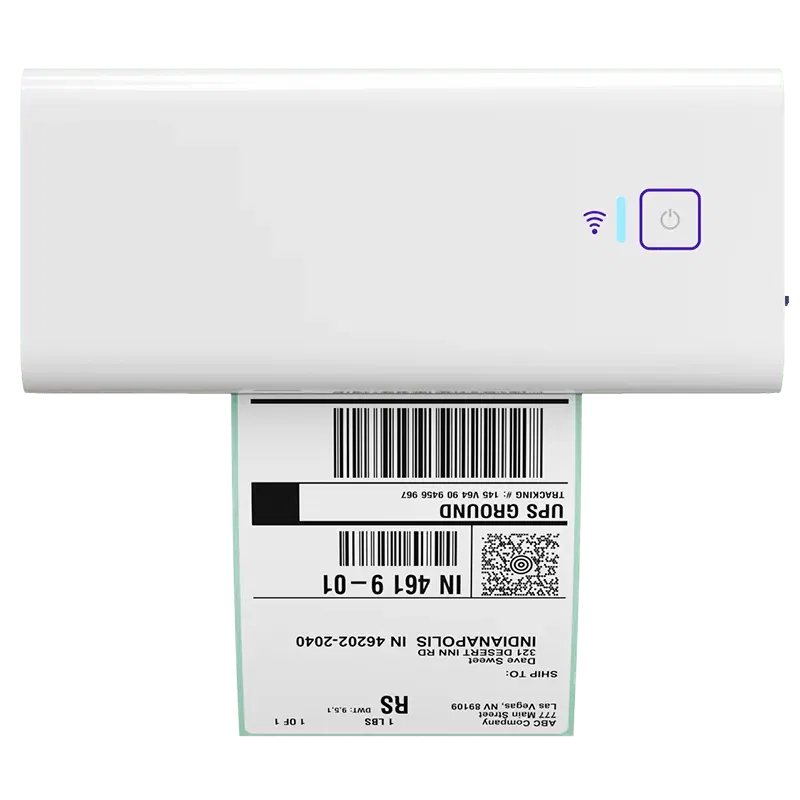
Once your packaging and carrier decisions are more consistent, the next step is keeping label printing just as smooth. The Rollo Wireless Printer helps you print fast, stay organized, and move orders out with less friction.
When it is time to move beyond guesswork
If light orders keep feeling pricey, the issue is usually not one bad shipment. It is the system behind the shipment.
That is the practical role Rollo Ship can play. It helps make compare-before-you-print decisions easier, gives you clearer cost visibility at the label stage, and supports a more organized order workflow when the goal is fewer surprises, not more complexity.
Final Words
Light orders get pricey when small shipping decisions stack up in the background. A box instead of a mailer, a default label instead of a quick comparison, or an automatic return label on a low-value order can all chip away at margin faster than expected. The fix is not making shipping more complicated. It is building a simpler, smarter workflow before you print. When packaging, carrier choice, and return logic are easier to review, apparel shipping costs become easier to control—and a lot less surprising.
Follow Rollo on:
Frequently Asked Questions About Apparel Shipping Costs
📌 Q: What shipping setup do I actually need as a first-time seller?
💭 A: You need a setup that covers the basics in a repeatable way: package details, label creation, label printing, packing, and tracking. It does not need to be advanced. It just needs to make standard orders easier to handle without confusion.
📌 Q: Does free shipping make apparel margins harder to control?
💭 A: Free shipping can make apparel margins harder to control if the shipping cost is being absorbed without enough room in the product price. That pressure gets even stronger when returns, packaging choices, and light-order cost surprises are already cutting into profit.
📌 Q: When does branded packaging stop being worth the extra shipping cost?
💭 A: Branded packaging usually stops being worth it when it adds enough size or weight to raise the billed shipping cost without adding enough customer value in return. If the unboxing experience is costing more than it is helping retention, perception, or order value, it may be time to simplify.
📌 Q: Should apparel brands use the same packaging for every product type?
💭 A: No. Standard tees, heavier knitwear, bundles, and presentation-focused orders often need different packaging rules because they create different size, protection, and cost tradeoffs. Using one packaging default for everything may feel simpler, but it can quietly raise shipping costs.
📌 Q: How can small apparel brands reduce shipping surprises without slowing fulfillment down?
💭 A: The best approach is to create a few simple defaults for package type, service level, and return logic by item type. That keeps the workflow fast while still giving the team a better chance to catch avoidable cost problems before the label is printed.
📌 Q: What makes a low-cost shipping option a bad fit for clothing orders?
💭 A: A low-cost option becomes a bad fit when it looks cheap upfront but creates a worse outcome because of package size, weak service fit, or higher return-related friction. The smartest choice is the one that protects margin and keeps the order workflow predictable, not just the one with the lowest first number.


