
TL;DR: Cheap shipping for small business starts with comparing the full label cost before you buy. Do not choose one carrier every time. Check package size, DIM weight, fees, flat rate options, platform labels, carrier discounts, and reward programs before printing your next label.
You print a label. You ship the order. Then you realize shipping took a bigger bite out of your profit than you expected. That is the real problem. In 2026, cheap shipping for small business is not just about finding a low rate. It is about knowing which carrier, package size, fee, platform label, or shipping choice is raising your total cost.
The cheapest option can change by order, product, and destination. Once you know what to compare before buying a label, shipping feels less like guesswork. It becomes a smarter business decision.
Here’s What We’ll Cover
Rollo Ship helps small businesses compare discounted carrier rates, create labels, batch shipments, and manage shipping from one workflow. For sellers in the U.S. and Canada, that kind of visibility can make it easier to find cheaper shipping before a label is purchased.
Why Shipping Costs Matter More for Small Businesses in 2026

Shipping costs matter more because e-commerce keeps growing. The U.S. Census Bureau estimated total U.S. retail e-commerce sales at $1.2337 trillion in 2025, up 5.4% from 2024, with e-commerce accounting for 16.4% of total retail sales.
In Canada, Statistics Canada reported that retail e-commerce sales were $5.1 billion in February 2026, accounting for 7.0% of total retail trade.
For small sellers, that means shipping is not just a back-office task. It affects product pricing, margins, customer expectations, returns, and whether an order is still profitable after the label is purchased.
What Does Cheap Shipping for Small Business Mean in 2026?

Cheap shipping for small business means finding the lowest practical total label cost for each order. That includes the carrier rate, package size, DIM weight, delivery speed, fees, platform label limits, and available discounts. There is no single cheapest carrier for every shipment.
Why cheap shipping is not one universal carrier
USPS, UPS, and FedEx can each be the better choice. It depends on the package.
A small, light item may ship best one way. A bulky hat box, skincare bundle, or heavy electronics order may need a different choice.
The better question is not, “Which carrier is cheapest?”
The better question is, “Which carrier is cheapest for this package, going to this place, at this speed?”
Total label cost vs base shipping rate
A low base rate can still turn into a higher final cost. Extra fees may apply before or after the label is bought.
Before buying a label, check:
- Package weight
- Package dimensions
- Delivery speed
- Residential delivery fees
- Fuel or transportation fees
- Additional handling risks
- Platform or marketplace label limits
- Label creation fees
- Available carrier discounts
- Rewards or loyalty savings
The first thing to compare before buying a label
Before you buy, compare the same package across more than one carrier or shipping tool.
Use the same weight, size, destination, and delivery speed. That gives you a fair comparison.
Suggested infographic:
Insert a simple visual titled “Cheap Shipping Starts Before the Label” showing this flow: weigh package → measure dimensions → compare carriers → check fees → choose total-cost option → print label.
Why Does Shipping Cost More Than the Quote You Expected?
Shipping can cost more than expected because the first rate may not show the full cost. Package size, DIM weight, home delivery fees, fuel fees, handling fees, marketplace fees, label fees, and platform limits can all change what you pay.

Base rate vs total shipping cost
The base rate is only one part of the shipping price. Your real cost may include fees tied to the package, address, carrier, platform, or shipping workflow.
| Cost driver | What it means | What to check before buying |
|---|---|---|
| DIM weight | The carrier bills by space, not just weight | Enter the right dimensions |
| Residential fees | Extra cost for home delivery | Check if the address is residential |
| Fuel or transportation fee | Added carrier cost tied to transport | Check if it is included |
| Additional handling | Extra fee for size, shape, or packaging | Check package limits |
| Marketplace fees | Platform costs tied to the order or shipping | Compare outside rates too |
| Label creation fees | Software or platform fee for creating labels | Check monthly or per-label costs |
| Return costs | Cost of sending products back | Review product category and return rate |
The 2026 cost stack: rates, fees, and surcharges
In 2026, USPS announced an 8% transportation-related, time-limited price change that would affect base postage prices for Priority Mail Express, Priority Mail, USPS Ground Advantage, and Parcel Select. USPS said the planned change would run from April 26, 2026 through January 17, 2027, pending favorable PRC review.
That does not mean USPS is always expensive. It means sellers should compare total cost before buying. This matters most when margins are tight.
Why the USPS temporary surcharge matters
This matters when you plan shipping costs for the year. If you sell low-margin items, even a small increase can change your profit after shipping.
Why small cost changes hurt low-margin products
A $2 difference may not seem like much. But for resale items, handmade goods, accessories, hats, beauty bundles, and specialty food, that $2 can erase profit fast.
For example, if you sell a $22 handmade item and your expected shipping cost was $6, a final shipping cost of $8 cuts directly into your margin. If that happens often, the issue is not one label. It is the shipping workflow.
USPS vs UPS vs FedEx: Which Is Best for Small Business Shipping?

USPS is often worth checking for small and light packages. UPS and FedEx may be better for heavier, larger, business-address, or longer-distance shipments. The best carrier depends on weight, size, destination, speed, discounts, and the full final cost.
When USPS may be a good fit
USPS is often a strong option for smaller parcels and light orders. It can work well for many everyday e-commerce shipments.
It may be a good fit when the item is compact and does not need special handling.
When UPS may be a good fit
UPS may be worth checking for heavier boxes, larger shipments, or ground delivery.
It can also help sellers who ship the same package types often and want steady service options.
When FedEx may be worth checking
FedEx may be worth comparing for heavier items, business deliveries, or certain time-sensitive shipments.
Do not skip it just because another carrier feels familiar.
Why the best carrier can change by order
| Carrier | Often strong for | Watch out for |
|---|---|---|
| USPS | Small, light, compact packages | Fees, service limits, package fit |
| UPS | Heavier boxes and ground shipments | DIM weight and handling fees |
| FedEx | Larger shipments and business deliveries | Service fit, account setup, fees |
After you compare carriers, the next step is making that process easier to repeat. Rollo Ship helps sellers compare discounted carrier options before buying labels. That way, the decision does not depend on old habits.
How Does DIM Weight Make Small Business Shipping More Expensive?

DIM weight can raise shipping costs when a package is large but light. Carriers may charge based on how much space the box takes up. So a light item in a large box can cost more than expected.
What DIM weight means
DIM weight means dimensional weight. It is based on package size.
A simple formula is:
Length × Width × Height ÷ DIM divisor = dimensional weight
Carrier rules can change. Always check current carrier guidance before using exact calculations.
Actual weight vs dimensional weight
Actual weight is what the package weighs on a scale.
DIM weight is based on the package size.
Carriers may charge based on whichever number is higher. That is why a large box of lightweight hats may cost more than expected.
Bulky-but-light products that trigger DIM risk
Watch DIM weight closely if you sell:
- Hats or headwear
- Sports equipment
- Gift boxes
- Pillows or soft goods
- Light electronics accessories
- Handmade items with protective packaging
- Framed prints
- Board games
- Skincare kits with filler
- Boutique apparel in oversized boxes
How to reduce DIM surprises before buying a label
Use the smallest safe package for the product.
If you ship the same items often, save package presets. That way, you do not guess the size each time you buy a label.
Suggested infographic:
Insert a visual titled “DIM Weight Cost Trap” showing two packages: one small/heavy box and one large/light box. The large/light box should show how empty space can raise billable weight.
Is Flat Rate or Standard Shipping Cheaper for Small Businesses?

Flat rate shipping can be cheaper when a dense or heavy item fits inside approved packaging. Standard pricing may be cheaper for lighter, smaller, or shorter-distance shipments. The best choice is to understand flat rate vs dimensional weight and compare both before buying the label.
When flat rate can save money
Flat rate can help when the product is heavy for its size. It also needs to fit safely in the approved package.
Think dense goods, not bulky goods.
When standard pricing may be cheaper
Standard pricing may be better for light, compact items or shorter-distance shipments.
For example, a lightweight apparel order in a mailer may not need flat rate packaging.
Quick flat rate decision checklist
Before choosing flat rate, ask:
- Is the item dense or heavy?
- Does it fit without forcing the package?
- Is the standard rate lower?
- Does the delivery speed work for the customer?
- Are tracking and protection still acceptable?
- Would a mailer or smaller box reduce the cost?
- Is the packaging free, paid, or already in your inventory?
Are Marketplace Shipping Labels Always the Cheapest Option?

Marketplace shipping labels are convenient, but they are not always the cheapest option. Platforms may offer discounted labels. Still, sellers should compare carrier options, package size, fees, and outside rates before assuming the platform label is the best deal.
Why platform labels feel easier
Platform labels are simple because the order is already there. The address, buyer details, and item information may already be connected.
That is helpful. But convenience is not the same as the lowest total cost.
Where platform label lock-in can happen
Platform label lock-in happens when you keep buying labels in one place because it feels easy.
This can affect sellers on Shopify, Etsy, eBay, Amazon, TikTok Shop, Facebook Marketplace, WooCommerce, and similar platforms.
Marketplace label audit checklist
Before staying with a platform label, check:
- Can you compare more than one carrier?
- Are fees shown before purchase?
- Can you save package presets?
- Can you batch labels?
- Can you compare outside rates?
- Can you export shipment history if needed?
- Can you ship across multiple stores from one workflow?
- Can you see the final label cost before buying?
When to compare outside the platform
Compare outside the platform when shipping starts cutting into your profit. Also compare when your package mix changes or you feel stuck with one carrier.
Rollo Ship can help sellers compare rates outside a single marketplace while still supporting a multi-channel shipping workflow.
What Are the Best Cheap Shipping Options by Product Type?

The cheapest shipping option depends on what you sell. Apparel, beauty products, electronics, handmade goods, chocolate, jewelry, hats, sports equipment, specialty food, print-on-demand orders, and resale items each come with different shipping risks.
| Product type | Common cost trap | What to compare |
|---|---|---|
| Apparel and soft goods | Using boxes when mailers may work | Mailer vs box, weight, destination |
| Beauty and skincare | Protective packaging adds weight | Weight, breakage risk, leaks |
| Electronics | Damage and value risk | Tracking, protection, carrier handling |
| Handmade goods | Odd sizes and extra packing | Size, box choice, packing method |
| Chocolate and confections | Heat and speed issues | Transit time, season, packaging |
| Jewelry and accessories | Small but high-value orders | Tracking, padding, delivery trust |
| Hats and headwear | Bulky-but-light DIM risk | Box size, DIM weight, carrier |
| Sports equipment | Oversize or handling risk | Size, fees, service fit |
| Specialty food | Speed and packaging needs | Delivery time, weight, customer expectations |
| Print-on-demand | Platform workflow limits | Label control, speed, tracking |
| Resale items | Thin margins | Total label cost, marketplace fees |
Apparel and soft goods
Apparel often ships well in poly mailers when the item does not need a box. The goal is to reduce empty space without risking damage.
A t-shirt in a box may look more premium, but if a mailer protects the product well, the box may add unnecessary cost.
Beauty and skincare
Beauty orders may need extra protection. Compare the cost of safer packaging against the risk of leaks, breaks, or refunds.
A small skincare bundle can become more expensive if too much filler pushes the package into a higher weight or size category.
Electronics
Electronics need careful packaging and reliable tracking. The cheapest label may not be the best choice if the item is fragile or valuable.
For electronics sellers, cheap shipping should still consider tracking, handling, declared value, and customer expectations.
Handmade goods
Handmade products often vary in size. Save presets for repeat items so you do not rebuild the shipping decision each time.
If you sell candles, ceramics, custom accessories, or art prints, packaging consistency can help prevent surprise costs.
Chocolate, confections, and specialty food
Speed matters more for items that can melt or spoil. A cheaper slow service can lead to damage or customer complaints.
For chocolate, macarons, sauces, or specialty snacks, compare the label cost against transit time and packaging needs.
Jewelry and accessories
Jewelry is usually small, but tracking and presentation still matter. Compare lightweight services that give enough delivery confidence.
A cheap label without enough tracking visibility may not be worth it for higher-value accessories.
Hats and headwear
Hats can trigger DIM weight because they need space. Use the smallest safe box and compare carriers before buying.
A hat may be light, but the box size can raise the billable weight.
Sports equipment
Sports items can be long, bulky, or oddly shaped. Check size and handling risks before assuming a basic ground label will work.
This matters for lacrosse gear, hockey training equipment, fencing gear, fishing gear, and fitness accessories.
Print-on-demand
Print-on-demand sellers may have less control over fulfillment. Compare platform options and customer expectations before changing workflows.
If you ship some orders yourself and outsource others, compare how both workflows affect margins.
Resale and marketplace items
Resellers feel every label cost. Compare before buying, especially when a few dollars can decide whether the sale was worth it.
If you bought an item for $20 and shipping costs $12, a cheaper label workflow can make the difference between profit and regret.
How Can U.S. and Canada Sellers Lower Cross-Border Shipping Costs?

U.S. and Canada sellers should compare more than the base shipping rate. Cross-border shipments can involve carrier availability, customs steps, tracking delays, delivery speed, customer expectations, and destination-based pricing. A cheaper label may not be better if it creates delivery problems.
What changes when shipping across the border
Cross-border orders can involve extra forms, longer delivery times, tracking changes, duties, taxes, returns, and more customer questions.
The label price is only one part of the decision.
Carrier availability and tracking considerations
USPS, UPS, FedEx, Canada Post, and Purolator may each fit different routes or needs.
Tracking matters because delays often turn into support messages.
Rollo Ship supports U.S. and Canadian shipping workflows. According to Rollo, Canadian users can access carriers such as Canada Post, Purolator, UPS Canada, and FedEx Canada through Rollo Ship. (Rollo Ship)
U.S. and Canada cheap shipping scenarios
| Scenario | What can raise the cost | What to compare before buying |
|---|---|---|
| U.S. apparel seller shipping to Canada | Cross-border delivery time, tracking handoff, package size | USPS/Canada Post handoff vs UPS or FedEx options |
| Canadian skincare seller shipping to U.S. buyers | Packaging weight, customs details, delivery expectations | Canada Post, UPS, FedEx, and Purolator options |
| U.S. reseller shipping electronics to Canada | Declared value, tracking, damage risk | Service level, tracking detail, and protection options |
| Canadian chocolate seller shipping to U.S. customers | Heat risk, packaging weight, delivery speed | Faster service vs cheaper slow service |
| U.S. hat brand shipping to Canadian customers | Bulky-but-light boxes and DIM weight | Smaller box options, carrier rate differences, delivery time |
| Canadian jewelry seller shipping to U.S. buyers | Small high-value parcels and delivery trust | Tracking, padding, carrier reliability, and total label cost |
What to compare before choosing a cross-border label
Check:
- Total price
- Delivery speed
- Tracking detail
- Carrier availability
- Customs workflow
- Customer expectations
- Return complexity
- Package size and DIM weight
- Whether the customer needs faster delivery
Rollo Ship can support a comparison-first workflow when sellers need to check carrier options before buying cross-border labels.
What Should You Compare Before Buying a Shipping Label?

Before buying a shipping label, compare package weight, size, carrier rates, delivery speed, flat rate vs standard pricing, fees, platform limits, tracking needs, and whether your workflow supports presets or batching. This helps prevent labels that look cheap but cost more later.
Step 1: Measure and weigh the package
Use the final package weight and size, not just the product weight.
The box, tape, filler, inserts, and protective materials count too.
Step 2: Compare USPS, UPS, and FedEx
Do not assume last week’s cheapest carrier is still cheapest today.
Use multi-carrier rate comparison to compare the same package details across carriers.
Step 3: Check flat rate vs standard
If the item is dense or heavy, flat rate may help.
If it is light or compact, standard pricing may win.
Step 4: Look for fees and handling risks
Watch for home delivery fees, fuel or transportation fees, extra handling, and large-package risks.
Step 5: Review platform label limits
If you buy labels through a marketplace, check whether you can compare outside rates.
If you only see the platform’s choices, you may miss a better option.
Step 6: Save presets and batch repeat shipments
If you ship the same product often, save the package details.
If you ship many orders at once, batching can cut down on repeated label work.
A simple pre-label cost check looks like this:
- Confirm final package weight.
- Enter exact package size.
- Compare carriers.
- Check flat rate vs standard.
- Review fees and surcharges.
- Choose the best total-cost option.
- Save the setup if you will use it again.
Rollo Ship fits here because it brings rate comparison, label creation, presets, and batching into one workflow.
Print Labels Without Slowing Down Your Shipping Flow
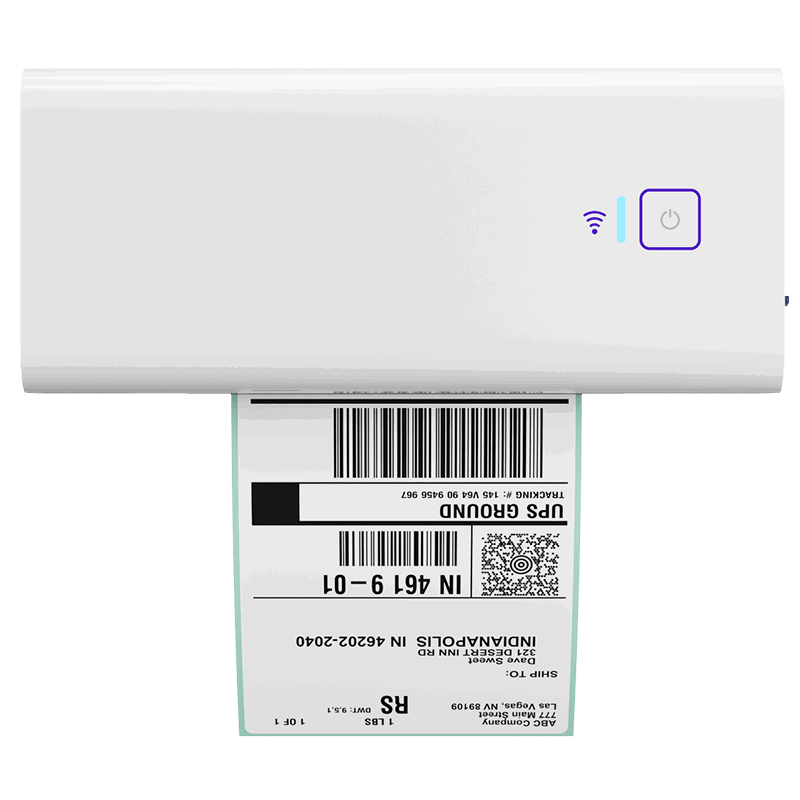
Once you compare the full label cost, the next step is printing it without ink, tape, or messy workarounds. The Rollo Wireless Printer helps small sellers print crisp 4×6 shipping labels from a cleaner, faster packing station.
How Rollo Ship Helps Small Businesses Find Cheap Shipping
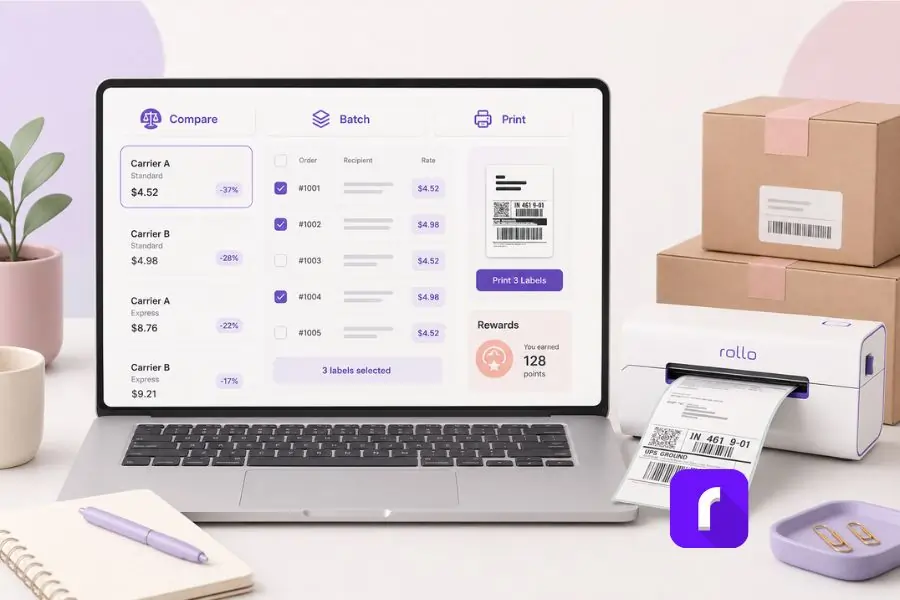
Rollo Ship helps small businesses find cheaper shipping by making rate comparison part of the label-buying workflow. Sellers can compare discounted carrier options, create labels, batch shipments, use shipping presets, and build a repeatable process before buying a label.
Compare discounted rates before purchase
Rollo Ship is built for sellers who want to compare before they buy.
Instead of checking carrier sites one by one, you can review available options during the label process.
Reduce tab-switching and carrier guessing
When rate comparison lives inside your workflow, you are less likely to pick a carrier out of habit.
That helps you choose based on the order in front of you.
Use presets for repeat package types
If you ship the same type of item often, presets can make your workflow cleaner.
Apparel packs, jewelry mailers, hat boxes, skincare bundles, and repeat product boxes become easier to handle.
Batch labels as order volume grows
Batching helps when daily orders increase.
It reduces one-by-one label work and keeps fulfillment from taking over your day.
How Rollo Rewards can lower label costs over time
Rollo Rewards helps frequent shippers reduce label creation fees as they keep using Rollo Ship. Rollo says the first 200 labels are free. After that, label creation costs 5¢ per label at Newbie and Basic, 3¢ at Pro, 2¢ at Expert, and 1¢ at VIP.
That matters for small businesses because cheap shipping is not only about the carrier rate. It is also about the total cost of buying, printing, and managing labels as order volume grows.
Rollo Ship also has no monthly subscription or signup fee, and Rollo says discounted shipping rates are available separately inside the app.
Rollo Rewards label fee ladder
| Rollo Rewards level | Label creation fee |
|---|---|
| First 200 labels | Free |
| Newbie | 5¢ per label |
| Basic | 5¢ per label |
| Pro | 3¢ per label |
| Expert | 2¢ per label |
| VIP | 1¢ per label |
Suggested infographic:
Insert a simple ladder graphic titled “Rollo Rewards Label Fee Ladder” showing: first 200 labels free → 5¢ → 3¢ → 2¢ → 1¢.
What Is the Best Way to Keep Shipping Costs Low Over Time?

The best way to keep shipping costs low over time is to turn rate comparison into a repeatable workflow. Measure packages the same way each time, save package presets, compare carriers before buying, review fees, batch labels when volume grows, and revisit your setup as products or channels change.
Build shipping presets for repeat products
If you ship the same product often, save the package size and weight.
This can reduce errors and speed up label creation.
Review shipping costs by product category
Check whether certain products always cost more than expected.
Hats, sports gear, beauty bundles, handmade goods, chocolate, electronics, and specialty food may need better packaging choices.
Audit platform labels regularly
Marketplace labels may be useful, but they should not go unchecked forever.
Compare them against other rates when costs rise.
Track whether your workflow still fits your volume
A workflow that worked for 10 orders a week may feel messy at 50.
As volume grows, batching, presets, rate comparison, and rewards become more important.
Compare the Full Cost Before You Buy the Label
Rollo Ship helps you compare discounted carrier rates, create labels, batch shipments, and manage shipping from one workflow. Use it to make label decisions with more visibility before shipping costs cut into your margins.

Final Words
Cheap shipping for small business is not about chasing the lowest rate once. It is about building a smarter label-buying habit.
Compare package size, DIM weight, carrier rates, flat rate options, platform labels, possible fees, and label creation costs before each purchase. Start with the orders that hurt your margins most. Then build repeatable presets and workflows from there.
The goal is simple: fewer surprises, cleaner fulfillment, and better shipping decisions over time.
If you want to compare discounted carrier rates before buying your next label, Rollo Ship can help you check available options, create labels, batch shipments, and earn Rollo Rewards as your shipping volume grows.
Follow Rollo on:
Frequently Asked Questions About Cheap Shipping For Small Business
📌 Q: What is the cheapest way to ship packages for a small business?
💭 A: The cheapest way is usually to compare discounted carrier rates before buying a label. Choose based on package weight, size, destination, delivery speed, and fees. No single carrier is always cheapest for every shipment.
📌 Q: Which carrier has the best shipping rates for small businesses?
💭 A: USPS is often strong for smaller, lighter packages. UPS and FedEx may be better for heavier, larger, or longer-distance shipments. The best option depends on the package, so compare before buying.
📌 Q: Why did my shipping label cost more than expected?
💭 A: A label can cost more than expected because of DIM weight, package size, home delivery fees, fuel fees, handling costs, platform fees, or marketplace label limits. The base rate may not show the full cost.
📌 Q: How can small businesses get shipping discounts?
💭 A: Small businesses can often get discounts through online postage tools, shipping apps, carrier business accounts, e-commerce platform labels, or volume-based programs. The key is to compare discounted rates before buying each label.
📌 Q: Is flat rate shipping cheaper than standard shipping?
💭 A: Flat rate can be cheaper for dense or heavy items that fit approved packaging. Standard pricing may be cheaper for light, compact, or short-distance shipments. Compare both before buying the label.
📌 Q: How does DIM weight affect shipping costs?
💭 A: DIM weight can raise costs when a package takes up more space than its actual weight suggests. A bulky but light item may be billed as heavier because the carrier charges based on box size.
📌 Q: Are marketplace shipping labels always cheapest?
💭 A: No. Marketplace labels can be convenient and discounted, but they should still be compared against other carrier rates and shipping apps. Platform convenience does not always mean the lowest total cost.
📌 Q: How can I compare shipping rates before buying a label?
💭 A: Enter the package weight, size, destination, and delivery needs into a rate comparison workflow or shipping app. Then compare carrier price, speed, fee visibility, and package fit before buying.
📌 Q: Does Rollo Ship help small businesses find cheap shipping?
💭 A: Rollo Ship helps sellers compare discounted carrier rates, create labels, batch shipments, and build a repeatable shipping workflow. It is helpful when you want to compare options before buying labels instead of guessing.
📌 Q: Does Rollo Ship work for Canadian small businesses?
💭 A: Yes. Rollo Ship supports Canadian shippers. Rollo says Canadian users can access carriers such as Canada Post, Purolator, UPS Canada, and FedEx Canada through the platform.
📌 Q: How do Rollo Rewards help lower shipping costs?
💭 A: Rollo Rewards can lower label creation fees over time. Rollo says the first 200 labels are free, then label creation costs 5¢ at Newbie and Basic, 3¢ at Pro, 2¢ at Expert, and 1¢ at VIP.
📌 Q: How can U.S. and Canada sellers reduce cross-border shipping costs?
💭 A: Compare carrier options, delivery speed, tracking, customs workflow, and destination-based pricing before buying labels. Cross-border shipping should be judged by total cost and customer experience, not base rate alone.


