
TL;DR: Print-on-demand shipping costs come from more than the label alone—they reflect packaging, rates, and workflow decisions that shape profit on each order. If shipping keeps quietly eating your margins, the fix is usually better package choices, clearer rate comparison, and a simpler process before you print.
You sell a product, print the label, and then realize print-on-demand shipping costs can take a bigger bite out of profit than expected. The order looked fine at checkout, but the package choice, label cost, or default shipping setup changed the math fast.
That is where many artists and print-on-demand sellers get stuck. The problem is usually not one bad shipment. It is a pattern of small decisions that quietly make each order less profitable.
Once those decisions are easier to see, shipping gets easier to manage too, with fewer surprises and more confidence behind every label.
Here’s What We’ll Cover
Why do margins disappear after the label gets printed?

Margins often disappear after the label gets printed because the real shipping cost finally becomes visible. What looked like a solid sale at checkout can feel weaker once packaging, carrier choice, and service level change the total. For many small sellers, the problem is repeated small misses, not one giant mistake.
Why checkout confidence does not always match shipping reality
A product page can make an order look clean and simple. Then the shipping step shows up and reminds you that real-world fulfillment has more moving parts.
A soft shirt, a rolled print, and a mug do not behave the same way once packaging enters the picture. One fits in a poly mailer. Another may need a box. That difference can change your shipping margins even before you compare services.
What “profit per order” actually tells you
Profit per order is a better reality check than the list price alone. It pushes you to ask a more useful question: after the product cost, packaging choice, and label cost, what is left?
For many POD sellers, the real problem is not shipping alone. It is landed cost. That may include more than the label itself.
What usually makes the margin shrink:
- base product cost
- shipping cost
- packaging choice
- marketplace fees
- payment processing
- return risk
Shipping often feels like the visible pain point because it is the moment when the margin problem finally becomes obvious. That is where surprise shipping fees start feeling personal. They are not abstract. They come straight out of the order you thought was already working.
Why low-margin products feel shipping mistakes faster
Low-margin orders leave less room for guesswork. A small shipping miss on a higher-ticket item may feel annoying. The same miss on a lower-priced product can make the whole order feel barely worth it.
That is why shipping for artists and print-on-demand sellers needs to be treated like part of the product decision, not a final errand at the end.
What shipping choices usually change the math the most?

The biggest margin swings usually come from a few repeat choices: packaging, label timing, rate comparison, and default shipping settings. None of those decisions look dramatic on their own. The issue is that they happen over and over, which makes them much more expensive than they seem in the moment.
Using one package type for everything
This feels efficient, but it often is not. A box may be right for one product and unnecessary for another. Packaging choice affects size, protection, and sometimes the final label cost in ways that are easy to miss when you are moving fast.
Waiting too long to compare rates
When label buying happens at the last minute, people tend to choose whatever feels easiest. That usually means less comparison, less clarity, and less confidence. By then, the goal becomes “finish this shipment,” not “make the best shipping decision.”
Letting default shipping settings do too much work
Platform tools are useful because they reduce friction. But convenience is not the same as visibility. When defaults handle too much of the process, it gets harder to tell whether you are overpaying for labels or using a weaker setup than you need.
Treating one-item orders and multi-item orders the same way
Some products simply behave differently when sold one at a time. Low-ticket items can be especially hard to price because shipping takes up a bigger share of what the customer sees as the total value.
| Order Type | Why the Math Changes Fast | Better Question to Ask |
|---|---|---|
| Single low-ticket item | Shipping can feel high relative to the product price | Would this work better as a bundle or multi-item order? |
| Soft good | Package choice may change the total quickly | Does this need a box, or would a mailer make more sense? |
| Fragile item | A cheaper package may create return risk | Is the lower shipping cost worth the damage risk? |
| Multi-item order | The shipping cost may feel more reasonable | Should this order be handled differently than a single-item shipment? |
That is why bundles, multiples, or a different shipping presentation may matter more than chasing the absolute lowest label cost. Sometimes the better move is not a cheaper label. It is a better order structure.
Poly mailer vs box: which one has lower print-on-demand shipping costs?

A poly mailer often protects margin better when the product is soft, lightweight, and flexible. A box usually makes more sense when the item is rigid, fragile, or more likely to get damaged in transit. The right choice is the one that balances cost, fit, and return risk for that order.
Why this matters to The Artist: This helps you make one of the most common shipping decisions faster, with fewer expensive guesses.
| Product Type | Better Fit | Why It Often Helps |
|---|---|---|
| T-shirts and soft goods | Poly mailer | Keeps the package compact and may reduce wasted space |
| Lightweight apparel orders | Poly mailer | Usually simpler and easier to ship without extra bulk |
| Framed prints | Box | Adds structure and helps protect rigid items |
| Mugs and fragile products | Box | Lowers the risk of damage, returns, and replacements |
| Mixed-item orders | Depends | The right choice depends on fit, protection, and how the items ship together |
When a poly mailer makes more sense
A poly mailer often works best when the item is:
- soft
- lightweight
- flexible
- unlikely to break in transit
For many sellers, this is one of the easiest ways to improve margin protection. A smaller, better-fitting package may keep the shipment from becoming bulkier than it needs to be.
When a box is the safer choice
A shipping box usually makes more sense when the product is:
- rigid
- fragile
- awkwardly shaped
- more likely to be damaged if compressed
That extra protection matters because damage is its own cost trap. A cheaper package is not really cheaper if it leads to returns, replacements, or frustrated buyers.
Why oversized boxes quietly raise costs
Oversized packaging can create cost without making the order any better. A roomy box may feel harmless, but extra space can make the shipment feel larger and less efficient than it should be.
A larger box can create avoidable cost when it:
- changes the shipping math without improving protection
- adds unnecessary bulk
- fits the product poorly
- uses more fill than the order needs
That is why better package selection matters. If you want to understand why a larger package can change the math so quickly, it helps to learn how to calculate billable weight before choosing a box by default.
How damage and returns change the decision
The cheapest package is not always the cheapest outcome. If a weak packaging choice leads to damage, the real cost may include:
- a replacement order
- another label
- lost time
- customer frustration
That is why the box-versus-mailer choice should include return risk, not just label price. Margin protection is about avoiding expensive mistakes, not chasing the lowest-cost option every time.
How do you compare shipping rates without slowing down orders?

The best way to compare shipping rates is not to re-research every package from scratch. It is to compare representative order types by package, service, and destination, then reuse that logic. That gives you rate visibility before printing while keeping the workflow simple enough to repeat.
Why this matters to The Artist: You get a practical way to reduce guesswork without turning shipping into an all-day project.
A simple compare-before-you-print routine:
- identify the order type
- confirm the package choice
- check a few realistic service options
- choose the best fit, not just the cheapest label
- reuse that logic for similar orders
Compare representative orders, not every order
You do not need to treat every order like a special case. A smarter move is to group common shipments by type, then compare those instead of starting from zero every time.
Examples of representative orders:
- a lightweight shirt in a poly mailer
- a framed print in a box
- a mug in protective packaging
- a multi-item order with mixed products
Once you compare a few common scenarios, future label decisions become easier and faster. It also helps to compare real order scenarios instead of “starts at” pricing, because a provider may look affordable on the product page and feel very different once shipping, route, and order type are factored in.
What to check before you buy the label
Before you buy the label, focus on the details that actually affect the decision:
- tradeoff — is the best option the cheapest, or just the most obvious?
- package type — does the packaging fit the product well?
- product fit — is the item soft, fragile, rigid, or mixed with other items?
- service options — which choices make sense for this order style?
- destination — does the route change the math enough to matter?
A quick multi-carrier rate comparison can make it easier to see which option makes the most sense before you commit. That shift leads to more confident carrier choice and lowers the odds that you buy a label first and regret it later.
When the cheapest option is not the best one
The cheapest label is not always the strongest choice. A slightly different service may be a better fit if it feels more predictable, works better for the package, or reduces the chance of a bad outcome.
The cheapest option may not be the best one if it:
- fits the package poorly
- creates more risk for fragile items
- feels inconsistent for that order type
- saves a little now but creates more friction later
This is also where a tool like Rollo Ship can fit naturally. If you are tired of jumping between tabs and want clearer rate comparison before you commit, having that visibility in one workflow can make label buying feel much less reactive.
Ready to make print-on-demand shipping costs easier to manage?
If shipping costs keep cutting into your margins, Rollo Ship can help you compare rates, stay organized, and make clearer label decisions before you print. It is a practical way to reduce guesswork and build a shipping workflow that feels more predictable as orders grow.

When does platform shipping start costing more than it saves?

Platform shipping starts costing more than it saves when convenience makes it harder to see better options. That usually happens when product mix, package types, or selling channels create more variation than a simple default setup can handle. At that point, the workflow may still feel easy, but the math can quietly get worse.
Why this matters to The Artist: This helps you decide whether your current setup is still helping or quietly limiting what you keep from each order.
Signs your current setup may be costing more than it saves:
- shipping feels inconsistent, but the reason is hard to spot
- package decisions keep changing from order to order
- default settings do too much of the thinking
- you sell across more than one channel
- rate comparison happens too late, or not at all
- label buying feels easy, but not especially clear
Signs convenience is becoming a cost trap
One sign is inconsistency. Shipping feels expensive, but you cannot tell exactly why. Another sign is repeated overpaying for labels because every order feels like a fresh decision.
You may also notice that your package rules are too vague. If everything gets treated the same way, the workflow looks simple on the surface but costs more behind the scenes.
Why multi-channel selling changes the decision
Selling across platforms adds pressure because shipping data stops living in one neat place. A setup that works fine for a small single-channel shop may feel messier once orders are coming from different storefronts.
Multi-channel selling often changes the workflow because:
- order data lives in more than one place
- shipping choices are harder to compare consistently
- product mix may vary by platform
- “good enough” defaults start creating more guesswork
That is where better workflow visibility starts to matter more. If you are juggling Shopify, Etsy, or another channel mix, the question becomes less about convenience and more about control.
When “good enough” stops feeling good enough
Sometimes the clue is emotional before it is technical. You feel less confident every time you print a label. You are shipping orders, but not with much clarity.
A simple way to think about it is this:
| If your current setup feels like… | It may be time to ask… |
|---|---|
| easy, but hard to explain | do I actually know why this is the best option? |
| fast, but inconsistent | am I saving time or just skipping visibility? |
| manageable on one channel, messy on several | do I need a better order workflow? |
| simple on the surface, expensive underneath | is convenience hiding better options? |
That is where Rollo Ship still fits as a practical option. If better order visibility and clearer carrier comparison would reduce friction, the issue is no longer just shipping cost. It is shipping workflow.
What shipping mistakes hurt margins the most?

The shipping mistakes that hurt margins the most are usually the ones that repeat: using one package for everything, skipping comparison, separating shipping from pricing logic, and ignoring product shape or return risk. The danger is not one imperfect label. It is a pattern that keeps quietly draining profit.
Why this matters to The Artist: It gives you a quick shortlist of habits worth fixing first, even before you redesign your whole process.
Using one package rule for every product
This is one of the easiest mistakes to make because it feels organized. It is also one of the fastest ways to create packaging mistakes across different product types.
A mug, tee, and art print should not all be treated like the same shipment. One rule may save mental energy now while costing more later.
Ignoring shape, fragility, or return risk
Flat products, soft products, and fragile products create different problems. If you ignore that, your shipping setup may look consistent while actually being fragile underneath.
That is how awkward product dimensions and fragile shipment anxiety sneak into the workflow. They are not edge cases if you sell items that trigger them often.
Treating shipping as separate from pricing
Shipping should not be an afterthought added after the product is priced. If it is, the order may look healthy until fulfillment exposes the gap.
That is why profit per order matters so much. It keeps pricing and shipping in the same conversation.
Waiting too long to compare options
If comparison only happens when the order is already packed, you are more likely to settle than decide. That creates weaker choices and more surprise shipping fees.
Another common mistake is treating one-item orders and bundled orders the same way. Some products are much harder to sell profitably one at a time than in multiples, so the shipping presentation may need to change with theThe shipping mistakes that hurt margins the most are usually the ones that repeat: using one package for everything, skipping comparison, separating shipping from pricing logic, and ignoring product shape or return risk. The danger is not one imperfect label. It is a pattern that keeps quietly draining profit.
Why this matters to The Artist: It gives you a quick shortlist of habits worth fixing first, even before you redesign your whole process.
The margin-killing mistakes worth watching first:
- Using one package rule for every product
This is one of the easiest mistakes to make because it feels organized. It is also one of the fastest ways to create packaging mistakes across different product types. A mug, tee, and art print should not all be treated like the same shipment. - Ignoring shape, fragility, or return risk
Flat products, soft products, and fragile products create different problems. If you ignore that, your shipping setup may look consistent while actually being fragile underneath. - Treating shipping as separate from pricing
Shipping should not be an afterthought added after the product is priced. If it is, the order may look healthy until fulfillment exposes the gap. - Waiting too long to compare options
If comparison only happens when the order is already packed, you are more likely to settle than decide. That creates weaker choices and more surprise shipping fees. - Treating one-item orders and bundled orders the same way
Some products are much harder to sell profitably one at a time than in multiples, so the shipping presentation may need to change with the order type.
A quick way to spot which mistake is hurting you
| If this keeps happening… | The likely issue is… |
|---|---|
| different products keep getting packed the same way | one package rule for everything |
| fragile items feel risky to ship | shape, fragility, or return risk is not being factored in |
| the order looks fine until fulfillment | shipping and pricing are being treated separately |
| labels get bought too quickly | comparison is happening too late |
| single-item orders feel hard to price | one-item and bundled orders are being treated the same |
Why repeated mistakes cost more than obvious ones
A one-time mistake is frustrating. A repeated mistake becomes part of the workflow.
That is why profit per order matters so much. It keeps pricing and shipping in the same conversation and makes it easier to notice when a “small” habit is quietly costing more than it should.
A small improvement here can make the whole process feel calmer.order type.
A small improvement here can make the whole process feel calmer.
What does a low-surprise shipping workflow look like for artists and print-on-demand sellers?

A low-surprise shipping workflow is simple enough to repeat and clear enough to trust. For most artists and print-on-demand sellers, that means assigning packaging by SKU, comparing rates before printing, and keeping label decisions organized across orders. The goal is fewer surprises, steadier costs, and more confidence during busy weeks.
A low-surprise shipping workflow usually looks like this:
- assign a default package to each common SKU
- compare rates before you print
- make label decisions in the same order every time
- keep the process easy to repeat across channels
Start with packaging rules by SKU
Not every item needs a complicated packing strategy. It just needs a default that makes sense.
For each common product, define:
- the usual package type
- whether the item is soft, rigid, or fragile
- whether it often ships alone or with other items
- whether the order needs extra protection
Assigning a likely package type to each common product reduces guesswork and makes packaging choices feel less reactive.
Build a compare-before-you-print routine
Create a quick routine before label purchase. Check the package type, compare the likely services, and then print with more confidence.
A simple routine can be:
- confirm the item and package match
- check the main shipping options
- choose the best fit for that order type
- print only after the comparison is done
That small pause often leads to more predictable shipping costs. It also gives you a repeatable fulfillment process instead of a string of rushed decisions.
Keep the process easy to repeat across channels
A good shipping workflow should not fall apart when order volume rises or channels multiply. It should still feel clear when the week gets busy.
| Workflow goal | What it should feel like |
|---|---|
| packaging choice | easy to repeat, not reinvented every time |
| rate comparison | quick and visible before label purchase |
| label flow | organized instead of reactive |
| multi-channel orders | manageable without extra confusion |
If you sell across regions, it also helps to know where each SKU is actually fulfilled, since supplier location can affect speed, cost, and cross-border friction.
This is another natural place where Rollo Ship can help. If you want rate comparison, cleaner label flow, and less order-dashboard chaos, a more organized workflow can make shipping feel easier instead of heavier.
Make label printing the easiest part of shipping
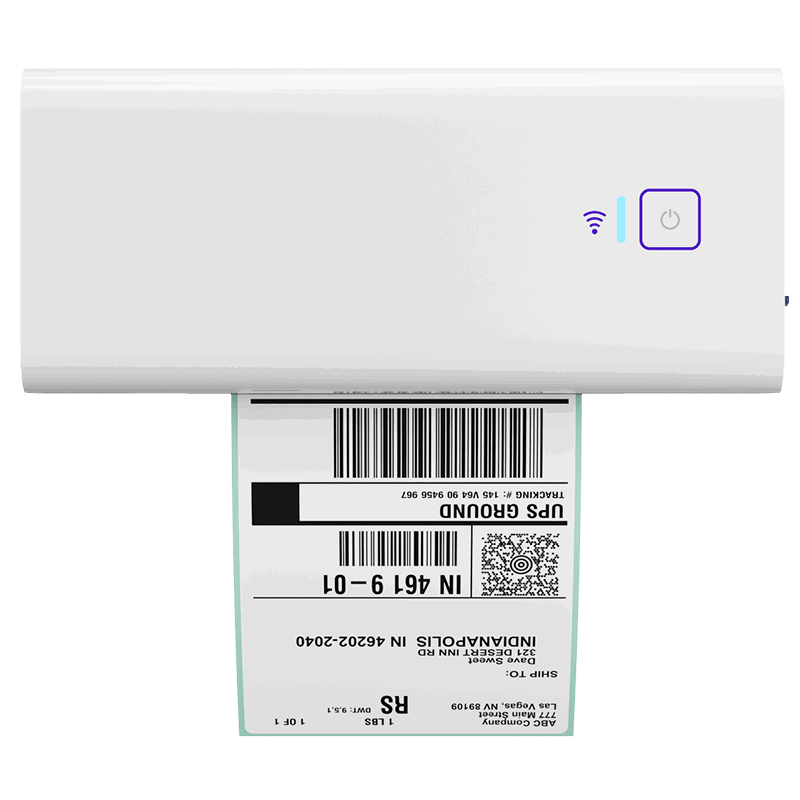
If print-on-demand shipping costs feel unpredictable, the Rollo Wireless Printer can make the label side of the workflow faster and easier to repeat. It is a practical way to print with more confidence, reduce friction at the packing stage, and keep orders moving without adding more chaos.
When is a better shipping workflow or shipping app worth it?

A better shipping workflow or app becomes worth it when the cost of guessing is higher than the effort of improving the process. That usually happens when product variety, repeated surprises, or channel sprawl make labels harder to manage with confidence. The right tool should reduce friction and improve clarity, not create more work.
A better shipping workflow may be worth it if:
- shipping costs feel inconsistent from order to order
- package decisions keep changing
- label buying feels scattered instead of steady
- you sell across more than one channel
- you cannot tell when platform defaults are helping or hurting
- better visibility would save time and reduce mistakes
Signs you have outgrown your current setup
You may be there already if shipping feels inconsistent, package decisions keep changing, or you cannot tell when platform defaults are helping versus hurting. Another sign is that label buying feels scattered instead of steady.
That usually means the issue is no longer just label cost. It is a workflow problem.
What better visibility should actually give you
Better visibility should make it easier to compare rates, track orders, and make consistent decisions. It should not bury you in extra steps.
Better visibility should help you:
- compare realistic shipping options before printing
- see orders more clearly across channels
- make label decisions with less guesswork
- spot repeated cost patterns faster
- keep the workflow calmer during busy weeks
That is the clearest reason Rollo Ship fits here. When you want a simpler shipping workflow, more rate visibility before printing, and fewer surprise fees hiding inside the process, a better tool starts to feel less like an upgrade and more like relief.
What to look for in a shipping workflow tool
Look for clarity, not complexity. The best setup should help you compare options, move through labels faster, and keep order workflow organized without turning shipping into another job.
| What to look for | Why it matters |
|---|---|
| clear rate comparison | helps you make better decisions before buying the label |
| organized order visibility | reduces confusion across channels |
| simple label flow | keeps the process fast without feeling rushed |
| repeatable workflow | makes shipping easier to manage during busy periods |
| less tab switching | lowers friction and mental load |
A better tool should make shipping feel easier, more visible, and more repeatable. If it adds confusion, it is probably solving the wrong problem.
Final Words
Shipping gets expensive fast when small decisions stay invisible. For artists and print-on-demand sellers, the goal is not to build a perfect system. It is to make better package choices, compare rates with more clarity, and create a workflow that feels easier to repeat. Once shipping stops feeling random, it becomes much easier to protect profit on each order. A calmer process usually leads to fewer surprises, better label decisions, and more confidence every time you ship.
Follow Rollo on:
Frequently Asked Questions About Shipping Costs for Print-on-Demand Sellers
📌 Q: Is a poly mailer always the cheaper option?
💭 A: Not always. A poly mailer often works well for soft, lightweight products, but fragile or rigid items may need a box to reduce damage and return risk.
📌 Q: Should I charge shipping separately or build it into the product price?
💭 A: There is no one right answer. For some products, especially low-ticket items, the better choice depends on perceived value, margin, and whether customers are more likely to buy multiples.
📌 Q: Do I need to compare rates for every order?
No. Most sellers do better by comparing representative order types and then reusing that logic for future shipments.
📌 Q:Do I need to compare rates for every order?
💭 A: No. Most sellers do better by comparing representative order types and then reusing that logic for future shipments.
📌 Q: Is platform shipping enough for a small shop?
💭 A: It can be, especially early on. The problem starts when product variety, packaging choices, or channel complexity make the default view too expensive or too hard to trust.
📌 Q: When does a shipping app become worth it?
💭 A: It becomes worth it when better rate visibility and smoother order workflow save more time, confusion, or shipping cost than your current setup.
📌 Q: What matters more: speed or margin protection?
💭 A: That depends on the order. In many cases, a slightly different service may protect margin better than chasing speed by default.
📌 Q: Should artists use the same packaging for every product?
💭 A: Usually not. Soft goods, prints, mugs, and multi-item orders often need different packaging rules to balance cost, protection, and consistency.
📌 Q: Why does the product price look fine until I check shipping?
💭 A: Because “starts at” product pricing rarely tells the full story. The real cost usually depends on base cost, shipping, route, package choice, and any platform or payment fees attached to the order.


