
TL;DR: Cross-border shipping between the U.S. and Canada of high-value items is a different discipline from everyday parcel shipping. Carrier default liability rarely matches what industrial electronics, robotics, or test equipment are actually worth. Declared value, third-party insurance, and customs paperwork each protect a different part of the shipment. Crossing the US–Canada border adds documentation rules and coverage limits that domestic shippers never see. This guide walks through what changes at each step—and how operations teams keep it manageable.
Key Facts About Cross-Border Shipping of High-Value Items
- Carrier liability and shipping insurance are not the same thing; declared value caps what a carrier will pay on a claim.
- UPS® and FedEx include US$100 of declared-value liability on most services; USPS included coverage varies by service—far below the value of most industrial electronics.
- Insurance-grade packing means double-boxing, anti-static protection where relevant, and photographed documentation before sealing.
- Every commercial shipment crossing the US–Canada border needs a commercial invoice with an accurate HS (Harmonized System) code and country of origin.
- The US suspended its $800 de minimis exemption effective August 29, 2025; US-bound shipments owe applicable duties regardless of value. Canada keeps CUSMA courier thresholds of CAD $150 (duty) and CAD $40 (tax).
- Oversized protective packaging can trigger dimensional (DIM) weight pricing, raising the billable weight of light-but-bulky electronics.
Read Ahead
If you manage cross-border e-commerce shipping for electronics, robotics, security equipment, or precision industrial parts, this guide is for you. Shipping high-value items between the US and Canada combines three separate risk areas: physical damage, financial coverage, and border compliance. Most guidance covers one of the three. Operations teams deal with all of them on the same shipment.
The stakes are concrete: high shipping costs and international shipping challenges compound when one unit carries an entire order’s margin. And the rules differ on each side of the border, across USPS, UPS®, FedEx, Canada Post, and Purolator. Here is how the whole picture fits together.
What Counts as a High-Value Shipment?

In cross-border shipping, a high-value shipment is any parcel whose contents are worth substantially more than the carrier’s default liability coverage. Once an item’s value exceeds the carrier’s default payout, it needs deliberate handling. That means declared value, added coverage, or both. Value, not weight or size, is what triggers the different rules.
That definition matters because carriers treat these parcels differently. For UPS® and FedEx, most services include US$100 of declared-value liability. USPS included coverage varies by service, from none to US$100. Either way, defaults sit well below the value of most industrial electronics.
Higher declared values can change signature requirements and claim procedures, and some item categories carry lower caps regardless of the value declared.
For B2B shippers, “high-value” usually isn’t jewelry. It’s a replacement servo motor, a security camera array, a calibrated sensor, or a custom-fabricated part. These items are heavy, fragile, and sometimes lithium-battery-regulated. That is three risk multipliers in one box.
Declared Value vs. Shipping Insurance: What Actually Protects Your Payout

Declared value is not insurance. It is the amount a carrier agrees to be liable for, and it caps the maximum payout on a claim. Shipping insurance — carrier-purchased or third-party — is a separate financial product that can cover value beyond that cap. Knowing which one you hold decides what you recover when something goes wrong.
Here is the practical distinction. Setting a declared value raises the carrier’s liability ceiling for a fee. Purchasing insurance transfers risk to an insurer, with its own claim process and documentation requirements.
Many shippers assume one covers the other. It doesn’t. A shipment can carry a high declared value and still be underinsured or carry insurance the claim can’t use because the packing didn’t meet the insurer’s standards.
Coverage mechanics for electronics — including how claims are filed and paid — are covered in depth in our guide to using electronics shipping insurance. This article stays focused on where high-value and cross-border rules intersect.
One rule of thumb travels well. Whatever protection you choose, it only pays if you can prove the condition and value. That proof is built at the packing bench, not at the claims desk.
How to Pack High-Value Electronics to an Insurance-Grade Standard
Secure shipping of high-value items depends on insurance-grade packing — packing so that a claim, if needed, will actually pay.
That requires three things: physical protection meeting carrier standards, anti-static handling for exposed electronics, and photographic documentation before sealing. A shipment packed this way protects both the hardware and the payout.
The physical standard for high-value electronics is double-boxing. The item sits in a fitted inner box, which sits inside a larger outer box with cushioning on every side. Single-boxed items with visible product branding invite both damage and theft.

For circuit boards, drives, and exposed components, anti-static bags come first — before any bubble wrap. Static protection and cushioning solve different problems. Skipping the antistatic layer can destroy a component without leaving any visible damage to claim against.
Then document everything. Photograph the item, the serial number, the inner packaging, and the sealed outer box. Claims for high-value shipments frequently turn on whether the shipper can prove pre-shipment condition and adequate packing.

Lithium batteries add a compliance layer of their own. Carriers in both countries apply specific labeling and documentation rules to lithium batteries. The rules vary by battery type, watt-hours, and whether batteries ship installed or loose. Check the current rules for your carrier and service before printing the label.
Lithium Batteries in High-Value Electronics: The Compliance Layer

Lithium batteries are regulated cargo in both the US and Canada. Carriers apply specific labeling, documentation, and service-eligibility rules, and the rules turn on three factors: battery chemistry, watt-hour rating, and whether the battery ships installed in equipment or packed separately. Getting the classification wrong can mean a refused or returned shipment.
This matters more for high-value gear than for consumer goods. Robotics units, security cameras, backup power modules, and test equipment often ship with batteries installed. A service that accepts installed batteries may refuse loose ones.
Cross-border adds a second rulebook. A battery configuration accepted on a domestic US service can face different requirements entering Canada, and the reverse is also true. Each carrier publishes its own dangerous-goods guidance for the exact service you plan to use.
The rules are revised often. Check them at label time, not from memory.
Cross-Border Shipping and DIM Weight on Protective Packaging

Dimensional (DIM) weight pricing charges by package volume instead of scale weight whenever the volume-based figure is higher. High-value packing makes boxes bigger — double-boxing and heavy cushioning add inches on every side. For light-but-bulky electronics, that added volume can quietly raise the billable weight and the price of every label.
This isn’t a reason to under-pack. It’s a reason to know your billable weight before choosing a box and a service.
The full mechanics — how carriers calculate it and how to work around it — are covered in our guide to dimensional weight vs. actual weight. You can check any box size against carrier divisors with the dimensional weight calculator.
Cross-Border Shipping Rules for High-Value Electronics: US–Canada
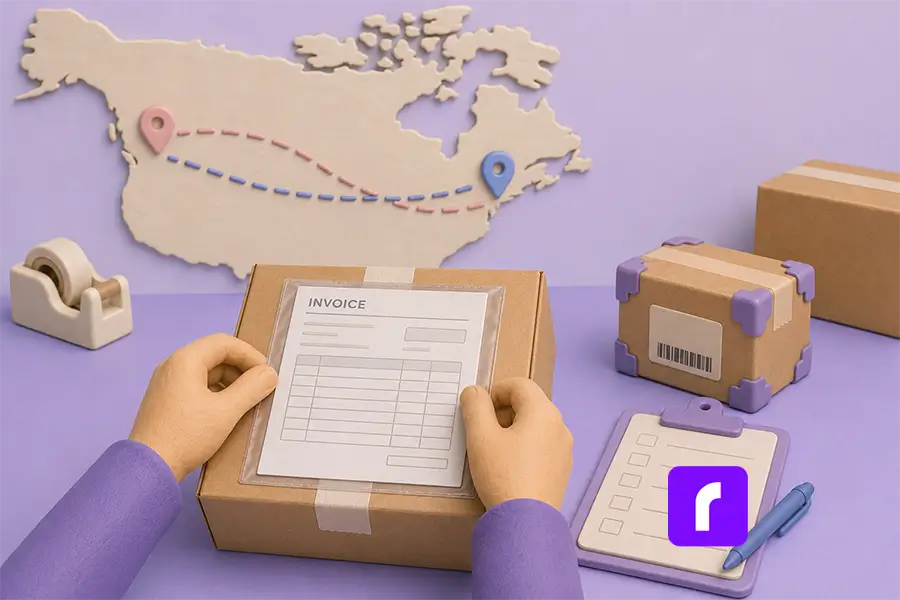
Every commercial shipment crossing the US–Canada border needs a commercial invoice stating what the item is, its value, its HS (Harmonized System) code, and its country of origin. High-value electronics raise the stakes on each field. A misclassified HS code changes the duty owed, and undervaluing a shipment to reduce duties can void insurance coverage. Accuracy on the paperwork is financial protection, not just a compliance task.
The duty rules are no longer symmetrical. The United States suspended its $800 de minimis exemption effective August 29, 2025, under Executive Order 14324. In June 2026, CBP codified the suspension as indefinite in its own regulations, independent of the executive order.
Every commercial shipment entering the US now requires customs entry and duties, whatever the value. Canada kept its thresholds. For cross border shipping to Canada, courier shipments from the US enter duty-free at CAD $150 or less, and tax-free at CAD $40 or less.
| Direction | Duty and tax treatment (as of July 2026) | Source |
|---|---|---|
| US → Canada, courier | Duty-free at CAD $150 or less; tax-free at CAD $40 or less (CUSMA courier thresholds) | CBSA |
| US → Canada, mail | Duty- and tax-free at CAD $20 or less | CBSA |
| Canada → US, any mode | No de minimis. The $800 exemption has been suspended since August 29, 2025; every commercial shipment requires customs entry and applicable duties | CBP / Federal Register |
For industrial electronics, these thresholds are mostly academic. Most units exceed every figure above. Assume duties and taxes apply, and treat the HS classification, the declared value, and the incoterms — which decide who pays — as the real variables.
Coverage also changes at the border. Insurance limits for international legs are often lower than domestic limits on the same carrier service. Some coverage excludes specific goods categories entirely. Confirm the cap before the shipment leaves the dock.
Carrier options shift as well. From a US origin, USPS, UPS®, and FedEx all offer cross-border services into Canada. From a Canadian origin, Canada Post provides broad domestic and cross-border coverage, and Purolator serves as an integrated domestic Canadian carrier with US-bound options. Canadian-origin shippers can find setup details on the Canada shipping page and the Canada Post carrier page.
One scope note for defense-adjacent shippers. Export-controlled goods—including many defense electronics—fall under ITAR and export-administration rules that no shipping platform resolves; route those shipments through official government guidance and your compliance counsel first.
For a broader look at international lanes beyond Canada, see our guide to international shipping options.
The End-to-End Workflow for a High-Value Cross-Border Shipment

A high-value cross-border shipment follows the same seven steps as any parcel — order intake, packing, carrier selection, label creation, printing, handoff, and tracking. What changes is what each step has to capture: documented condition, declared value, customs data, and coverage confirmation. The table below shows where the high-value additions land.
| Workflow step | Standard shipment | What changes when it’s high-value and cross-border |
|---|---|---|
| Order intake | Confirm address and contents | Verify commercial invoice data: HS code, origin, accurate value |
| Packaging | Single box, basic cushioning | Double-box, anti-static layer, photograph before sealing |
| Carrier selection | Pick by price and speed | Compare coverage caps, cross-border service, and DIM impact together |
| Label creation | Weight + dimensions | Add declared value; attach customs documentation |
| Label printing | Print and apply | Include required customs copies per carrier |
| Handoff / shipment | Drop off or pickup | Obtain acceptance scan as chain-of-custody evidence |
| Tracking | Watch for delivery | Monitor border clearance status; act fast on customs holds |
| Claims (if needed) | Basic claim form | Submit photos, invoice, and packing evidence assembled at step 2 |
Running manually, this workflow lives in several places at once. Values sit in a spreadsheet. Each carrier account has its own portal, and every border crossing gets its own customs form. Each handoff between systems is a place where a declared value gets skipped or an HS code gets retyped wrong.
Once the workflow itself is clear, the next question is which system structure lets one operations person run it consistently across carriers and both countries.
How a Multi-Carrier Shipping Platform Handles High-Value Shipments

A multi-carrier shipping platform puts rate comparison, label creation, declared value entry, and customs documentation in one place across every carrier account. Instead of checking coverage caps and cross-border prices portal by portal, the shipper sees the options side by side before committing to a label. For high-value shipments, that single view is where cost, coverage, and compliance stop being separate lookups.
Rollo Ship is a multi-carrier shipping platform available in the United States and Canada. It connects shippers to USPS, UPS®, FedEx, Canada Post, and Purolator from a single dashboard—FedEx and FedEx Canada through connected accounts. Rollo is not a carrier, and postage is always paid directly to the carrier.
For electronics and B2B shippers specifically, the platform surfaces the three decisions this article covers in one flow: carrier choice, DIM-aware billable weight, and declared value options—all before the label prints. Rollo Ship’s AI-powered rate selection groups similar orders, applies the seller’s shipping rules, and recommends the cheapest service before the label is printed. Product data stays stored for reuse on customs paperwork, alongside inventory tracked in both USD and CAD. This is how multi-carrier comparison stops overpayment at the label level.
The comparison covers cross-border shipping from both US-origin and Canada-origin accounts. That is the structural piece most single-country tools lack.
Consider a concrete case. An operations manager at a security-camera company in Texas ships replacement units to installers in both Dallas and Toronto. Domestic units go out at standard declared value; Toronto-bound units need a commercial invoice, an HS code, and a coverage check against the international cap. On one platform, both orders run through the same workflow — the border shipment simply carries more fields, not a second system.
Pricing follows volume rather than a subscription. Rollo Ship is free to start with no monthly fee; a per-label service fee starts at 5 cents and drops as low as 1 cent through Rollo Rewards, with the first 200 labels fee-free for new users. Postage itself is separate and always goes to the carrier.
Rollo Ship holds a 4.8★ rating on Capterra. More than 500,000 sellers across the US and Canada ship on the platform.
This extends the ground covered in our guide to shipping equipment for robotics and security businesses — that article handles the equipment-shipping fundamentals; this one adds the border.
What Happens Without a System Like This

Without a unified system, high-value cross-border shipping runs on fragmented tools. Rates get checked in one carrier portal at a time, so the coverage-versus-cost comparison never happens in one view. Declared values live in a spreadsheet that someone updates by hand.
Customs paperwork gets rebuilt per shipment instead of drawn from stored product data. Each rebuild is a chance to mistype an HS code or an item value. Tracking happens carrier by carrier, so a customs hold in one portal can sit unseen for days.
None of this fails loudly. It shows up as a slow, cumulative cost: an underinsured claim here, a duty surprise there, and an hour per day of portal-hopping that never gets counted. The structural fix is consolidation, not more diligence.
Who This Is NOT For
If you ship a high-value item once or twice a year, carrier-native tools handle it fine. The counter service at any USPS, UPS®, FedEx, Canada Post, or Purolator location can set declared value and coverage for a one-off shipment.
This also isn’t a fit if a 3PL controls your label creation. When fulfillment is fully outsourced, carrier selection and declared value are the 3PL’s workflow, not yours.
The structural gains belong to teams that create their own labels and handle cross-border shipping across the US–Canada border regularly. For everyone else, the fundamentals in this guide still apply. The platform layer is optional.
Make label printing the easiest part of your workflow
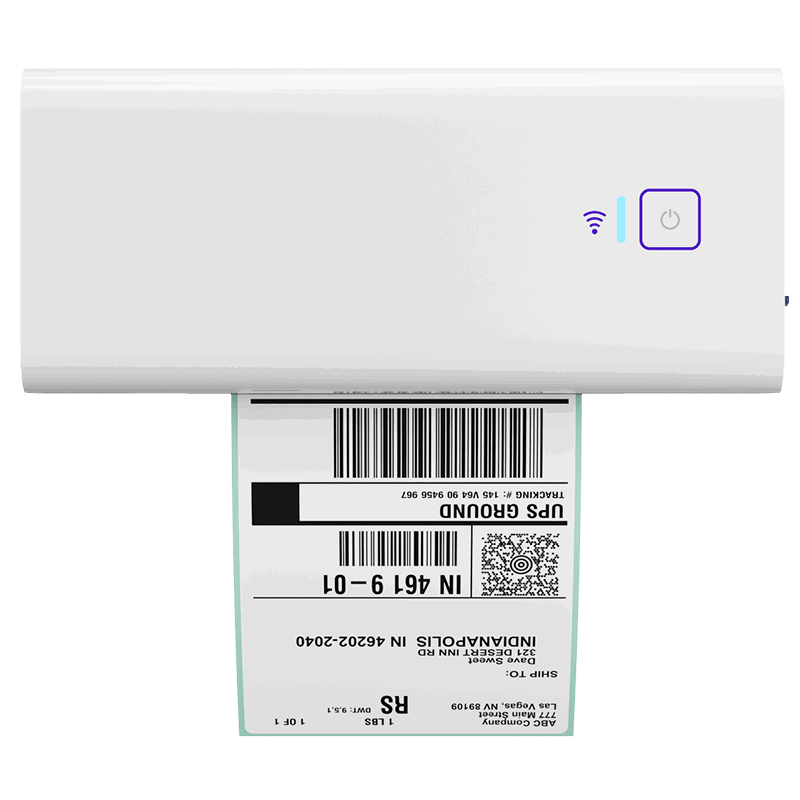
If your team is ready to spend less time on one-by-one labels, the Rollo Wireless Printer can help simplify one of the most repeated steps in shipping. It is a practical next step for small teams that want faster label printing, fewer interruptions, and a setup that feels easier to manage as order volume grows.
When to Try Rollo Ship
If you’re still reading, the threshold below probably describes your operation. Your team handles cross-border shipping of high-value items regularly, and the work currently spans portals and spreadsheets. That is the point where a multi-carrier platform changes the job from portal-hopping to a single repeatable flow.
Rollo Ship is the platform-level answer to the problems this guide covers: side-by-side carrier comparison in both countries, declared value and DIM-aware decisions before the label, and one tracking view across USPS, UPS®, FedEx, Canada Post, and Purolator.
The economics reward exactly the shippers who face these problems most. Free to start, no monthly subscription, first 200 labels fee-free, and a per-label fee that falls from 5 cents to as low as 1 cent through Rollo Rewards as volume grows.
Sign up for Rollo Ship and run your next high-value shipment—domestic or cross-border—through one dashboard.
Ready for a shipping workflow that scales without adding more chaos?
If your team is spending too much time on rate checks, label creation, and order handoffs, Rollo Ship can help bring those steps into one place. It is a practical next step for small teams that want more clarity, fewer repeated tasks, and a shipping process that feels easier to manage as order volume grows.

Follow Rollo on:
Frequently Asked Questions About Shipping High-Value Items
📌 Q: Do I need a customs broker to ship high-value electronics from the US to Canada?
💭 A: Not always. Courier carriers typically include customs brokerage on standard cross-border services, though brokerage and disbursement fees can apply. Complex, regulated, or unusually high-value goods may warrant a licensed customs broker. Every shipment needs an accurate commercial invoice with the correct HS code, declared value, and country of origin, whichever route you choose.
📌 Q: How is high-value cargo insured during transit?
💭 A: Two mechanisms exist. Declared value raises the carrier’s liability ceiling for a fee and caps the claim payout. Separate shipping insurance — carrier or third-party — covers value beyond that cap through its own claim process. Many shippers use both. A multi-carrier platform like Rollo Ship lets you set declared value while comparing carriers.
📌 Q: Are there insurance options available for mailing expensive items?
💭 A: Yes. Carriers in the US and Canada offer added coverage at label creation, and third-party insurers cover values above carrier caps. The right option depends on value, destination, and whether the shipment crosses a border. Seeing coverage alongside rates in one view makes the tradeoff visible before you buy the label.
📌 Q: What documents are needed to file a shipping insurance claim?
💭 A: Most claims require proof of value (invoice or receipt), proof of shipment (label and acceptance scan), and evidence of condition and packing — ideally photos taken before sealing the box. Cross-border claims may also require the commercial invoice. Assembling this evidence at packing time is what separates paid claims from denied ones.
📌 Q: Should I use anti-static bags for electronics when packing for transport?
💭 A: Yes, for any exposed circuit boards, drives, or components. Anti-static bags protect against electrostatic discharge, which can destroy electronics without visible damage. Cushioning does not provide this protection, so the anti-static layer goes on first, then padding, and then the double box. Sealed devices in original retail packaging are typically already protected.
📌 Q: Are there limits to coverage for international shipments?
💭 A: Yes. Coverage caps for international legs often differ from domestic caps on the same carrier, and some goods categories are excluded entirely. Crossing the US–Canada border can change both the maximum insurable value and the required claim documentation. Comparing carriers and coverage from one account, across US and Canadian origins, makes that check routine.
📌 Q: What are the costs involved in shipping electronics overseas?
💭 A: Five components stack: the base carrier rate, any DIM-weight uplift from package size, declared-value or insurance fees, duties and taxes at the destination, and possible brokerage or disbursement fees. The mix shifts by carrier, service, and direction. Comparing the total across carriers before buying the label is what keeps the number predictable.
📌 Q: Can you ship lithium batteries from the US to Canada?
💭 A: Yes, on services that accept them, but the rules are strict. Carriers classify shipments by battery chemistry, watt-hour rating, and whether batteries ship installed or loose. A configuration accepted domestically can face different requirements at the border, and loose batteries face tighter limits than installed ones. Check the carrier’s current dangerous-goods guidance for your exact service before printing the label.
📌 Q: Can you recommend affordable cross-border shipping providers?
💭 A: No single provider is cheapest for every shipment—the lowest landed cost shifts by weight, declared value, destination, and speed. The US–Canada carriers are USPS, UPS®, FedEx, Canada Post, and Purolator. Comparing landed cost across them before printing, rather than defaulting to one, is what keeps cross-border shipping affordable. A multi-carrier platform like Rollo Ship shows those options side by side.
📌 Q: What are the best options for cross-border shipping from the US to Canada?
💭 A: The main options are the major carriers—USPS, UPS®, FedEx, Canada Post, and Purolator—each with different cross-border coverage, customs handling, and declared-value caps. The right choice depends on the item’s value, size, and how fast it must clear the border. Comparing carriers and coverage in one view, rather than one portal at a time, makes the tradeoff visible before you buy the label.


