
TL;DR: US-Canada shipping is not about finding one universally cheapest carrier. It is about choosing the best option for your order type based on total landed cost, speed, and fee risk. If cross-border labels keep creating surprise charges or second-guessing, compare the full cost before you buy.
You have an order ready to go, but the hard part is not packing it. It is deciding whether shipping to Canada from US will be simple, affordable, or one more label that creates surprise fees later.
That is the real problem with US–Canada shipping: the best option changes with the order. A lightweight item, a fragile product, a rush shipment, and a repeat customer order can all call for different choices once cost, speed, and customer friction are in the mix.
The goal is not to chase the lowest rate. It is to make the kind of shipping decision that protects margin and leads to fewer surprises.
Here’s What We’ll Cover
How do you choose the best US-Canada shipping option for the order in front of you?

The best US-Canada shipping option depends on the shipment itself. Start with the order type, then compare total landed cost, delivery speed, fee risk, and how likely that path is to create customer friction after the label is purchased.
Most sellers do not need more shipping theory. They need a fast way to decide what to choose without turning every Canada-bound order into a mini research project.
The short answer most sellers actually need
A practical choice usually comes down to four questions:
- Is the order lightweight or bulky?
- Does it need to arrive fast?
- Is it fragile or higher risk in transit?
- Will this be a repeat shipment type you need to process again and again?
If you can answer those four questions, you are already much closer to the right path.
The four factors that change the right choice
- Total cost, not just label price
A cheaper quote can still lead to a worse outcome if extra fees appear later. - Customer experience
Some shipping paths may create more confusion or more surprise charges after delivery. - Handling risk
A fragile item should not be treated the same way as a lightweight T-shirt. - Workflow fit
A one-off order and a repeat order do not need the same decision process.
That is why the “best” option is rarely one universal answer. It is usually the option that fits the shipment with the least friction.
What changes the best shipping choice from one order type to another?

The right shipping path changes when the order changes. Lightweight items, heavier boxed shipments, fragile products, urgent deliveries, and repeat cross-border orders all create different tradeoffs around cost, speed, dimensional weight, customs handling, and customer-facing fees.
A broad “cheapest shipping” article usually misses the real question: what should you choose for this order?
| Order type | What matters most | Common risk | What usually matters more |
|---|---|---|---|
| Lightweight, lower-value | Lower total cost, simple handling | Surprise fees can outweigh the savings | Cost clarity and predictable delivery |
| Heavier boxed shipment | Weight-based pricing, space, transit time | A low quote can rise fast with extra charges | Total landed cost, not just base rate |
| Fragile item | Safer handling, fewer touchpoints | Damage risk and support headaches | Reliability over the lowest rate |
| Urgent shipment | Speed and tracking confidence | Paying for speed that the order does not need | Delivery time that matches the promise |
| Repeat order | Consistency and workflow speed | Repeating the same bad choice over and over | A process you can use every time |
Lightweight, lower-value orders
These orders often reward simplicity. If the item is small, easy to pack, and not especially urgent, the smartest path is usually the one that keeps total cost predictable and avoids turning a low-ticket order into a customer-service issue.
That does not always mean the lowest displayed rate. It means asking:
- Will this shipment stay simple all the way through delivery?
- Is the path likely to create extra fees that feel bigger than the item itself?
- Is the package light enough that a more basic route still makes sense?
For many small sellers, this is where a quick comparison matters most. A cheap-looking label can be a bad fit if the total experience feels messy afterward.
Heavier boxed shipments
Heavier orders change the math fast. The more weight and space you add, the less useful a “cheap label” mindset becomes.
Watch for these pressure points:
- Higher base shipping costs
- More sensitivity to box size
- More chance that the cheapest path stops being the cheapest
- Bigger impact on margin if you guess wrong
Heavier orders usually require a better look at the full cost picture before checkout is final and before the label is bought.
Fragile items
Fragile shipments should be chosen with risk in mind first. Even if one option looks cheaper, it may not be the best choice if the package is more likely to get damaged, delayed, or disputed.
A fragile shipment usually needs:
- Better handling confidence
- Stronger packaging discipline
- Clearer tracking
- Fewer avoidable handoff problems
If a damaged item creates a refund, replacement, or upset customer, the “savings” disappear fast.
Urgent shipments
Urgent orders are different because delay risk matters more than squeezing out the lowest possible rate. When the order has a deadline, the better question is not “what is cheapest?” It is “what gives me the best chance of hitting the promised window without creating a bigger mess?”
Use urgency as a real decision factor, not a guess. If the shipment is time-sensitive, clarity and consistency often matter more than small price differences.
Repeat or subscription-style orders
Repeat orders expose weak shipping choices faster than one-time orders do. A path that feels manageable once can become frustrating when you need it across dozens of labels.
This is where small inefficiencies pile up:
- Rechecking the same details every time
- Forgetting a customs step
- Using the wrong default for a certain order type
- Letting surprise charges keep showing up in the same pattern
This is also where comparison tools become more useful. When you can compare options before buying labels, the decision gets easier to repeat with less guesswork. That is the kind of workflow relief Rollo Ship is built to support.
Why is the cheapest quoted rate not always the best choice?

The cheapest quoted label rate can still create the worst overall result. Duties and taxes, brokerage exposure, dimensional weight, paperwork mistakes, and delivery friction can turn a lower upfront number into a more expensive cross-border decision.
That is why many sellers feel like they are “saving” on the label but losing on everything around it.
Base rate vs total landed cost
The base rate is only one piece of the real cost. A better comparison looks at the full picture:
- What you pay for the label
- What the customer may deal with later
- What delays or support issues may cost you
- What happens if the shipment needs extra handling
If you only compare the first number, you may miss the actual cost of the decision, which is why a deeper shipping cost breakdown for US and Canada can be helpful when you want to see where the extra cross-border costs usually show up.
Brokerage fees vs duties and taxes
These are not the same thing, and mixing them together creates bad decisions.
- Duties and taxes are part of the broader cross-border cost picture, and the CBSA guidance on duty and taxes owed is a useful reference if you want to understand why a shipment’s final cost may be higher than the quoted label rate.
- Brokerage-related charges are often the extra friction sellers and buyers complain about most.
- A shipment can look affordable until these other charges enter the experience.
This is one reason customers sometimes feel blindsided. The seller thinks the order shipped fine. The buyer feels like the final price changed later.
How dimensional weight changes the math
Dimensional weight confusion hits bulky, lightweight shipments especially hard. If the box takes up more space than the scale suggests, the rate can rise in ways that feel disproportionate.
Common examples include:
- Gift-style packaging
- Light products in oversized boxes
- Subscription boxes with a lot of empty space
- Fragile items packed with extra protection
That is why box size matters almost as much as weight in cross-border planning.
Why did my customer get charged extra after delivery?

Customers often get charged extra after delivery because the full cross-border cost was not visible before the label was purchased. The most common causes are duties and taxes, brokerage-related charges, or a shipping path that looked cheaper upfront but created more friction at the border.
This is usually not just a shipping issue. It is a trust issue.
The most common surprise-fee scenarios
- The seller compared only the label price
- The shipment path created added cross-border charges later
- The order looked “small enough” to stay simple, but did not
- Packaging increased the total cost more than expected
- The customer did not understand what they might owe
When the wrong path creates avoidable friction
A bad fit usually shows up after the label is already printed:
- Customer emails asking why the final cost changed
- Delivery delays tied to paperwork or clearance issues
- Refused packages
- Negative reviews from a charge the buyer did not expect
If those problems sound familiar, the real issue is usually the decision process before the shipment went out.
How to reduce post-delivery complaints
A few habits go a long way:
- Compare more than one option before you buy
- Treat cross-border cost visibility as part of the customer experience
- Match the shipping path to the order type
- Use a repeatable process for orders you ship often
The best prevention is not a better apology email. It is a better decision before the label exists.
What should you compare before you buy a cross-border label?

Before you buy a US–Canada Shipping label, compare more than the rate. Sellers should check order value, package size, package weight, urgency, likely duties and taxes, customs details, and whether the path creates a smoother customer experience.
A short checklist can prevent the mistakes that cost the most later.
A practical pre-label checklist
Use this quick process before buying any Canada-bound label:
- Confirm the order type
Is it lightweight, heavy, fragile, urgent, or repeat? - Check package weight and dimensions
Do not assume scale weight tells the full story. - Compare more than one shipping path
Look at cost, timing, and likely friction together. - Review customs details carefully
Small paperwork mistakes can create bigger delays later. - Ask what the buyer experience will feel like
Will the delivery feel clear, or confusing? - Decide whether this should become a repeat rule
If this order type shows up often, turn the decision into a workflow.
Print the Label Without
Slowing Down the Workflow
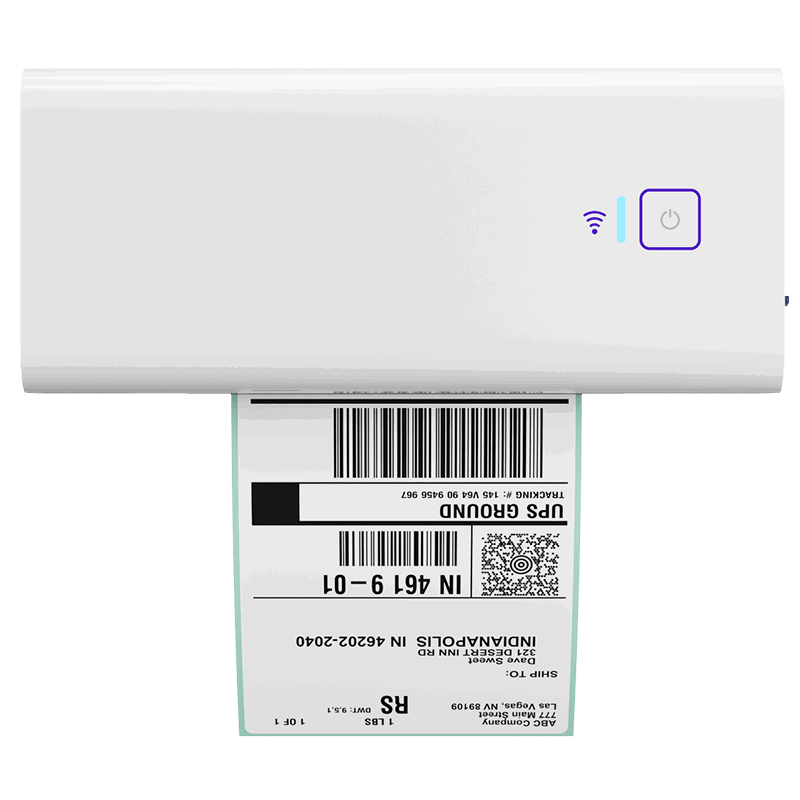
Once you know which shipping path makes the most sense, the next step should feel simple. Rollo’s Wireless Printer helps you print crisp 4×6 labels quickly, so your packing station keeps moving without adding extra friction to the order.
Which shipment details change cost the most
These details usually matter more than sellers expect:
- Box size
- Package weight
- Urgency
- Fragility
- Order value
- Whether the shipment type repeats often
That is another reason disconnected tools create friction. When rate comparison, customs details, and label creation live in separate places, it is easier to miss something important. A more connected workflow can make these decisions easier to catch before the label is purchased.
What documentation mistakes create avoidable friction
You do not need a paperwork-heavy process. You do need a careful one.
Watch for:
- Vague product descriptions
- Missing or inconsistent shipment details
- Customs information filled in too quickly
- Reusing the wrong defaults for a new order type
Paperwork errors rarely feel dramatic in the moment. They show up later as delay, confusion, or added work.
How do you make the right US–Canada shipping choice repeatable instead of manual?

The real goal is not choosing correctly once. It is building a workflow that helps you make the right choice every time. Cross-border shipping gets easier when rate comparison, customs information, package details, and label decisions all work together before mistakes become expensive.
That is the difference between a shipping task and a shipping system.
What a repeatable cross-border workflow should include
A useful workflow usually has five parts:
- A clear way to sort orders by type
- a reliable way to run a multi-carrier rate comparison
- A place to review customs details before label purchase
- A consistent packing process
- A simple rule for repeat shipment types
If any of those pieces is missing, the same avoidable mistakes tend to come back.
Where manual shipping decisions break down
Manual choices tend to fail when:
- You are shipping the same order type often
- Team members handle orders differently
- Package size changes more than expected
- You rely on memory instead of a process
- You only look at rates after the order is already packed
This is usually the point where a shipping app stops feeling optional and starts feeling useful.
When a shipping app becomes the logical next step
If your cross-border shipping choices still live across tabs, spreadsheets, notes, and memory, it becomes hard to stay consistent. That is where Rollo Ship fits naturally: it helps bring rate comparison, label flow, and order workflow into one place so you can make clearer decisions with fewer surprises.
It is not about adding another tool for the sake of it. It is about making the right choice easier to repeat.
Make Cross–
Border
Shipping
Easier
to Repeat
If you are tired of bouncing between tabs, second-guessing label choices, and dealing with surprise-fee fallout later, Rollo Ship gives you one place to compare rates, manage label flow, and make clearer shipping decisions before you buy.

Final Words
There is no one-size-fits-all answer for US–Canada Shipping. The right choice depends on what you are sending, how fast it needs to arrive, and how much risk you are willing to take on cost surprises or delivery friction. When you compare options by order type instead of chasing the lowest quoted rate, it becomes much easier to protect margin and create a smoother customer experience. Once that decision framework is in place, the smaller follow-up questions become a lot easier to handle.
Follow Rollo on:
Frequently Asked Questions About US-Canada Shipping Based on Order Type
📌 Q: What is the best US–Canada Shipping option for a lightweight order?
💭 A: For many lightweight orders, the best option is the one that balances cost, fee predictability, and customer experience. The lowest label price is not always the best fit if it leads to more friction later.
📌 Q: Why is the cheapest shipping option not always the best one?
💭 A: A lower quoted rate can still lead to higher total cost once duties, taxes, brokerage exposure, or dimensional weight come into play. That is why total landed cost matters more than the first number you see.
📌 Q: How can I avoid surprise fees when shipping to Canada?
💭 A: Start by checking more than the rate. Compare likely charges, order type, packaging, customs details, and the buyer experience before you buy the label.
📌 Q: What should I compare before buying a cross-border label?
💭 A: Compare order value, package size, package weight, urgency, customs details, and likely customer-facing charges. That gives you a stronger shipping decision than rate shopping alone.
📌 Q: Does the best US–Canada shipping choice really change by order type?
💭 A: Yes. Lightweight, bulky, fragile, urgent, and repeat shipments create different tradeoffs, so the right path can change even for the same store.
📌 Q: Why did my customer get charged extra after delivery?
💭 A: That usually happens when the full cross-border cost was not visible upfront or when the shipment path created extra friction later. It is often a sign that the pre-label decision process needs work.
📌 Q: When does a repeatable shipping workflow matter most?
💭 A: It matters most when you ship to Canada regularly and cannot afford to rethink every order from scratch. A repeatable workflow saves time and helps reduce avoidable mistakes.
📌 Q: What matters more: the lowest rate or a smoother customer experience?
💭 A: That depends on the order, but many sellers lose more from friction than from a slightly higher upfront rate. A smoother experience can protect margin, reviews, and support time.


