
TL;DR: TikTok Shop shipping costs, commissions, fulfillment, and returns quietly erode margin — but shipping is the part you can control when you see real costs before every label. Rollo Ship shows DIM weight and multi‑carrier rates for TikTok Shop orders in one dashboard.
TikTok Shop Fulfillment Costs Overview
- TikTok Shop fulfillment costs include TikTok Shop shipping, packaging, returns, and handling between each sale and delivered order—not just platform commission.
- TikTok Shop commission is only the first deduction—shipping, packaging, and returns stack on top before margin is real.
- Residential surcharges, DIM weight, and untracked return costs are the biggest drivers of margin loss for TikTok Shop sellers in the U.S. and Canada.
- Most TikTok Shop orders ship to residential addresses, which means residential delivery fees apply on nearly every label.
- DIM weight pricing can push billed weight well above the product’s actual weight when packaging is larger than necessary.
- TikTok Shipping hides the actual carrier rate inside your net settlement — you never see what you’re paying per label.
- TikTok continues to update when US sellers can use their own labels, testing more TikTok‑managed logistics over time.
- TikTok Shop orders import automatically so carrier comparison becomes part of your TikTok workflow, not a separate task.
- Rollo Ship compares USPS, UPS®, FedEx, Purolator, and Canada Post rates before label creation with TikTok Shop orders imported automatically.
Read Ahead

TikTok Shop has grown into one of the most significant e-commerce channels in North America for social-driven brands. According to eMarketer, social commerce sales in the US are projected to continue growing through 2026, with TikTok Shop representing a meaningful share of that volume.
Most TikTok e-commerce strategies focus on content and pricing, but long-term profit depends on understanding TikTok Shop fulfillment costs, shipping, and returns before campaigns scale.
The appeal is obvious: a built-in audience, organic discovery through short video, and a checkout experience that turns viewers into buyers faster than almost any other platform.
What is less obvious—until the first few invoices arrive—is what happens to margin after the sale. Most sellers anchor on commission because it is visible in the Seller Center. The real TikTok Shop shipping costs and fulfillment fees live underneath that line: carrier charges, packaging, residential surcharges, and returns that quietly erode platform shipping margins.
This is the operational reality for the TikTok Shop self‑starter and the platform‑locked seller who trusts platform‑default shipping. The orders feel good and dashboards look busy, but end‑of‑month profit is far smaller than the sale price implied. The pattern is simple: “I just started selling on TikTok Shop, and my shipping costs are killing the margins I thought I had.”
This article breaks down exactly what TikTok Shop fulfillment costs look like in 2026—commission, e-commerce shipping on TikTok, packaging, and returns—and what a shipping workflow looks like when it controls those costs instead of discovering them on the monthly invoice.
What Are TikTok Shop Fulfillment Costs in 2026?

TikTok Shop fulfillment costs are all the expenses that sit between a completed sale and a delivered order, beyond platform commission. They include carrier shipping charges, packaging and supplies, pick and pack labor, optional third-party fulfillment fees, and the cost of handling returns.
Together, they determine whether a product is actually profitable — or just generating revenue that looks good until the freight bill arrives.
The reason this surprises sellers is simple: TikTok Shop’s checkout flow is fast and frictionless for the buyer. The cost stack running in parallel on the seller side is not.
Most sellers calculate margin as sale price minus product cost before the first order ships. The rest of the stack shows up later, quietly, until the monthly numbers don’t add up.
Understanding TikTok Shop fulfillment costs as a complete picture — not as isolated line items — is the foundation of any margin that holds at scale.
How TikTok Shop Commission Fits into Your Real Margin

TikTok Shop commission is just the first deduction from your sale price, not the whole fulfillment picture. After commission, you still absorb shipping, packaging, and returns before any true profit remains.
Sellers who only track the commission rate often underestimate how much total fulfillment eats into each order — and price their products accordingly, which is how breakeven SKUs end up looking like winners until the freight bill arrives.
Commission rates on TikTok Shop vary by product category and promotional period. During platform growth phases, TikTok has used reduced commission incentives to attract sellers — which some sellers have built into their margin models without stress-testing what happens when those incentives normalize.
The key distinction: Commission is fixed and non-negotiable at the platform level. Shipping, packaging, and return costs are variable. The controllable margin lives entirely in the fulfillment layer — not in the platform fee. This is where effort pays off.
The practical takeaway: model real margin using the full cost stack, not just commission. Commission is the most visible fee. It is rarely the largest one once shipping and returns are included.
Shipping and Delivery Fees: The Biggest Variable in TikTok Shop Fulfillment

Shipping and delivery fees are usually the most volatile part of TikTok Shop fulfillment costs. Carrier rates shift with weight, dimensions, delivery zone, and residential address surcharges — and most sellers bake free shipping into the listing price rather than charging separately.
The result is a margin line that moves every time shipping costs shift, with no corresponding adjustment to the price the buyer sees.
What compounds this: nearly every TikTok Shop order ships to a residential address. Residential delivery surcharges apply to home deliveries and are one of the most consistently underestimated costs in seller margin calculations — present on almost every label, visible only on the invoice after the label is printed.
| Surcharge Type | What Triggers It | Impact on TikTok Shop Sellers |
|---|---|---|
| Residential delivery fee | Shipping to a home address | Applies to nearly every TikTok Shop order — most buyers ship home |
| Dimensional weight (DIM) | Package volume exceeds actual weight threshold | Billed weight often higher than product weight when packaging is oversized |
| Fuel surcharge | Applied as % of base rate, adjusted periodically | Compounds on thin margins; not always visible at label purchase |
| Peak season surcharge | Q4, major sale periods | Hits precisely when TikTok Shop volumes are highest |
TikTok Shop’s built-in shipping tool provides access to a defined set of carriers. Sellers who compare rates across USPS, UPS®, FedEx, and others before printing each label frequently find meaningful cost differences on the same package — particularly for lightweight parcels where carrier pricing diverges most. Platform-default shipping makes that comparison invisible.
Packaging, Supplies, and Handling: The Hidden TikTok Shop Costs

Packaging and handling rarely show up as line items on a TikTok invoice, but they are real costs that compound over time. Boxes, mailers, tape, labels, void fill, and the time it takes to pick and pack each order all reduce effective margin.
At low volume they feel negligible. At 200 orders per week, they are a real number that belongs in the margin model before the first SKU goes live.
Two packaging decisions directly affect shipping costs as well. Box sizing determines DIM weight — a product shipped in a box larger than necessary triggers DIM billing that a tighter package would avoid entirely.
Packaging weight adds to actual weight on every label. Both are controllable before the label prints, not after.
Right-sizing packaging is one of the fastest TikTok Shop margin fixes available — it reduces DIM weight on every label, automatically, without changing anything about the product or the carrier.
Returns on TikTok Shop: How They Impact Fulfillment Costs

Returns turn a single TikTok order into multiple fulfillment events on the same revenue. You may refund part or all of the sale, cover return shipping, and still pay for inspection or repackaging before the item can be resold — or write it off entirely. Even a modest return rate can erase the profit on otherwise strong products, especially at the thin margins that characterize most TikTok Shop categories.
❌ Original outbound shipping cost — spent and non-recoverable regardless of return outcome.
❌ Return shipping cost if the seller’s policy covers it.
❌ Processing time and restocking or disposal cost for the returned unit.
❌ Potential algorithm impact if return rates rise above TikTok Shop’s category benchmarks.
Social video can create stronger expectations than static listings, which many sellers experience as higher return pressure compared to other ecommerce channels.
Building a return cost estimate per SKU into the margin model before scaling, even a rough one, gives sellers a more accurate picture of real profitability before they commit ad spend or inventory to a product.
US vs Canada: What Changes in TikTok Shop Fulfillment Costs?

TikTok Shop sellers in the US and Canada face the same basic cost categories, but the mix changes by market. In the US, shipping often centers on USPS and UPS® ground economics for domestic orders, with FedEx used for time-sensitive deliveries.
Canadian sellers navigate Canada Post, Purolator, and regional delivery realities that produce different zone economics — and often different DIM divisors — compared to their US counterparts.
Cross-border orders between the US and Canada add customs declarations, brokerage fees, and longer transit windows that don’t apply to domestic shipments in either country.
Brokerage fees in particular are often invisible at the rate comparison stage and surface only when the shipment clears customs—which is why confirming total landed cost before label purchase matters more on cross-border orders than on domestic ones.
This is why sellers who treat TikTok as one channel inside a larger multi-carrier shipping system—rather than relying entirely on TikTok logistics—tend to build more stable platform shipping margins over time.
For the cross-border seller managing TikTok Shop across both markets, Rollo Ship’s combined US–Canada carrier coverage—USPS, UPS®, FedEx, Canada Post, UPS Canada, FedEx Canada, and Purolator—in one dashboard means domestic and cross-border orders are compared and fulfilled from the same workflow without switching tools.
How to Calculate TikTok Shop Fulfillment Cost per Order

A straightforward way to calculate TikTok Shop fulfillment cost per order is to start with your sale price and subtract each major cost layer in sequence.
List commission, carrier shipping cost (DIM-inclusive, including residential fee), packaging materials, pick and pack labor, and a return cost estimate based on your historical return rate for that SKU.
The remainder is your true pre-order margin—not the product margin, but the order margin that actually settles in your account.
| Cost Layer | How to Estimate It | Common Mistake |
|---|---|---|
| Platform commission | Current TikTok Shop Seller Center rate for your category | Using a promotional rate without stress-testing the standard rate |
| Carrier shipping (DIM-inclusive) | Calculate DIM weight first, then compare landed cost across carriers | Using base rate without DIM weight or residential surcharge included |
| Packaging materials | Cost per box or mailer × orders shipped | Treating as zero or rounding down to negligible |
| Pick and pack labor | Estimated time per order × hourly rate (including your own time) | Not counting owner time as a real cost in the model |
| Return cost estimate | Historical return rate × (outbound + return shipping + processing) | Only calculating return cost after the first high-return quarter |
Once this per-SKU model exists, sellers can identify which products can absorb free shipping without margin risk — and which ones are silently breakeven. This is the calculation most TikTok Shop sellers build only after a bad month, rather than before the first listing goes live.
Building a TikTok Shop Shipping Workflow That Protects Margin

A margin-safe TikTok Shop shipping workflow treats the label as the outcome of informed decisions, not a last-minute click. You choose packaging with DIM weight in mind, compare carrier options before buying postage, and standardize how returns are handled so every return has a known cost rather than an unknown one.
When every step follows a repeatable structure, fulfillment costs become predictable—rather than something that surprises you on month-end invoices.
| Step | What Happens | Where Margin Is Protected |
|---|---|---|
| Order import | TikTok Shop orders pull automatically into the dashboard. | All orders in one place — no manual entry or missed shipments |
| Right-size packaging | Smallest appropriate box or mailer selected per product | DIM weight minimized before carrier rates are even compared |
| DIM calculation | Billed weight calculated before carrier selection | True carrier cost known before the label is committed |
| Carrier comparison | Rates compared across USPS, UPS®, FedEx, and others | Lowest landed cost selected — not the platform default |
| Label creation and print | Label generated at selected rate, printed directly | No manual re-entry; no switching between portals |
| Tracking sync | Tracking pushed back to TikTok Shop order automatically | Buyer notified; no manual update step needed |
Without a structured shipping workflow, most TikTok Shop sellers only discover new fees during their worst months — when order volume spikes, returns climb, and ad spend is already locked in.
Residential surcharges, DIM weight, and unplanned return shipping show up on invoices, not dashboards, so margin erosion looks like a mystery instead of the predictable outcome of default shipping decisions.
For TikTok Shop sellers managing TikTok Shop shipping & tracking across dozens or hundreds of weekly orders, the practical gap is not finding a carrier—it is using an e-commerce seller platform that makes cost and carrier decisions visible before every label, not buried in a net settlement afterward.
A pre‑label comparison step is what turns those “surprises” into costs you can see and control before every order ships.
Make label printing the easiest part of your workflow
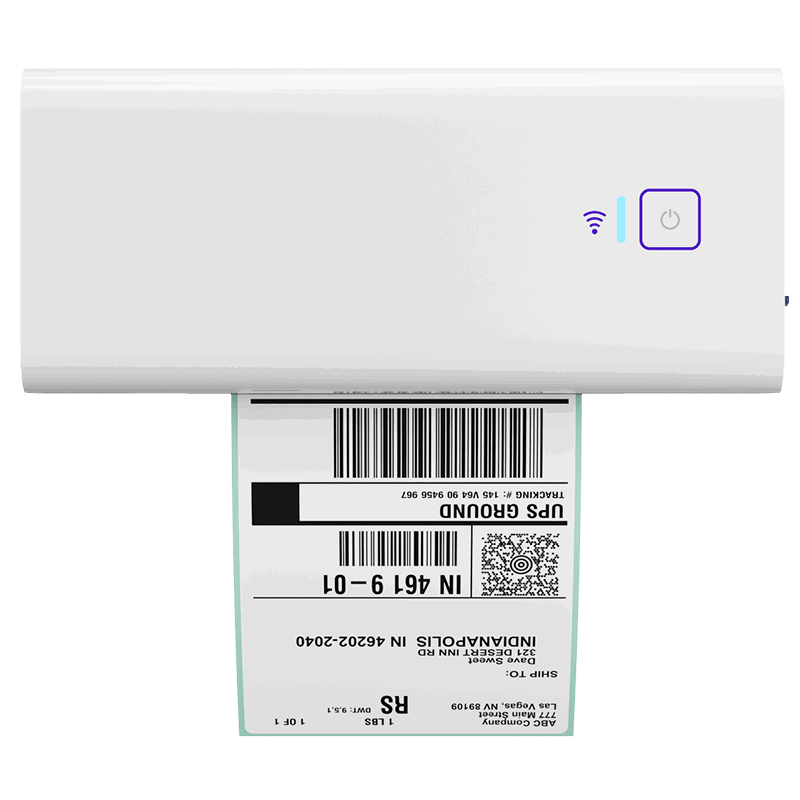
If your team is ready to spend less time on one-by-one labels, the Rollo Wireless Printer can help simplify one of the most repeated steps in shipping. It is a practical next step for small teams that want faster label printing, fewer interruptions, and a setup that feels easier to manage as order volume grows.
What a Skipped Workflow Actually Costs

A TikTok Shop seller is shipping 150 orders per week—accessories and soft goods, $12–$25—using platform-default shipping without any DIM calculation. Every label is slightly oversized. Residential fees apply to every order. The carrier comparison never runs. The return rate is 8% but not budgeted into any SKU model.
❌ DIM adds ~0.6 lbs to billed weight on most labels — on every order, every week, compounding.
❌ Residential fee applies to 100% of deliveries — never factored into original listing margin.
❌ Platform default carrier selected on every label — no visibility into whether a cheaper option exists on that lane.
❌ 8% return rate absorbed but not budgeted — real per-SKU profitability overstated from day one.
These skipped steps mirror the TikTok Shop Self-Starter’s core margin pains in 2026: free shipping absorbing more than budgeted, DIM billing on products that could ship lighter, residential fees on every label, and carrier selection by default rather than by comparison.
Where Rollo Ship Fits in TikTok Shop Fulfillment
Rollo Ship fits into TikTok Shop fulfillment as the shipping layer that gives sellers cost visibility before labels are created. TikTok Shop orders can be imported into one dashboard, where USPS, UPS®, FedEx, Canada Post, and Purolator rates are compared side by side — with DIM weight calculated per shipment and full landed cost visible before any label is committed.
With no monthly subscription and per-label fees that decrease as volume grows, the platform scales with actual order activity rather than charging a fixed overhead regardless of how much you ship.
Rollo provides the shipping infrastructure TikTok Shop sellers need to manage carrier selection, DIM weight, label creation, and order tracking in one integrated system — across the U.S. and Canada — without building a separate logistics workflow outside of TikTok.
Rollo is a multi-carrier shipping platform that helps TikTok Shop sellers compare carrier rates, generate shipping labels, and manage shipments across the United States and Canada. Rollo Ship is available with no monthly subscription fee—a small per-label service fee applies, starting at 5 cents per label, with the first 200 labels free.
The TikTok Shop integration for Rollo Ship imports orders automatically so you can manage TikTok shipping and tracking from the same dashboard as Shopify, Amazon, and other channels.
How a TikTok Shop Owner Uses Rollo Ship Day-to-Day
For a TikTok Shop owner using platform-default shipping today, switching to Rollo Ship is a one-time store connection that immediately changes how every order is fulfilled. Here is what the day-to-day TikTok Shop shipping and tracking workflow looks like:
- Connect TikTok Shop to Rollo Ship: Authorize the TikTok Shop integration so orders begin importing automatically into your Rollo dashboard.
- Review auto-imported TikTok orders: See all new TikTok Shop orders in one place, ready for packaging and carrier comparison without switching portals.
- Right-size packaging and confirm DIM weight: Choose the smallest appropriate box or mailer for each SKU and let Rollo calculate DIM weight so billed weight is known before you pick a service.
- Compare carrier rates and services: View USPS, UPS®, FedEx, Canada Post, and Purolator side by side, then select the lowest landed cost that still meets your delivery promise for each TikTok Shop shipment.
- Print labels and sync tracking to TikTok: Generate labels in Rollo Ship and let tracking sync back to TikTok Shop automatically so buyers receive updates without a manual step.
An Example Scenario
An accessories creator sells exclusively on TikTok Shop—no Shopify, no Amazon, 100% social commerce—and ships about 120 orders per week with free TikTok Shop shipping to stay competitive. Before using the TikTok Shop integration for Rollo Ship, she relied on platform-default shipping and never saw the true carrier rate or DIM weight on her packages.
After connecting TikTok Shop directly to Rollo Ship, she right-sized packaging on her top SKUs, shifted some lanes to USPS services where they beat her previous TikTok Shipping cost, and now sees per-label cost before printing instead of only in net settlement—turning her TikTok e-commerce strategy into a margin-aware TikTok Shop fulfillment workflow.

For TikTok Shop sellers specifically, Rollo Ship provides:
- Direct TikTok Shop integration — orders import automatically, no manual entry. See the TikTok Shop integration.
- Real-time rate comparison across USPS, UPS®, FedEx, and more — before label purchase, not after.
- DIM weight calculated per shipment — billed weight visible before carrier selection.
- Batch label printing for high-volume TikTok Shop order days.
- Tracking synced back to TikTok Shop automatically — no manual update step.
- Multi-marketplace dashboard — Shopify, Amazon, eBay, WooCommerce, Walmart, and more from one account. See the full integrations list.
For US sellers, Rollo Ship provides access to discounted USPS rates (up to 90% off retail USPS rates on select services) and discounted UPS® rates. FedEx accounts can be connected for rate comparison alongside USPS and UPS®.
*Discounts off UPS® daily rates. Rates limited to shipping from the U.S. only. Rates and discounts are subject to change without notice.
Rollo Ship has no monthly subscription. The first 200 labels are free. After that, a small per-label service fee applies — starting at 5¢ and decreasing to as low as 1¢ at the VIP tier through Rollo Rewards. Postage is always paid directly to the carrier. No business verification required. No minimum shipment volume.

Workflow Example
An apparel seller on TikTok Shop and Shopify routes compact, low-return SKUs through FBT for the free-shipping default — while routing oversized or high-return items through Shopify with Rollo Ship handling carrier comparison and label printing. TikTok Shop drives discovery. Rollo Ship protects the margin on every label.
Who This Article Is For — and Who It Is Not For
Written For
The TikTok Shop owner using platform-default shipping — new or scaling — whose margins feel thinner than the sale price suggests, who has not yet mapped the full cost stack per SKU, and who is using platform-default shipping without comparing carrier rates.
Also, the multi-channel seller managing TikTok Shop alongside Shopify or Amazon who wants one shipping workflow across all channels and is ready to integrate TikTok Shop with a multi-carrier platform like Rollo Ship.
Not For
TikTok Shop sellers who already calculate DIM weight per product, compare carrier rates before every label, and maintain a full per‑SKU fulfillment cost model that includes packaging, returns, and surcharges.
It is also not for brands that have fully outsourced fulfillment to a 3PL or TikTok‑managed programs where they never see carrier invoices; in those cases, your leverage sits in contract terms more than daily workflow changes.
Ready for TikTok shipping costs that make more sense per order?
If TikTok orders look healthy but your margin disappears after platform fees, shipping, and packaging, Rollo Ship helps you see the full landed cost before you print a label. It pulls TikTok Shop orders into one dashboard, compares carrier rates for U.S. and Canadian shipments, and makes it easier to choose services that protect your margin instead of guessing from a single rate.

The Bottom Line on TikTok Shop Fulfillment Costs in 2026
TikTok Shop is a real ecommerce channel with real fulfillment economics. The sellers who build profitable operations on it are not the ones who found the most viral product format. They are the ones who mapped their full cost stack — commission, shipping, packaging, returns — before listing, and built a workflow that controls the variable costs on every order rather than discovering them on the monthly freight bill.
Shipping is the most controllable variable in that stack. Carrier rates differ on the same shipment. DIM weight can be reduced with better packaging decisions made before the label prints. Residential fees are predictable once you account for them at listing.
Return costs can be budgeted once return rates are tracked by product. None of these fixes require a logistics team. They require a pre-label workflow that makes the cost decisions visible before every label — not discoverable afterward.
For the TikTok Shop Self-Starter, that means one repeatable step before every order ships: compare rates, confirm DIM weight, and print. Before the label. Not after the invoice.
Follow Rollo on:
Frequently Asked Questions: TikTok Shop Fulfillment Costs and Shipping
📌 Q: What are TikTok Shop fulfillment costs?
💭 A: TikTok Shop fulfillment costs are all the expenses between a completed sale and a delivered order, beyond product cost and platform commission. They include carrier shipping charges, packaging and supplies, pick and pack labor, optional third‑party fulfillment fees, and the cost of handling returns on each SKU.
📌 Q: Are TikTok Shop shipping costs really “free” for sellers?
💭 A: When buyers see free shipping on TikTok Shop, the seller is usually absorbing the shipping cost inside the sale price instead of charging it separately. Carrier rates, residential surcharges, fuel, and peak fees still apply on every label and quietly reduce the margin on each order.
📌 Q: How do I calculate TikTok Shop fulfillment cost per order?
💭 A: Start with your sale price and subtract each major cost layer in sequence: TikTok Shop commission, DIM‑inclusive shipping cost, packaging materials, pick and pack time, and a return cost estimate based on your historical return rate. The remainder is your true pre-order margin—not just product margin on paper.
📌 Q: Why is my TikTok Shop profit lower than my sale price suggests?
💭 A: Most new sellers model profit as sale price minus product cost and commission, while ignoring shipping, packaging, and returns. Once you factor in residential delivery fees, DIM weight charges on oversized boxes, and even a modest return rate, the real TikTok Shop shipping costs and fulfillment fees can turn a seemingly strong SKU into a breakeven product.
📌 Q: How can I lower TikTok Shop shipping costs without hurting delivery times?
💭 A: You can reduce TikTok Shop shipping costs by right‑sizing packaging to avoid unnecessary DIM weight, comparing carriers on landed cost instead of relying on platform defaults, and picking ground services that still meet your delivery promise. Standardizing a pre‑label workflow also prevents last‑minute, expensive service choices when you are busy.
📌 Q: Are TikTok Shop fulfillment costs different in the US and Canada?
💭 A: Yes. US sellers typically lean on USPS and UPS® for domestic orders, while Canadian sellers work with Canada Post, Purolator, and other regional options. Cross‑border orders between the US and Canada add customs declarations, brokerage fees, and longer transit times that do not apply to domestic shipments in either country.
📌 Q: Can I see the real carrier rate behind TikTok Shop’s shipping charges?
💭 A: TikTok’s native shipping can bundle carrier charges into your net settlement, which makes it hard to see the exact per‑label rate. Using a multi‑carrier platform to import TikTok Shop orders and compare USPS, UPS®, FedEx, Canada Post, and Purolator rates side by side gives you clearer visibility into the shipping cost on each order.
📌 Q: What tools help track TikTok Shop fulfillment costs per order?
💭 A: Spreadsheet models can work at low volume, but they are easy to break once orders scale. A multi‑carrier shipping platform that imports TikTok Shop orders, calculates DIM weight, and shows landed cost per shipment in one dashboard makes it easier to track and optimize fulfillment costs across every channel.
📌 Q: How can I start selling merch on TikTok effectively?
💭 A: Effective TikTok e-commerce strategies start with matching your products to your audience, using TikTok Shop for discovery and checkout, and connecting your store to a reliable shipping platform so TikTok Shop fulfillment, shipping, and tracking stay predictable as orders increase.
📌 Q: How does Rollo Ship help with TikTok Shop shipping costs?
💭 A: Rollo Ship helps TikTok Shop sellers see real shipping costs before labels are created by importing orders into a multi‑carrier dashboard and calculating DIM weight per package. It compares USPS, UPS®, FedEx, Canada Post, and Purolator rates side by side so you can choose the lowest landed cost that still meets your delivery promise, with no monthly subscription and per‑label fees that decrease as your volume grows.


