
TL;DR: UPS vs USPS vs FedEx rate changes 2026 are not just headline updates; they change the real label cost once surcharges, package size, and delivery details are factored in. If your shipping bill suddenly feels worse, the key is knowing which fees affect your order type most and comparing total cost before you buy the label.
You buy a label expecting one cost, then the invoice makes it feel like shipping got expensive overnight. UPS vs USPS vs FedEx rate changes 2026 matter, but the real problem is figuring out which updates actually affect your orders and which fees are quietly cutting into your margin.
For small e-commerce teams, the biggest surprise is usually not the headline increase. It is the mix of surcharges, package size, and delivery details that changes the real cost of each shipment.
Once you see which carrier fits each order type and where the biggest cost traps show up, it gets much easier to ship with more confidence and fewer surprises.
Topics Covered
Why does your shipping bill feel worse than the headline increase?

Carrier fee changes in 2026 are not just about published rate updates. What most sellers feel is the gap between the quoted label price and the final shipping cost once shipping surcharges, package size, delivery details, and service choices start changing the real invoice. For small ecommerce teams, that gap is often what makes shipping feel suddenly more expensive.
Base rate vs real label cost
| Cost concept | What it means | Why it matters |
|---|---|---|
| Base rate | The starting label price | Useful as a reference, but not the full picture |
| Real label cost | The final cost after fees and shipment details | This is what affects your margin |
| Address-related fees | Charges tied to residential or delivery-area shipments | These can repeat across many orders |
| Package-related fees | Charges tied to dimensions, shape, or handling | These can make one shipment much more expensive |
The base rate is only the starting point. What hits your margin is the full label cost after address type, package dimensions, handling triggers, and service-specific fees are applied. That is why a carrier update can look manageable on paper but still feel rough in day-to-day fulfillment.
Everyday fees vs spike-risk fees
- Everyday fees show up again and again on standard ecommerce shipments, especially residential orders.
- Spike-risk fees hit when a package is larger, longer, awkward, or harder to handle.
- Why sellers feel both: one creates steady margin drain, while the other creates surprise cost spikes.
If your shipping bill feels worse than the headline increase, that is usually the reason. You are not just paying for transportation. You are paying for the package you chose, the address you shipped to, and the service you selected.
What changed in 2026 for UPS, USPS, and FedEx?

Carrier updates matter, but only as a starting point. Sellers still need to look at the shipment itself before deciding which option makes the most sense.
UPS, USPS, and FedEx at a glance
| Carrier | 2026 change | What sellers should watch |
|---|---|---|
| USPS | Competitive shipping prices increased on January 18, 2026 | Lightweight shipments may still work well, but size rules still matter |
| FedEx | U.S. package standard list rates increased an average of 5.9% on January 5, 2026 | The list rate is not the full cost |
| UPS | Daily rates and accessorial charges were updated for 2026 | Residential and area-related charges can change the outcome |
What “carrier fee change” still does not tell you
A carrier update still does not answer the question sellers actually care about: What will this shipment cost?
A light order in a poly mailer, a candle in a small box, and a framed print in a long carton do not react the same way to FedEx’s 2026 shipping rate changes, because package dimensions, oversize criteria, and added fees can all change the real total cost. Broad announcements are useful for awareness, but they are not enough for label decisions. Sellers still need shipment-level comparison before buying.
Which fees hurt small sellers most by order type?

The most useful question is not which carrier raised fees the most overall. It is which fee hurts your kind of shipment the most. Light residential orders, bulky-but-light boxes, standard parcels, awkward packages, and small international shipments all create different cost traps.
Order type vs cost risk
| Order type | Main cost trap | Why it hurts | What sellers should check |
|---|---|---|---|
| Light, small residential orders | Repeating residential-style fees | Small charges add up across many orders | Destination type and service fit |
| Bulky but light packages | Dimensional weight | The box takes up space even if it is not heavy | Box size and packaging choice |
| Standard medium-weight boxes | Base rate plus recurring add-ons | These look safe, so sellers stop comparing | Exact address and carrier options |
| Large or awkward shipments | Additional handling | Shape, length, or handling issues can raise cost quickly | Package shape, length, and handling risk |
| Small international parcels | Duties, taxes, and forwarding-style fees | Domestic habits stop working cross-border | Separate international decision rules |
Quick read on where the pain shows up
- Light residential orders: the risk is repetition. Nothing looks dramatic on one label, but the margin drain adds up fast.
- Bulky but light packages: the product is not heavy, but the package is expensive because size changes the rating.
- Standard medium-weight boxes: these can look safe, which is why habit becomes expensive here.
- Large or awkward shipments: handling-related fees can turn a normal-looking order into a high-cost shipment.
- Small international parcels: the label may look fine at first, but duties, taxes, and service differences can change the real cost.
The goal is not to memorize every fee. The goal is to know where your shipment mix is most exposed so you can compare smarter before buying the label.
When is USPS still cheaper, and when do UPS or FedEx win?

There is no single cheapest carrier for every order. USPS can still make the most sense for some lightweight residential shipments and PO box deliveries, while UPS or FedEx may become the better value when package traits, speed needs, or fee exposure change the all-in cost.
When each carrier tends to make more sense
| Carrier | Usually stronger when | Main watch-out |
|---|---|---|
| USPS | Lightweight residential shipments and PO box deliveries | Not always cheapest once size or service needs change |
| UPS | Heavier or less simple shipments | Accessorial charges can still change the total |
| FedEx | Service-fit situations where the shipment profile changes the math | List rate alone can mislead |
The shipment traits that flip the answer
- Larger package dimensions
- Awkward packaging
- Home delivery
- PO box delivery
- Cross-border shipping
- Tighter delivery expectations
“Best carrier” is usually the wrong framing. The better question is: Which carrier is the lowest-risk fit for this shipment? That question leads to better decisions because it keeps the focus on the package, the address, and the real total cost.”
How do you compare the real shipping cost before buying a label?

The real fix is not memorizing more carrier updates. It is building a simple pre-purchase workflow: start with the package profile, compare carrier options for that exact shipment, check the fee triggers most likely to apply, and choose based on total cost and delivery fit.
Step 1: Start with the package, not the carrier
Measure and weigh the shipment first. Do not begin with, “I usually use USPS,” or, “We always print FedEx for these.”
Start with the actual box, mailer, or parcel in front of you. That one change removes a lot of guesswork.
Step 2: Compare services for that exact shipment
Once you know the package profile, a multi-carrier rate comparison helps you compare the services available for that exact shipment. You are looking for the best balance of total cost, delivery fit, and fewer surprise fees.
This is the point where a shipping tool becomes more helpful than another spreadsheet. If you are comparing labels order by order across Shopify, Amazon, eBay, Poshmark, or TikTok Shop, a tool like Rollo Ship fits naturally here because it can help surface real options before you buy the label and reduce manual rate checking across channels.
Step 3: Check the fee triggers before you commit
Before you click buy, ask a few boring but valuable questions:
- Is this going residential?
- Is the package bigger than it looks?
- Could packaging choice change the cost?
- Does the service really need to be this fast?
- Is this an edge-case address?
This is where many surprise shipping fees can be prevented. A small pause before purchase is cheaper than fixing margin loss after the fact.
Step 4: Save the decision rule for similar orders
If a certain product type keeps shipping best in one format, write that rule down. Small teams save time when they stop re-solving the same shipping decision.
That is also where Rollo Ship can make the workflow feel cleaner. The real benefit is not just rate comparison. It is making the shipping decision easier to repeat with more clarity and fewer surprises.
What should you check before you buy a label in 2026?

A short pre-purchase check can catch most avoidable shipping mistakes before they turn into margin loss. Sellers should verify package size, weight, delivery type, packaging choice, speed need, and likely fee triggers before they buy the label.
Pre-purchase shipping checklist
| Check before purchase | What to verify | Why it matters |
|---|---|---|
| Package size and weight | Measure and weigh the actual shipment | Size-related pricing can change the cost quickly |
| Delivery type and address risk | Check whether it is going to a home, PO box, rural, or delivery-area address | The address can change the real label price |
| Speed vs cost | Ask whether the shipment truly needs faster service | Speed is often overbought by habit |
| Packaging choice | Review whether a different box or mailer would reduce cost risk | The wrong carton can create a more expensive shipment |
What this checklist looks like in practice
- Package size and weight: Do not guess. Measure and weigh the shipment you are actually sending.
- Delivery type and address risk: Remember that a home, PO box, or edge-case address can change the result.
- Speed vs cost: Sometimes the expensive label is right. Often, it is just the default.
- Packaging choice: A better box choice can protect margin without changing the product.
A stronger pre-purchase workflow usually protects margin better than a rushed label process. The goal is not more complexity. The goal is catching the expensive mistakes before they happen.
Print shipping labels without slowing down your workflow
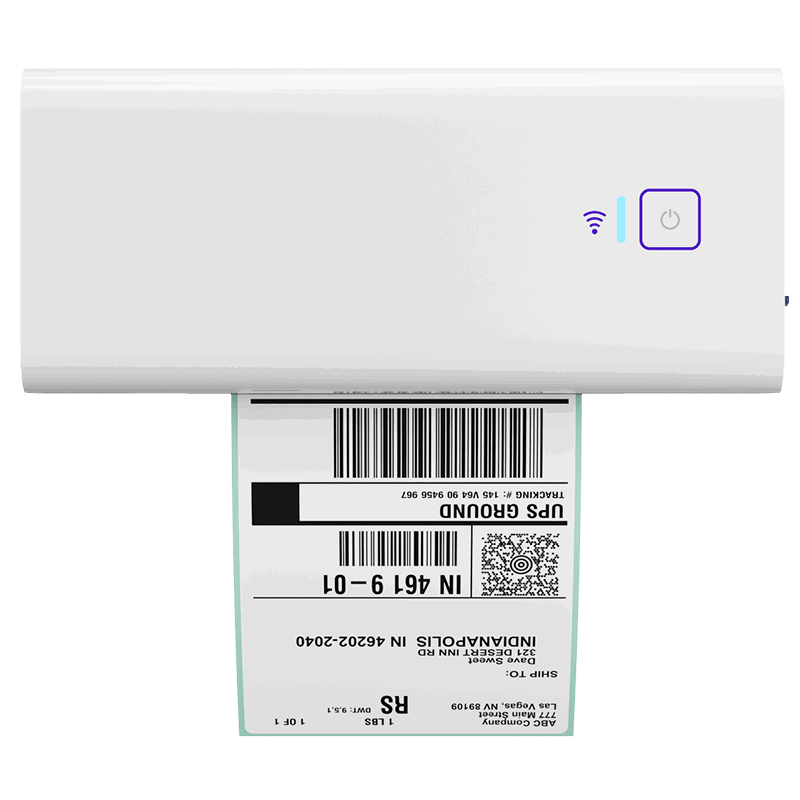
Once you’ve chosen the right label, printing it should be the easy part. The Rollo Wireless Printer helps small teams print crisp shipping labels without ink, messy setup, or extra friction at the packing table.
Where do sellers still get surprised: PO boxes, rural deliveries, and cross-border orders?

Edge cases break simple shipping rules. PO boxes, rural or remote deliveries, and cross-border orders can change which carrier makes the most sense, so sellers should treat these as separate decision points instead of assuming their normal carrier choice will still be the best value.
PO boxes and carrier access
PO boxes are the classic reminder that not every carrier choice is interchangeable. If a buyer uses a PO box, your options narrow quickly.
That does not need to be frustrating. It just means PO box orders should follow their own rule.
Rural and delivery-area realities
Some addresses bring extra cost or fewer easy choices. That is why “lowest published rate” and “best actual label choice” are not always the same thing.
UPS’s 2026 materials list updated area and extended-area surcharge amounts, which helps show why address context matters more than many sellers expect.
Cross-border cost traps
International orders deserve their own logic. The right choice may depend less on your usual domestic shipping habits and more on fee exposure, service fit, and how cleanly the shipment moves through the process.
FedEx’s additional-fees materials are a useful reminder here because they highlight international duty- and tax-forwarding style costs that domestic-first sellers may overlook.
See your real shipping cost before you buy the label
If carrier fee changes are making shipping harder to predict, Rollo Ship can help. Compare rates in one place, get more visibility before you purchase, and make cleaner shipping decisions with fewer surprises.

Final Words
Carrier fee changes in 2026 matter, but the bigger lesson is how sellers respond to them. The cheapest option is not the carrier with the lowest published rate. It is the one with the lowest all-in cost for that shipment after package details, delivery needs, and fee triggers are considered.
If your labels keep feeling more expensive than expected, the answer is usually not one perfect carrier. It is a better comparison habit.
That is where Rollo Ship fits best. It gives small teams a more practical way to compare carrier options before buying labels, keep the workflow cleaner, and reduce the surprise-fee feeling that slows fulfillment down.
Follow Rollo on:
Frequently Asked Questions About Carrier Fee Changes
📌 Q: How do I compare UPS vs USPS vs FedEx without missing surcharges?
💭 A: Start with the exact package, destination, and service need. Then compare the all-in cost instead of the base rate alone, and check the fee triggers most likely to apply before buying the label.
📌 Q: Is USPS still the cheapest option in 2026?
💭 A: Sometimes, yes. USPS can still be a strong fit for lightweight residential shipments and PO box deliveries, but it is not an automatic win once package size, distance, or service needs change. USPS’s January 2026 shipping-service changes also show that even a familiar carrier still needs a shipment-level check.
📌 Q: Which fee hurts small sellers the most?
💭 A: It depends on the order type. Residential-style fees often create steady margin drain, while dimensional weight and additional handling create the biggest surprise spikes.
📌 Q: Why did my shipping bill jump even though the announced increase looked modest?
💭 A: Because the published carrier update is only part of the story. The final invoice reflects the mix of base rates, shipment details, address context, and added fees around that label.
📌 Q: What should I check before I buy a label?
💭 A: Check package size, weight, destination type, packaging choice, delivery speed, and the fee triggers most likely to apply. A quick review before purchase can prevent a lot of avoidable margin loss.
📌 Q:How do PO boxes and rural addresses change the carrier decision?
💭 A: They can narrow your options or change the real cost of the shipment. These orders should follow their own decision rule instead of borrowing the one you use for standard residential orders.
📌 Q:When do UPS or FedEx become a better value than USPS?
💭 A: Usually when the shipment profile changes enough that size, handling, speed, or address-related fees matter more than a simple lightweight-mail mindset. That is why package-first comparison works better than brand-first habits.
📌 Q: When should I stop manual rate checking and use a comparison workflow?
💭 A: If comparison is slowing your team down or surprise costs keep showing up, a structured multi-carrier workflow is usually the smarter next step. That is also the point where a tool like Rollo Ship can help by making pre-purchase comparison easier to repeat.


