
TL;DR: Dimensional weight vs actual weight comes down to one rule: carriers bill the greater of the two, called billable weight. Actual weight is the number on your scale. Dimensional (DIM) weight is size-based: (length × width × height) ÷ a carrier divisor. Big, light boxes usually bill on DIM weight. Small, heavy ones bill on actual weight. Entering accurate dimensions before you buy a label is how you avoid surprise adjustment fees.
Dimensional Weight vs Actual Weight: Quick Facts
- Billable weight = the greater of actual weight or dimensional weight.
- DIM formula: (L × W × H) ÷ divisor, rounded up to the next pound.
- US divisors: USPS 166; UPS® 139 daily / 166 retail; FedEx 139.
- USPS applies DIM only above 1 cubic foot (1,728 in³). UPS® and FedEx apply it to every package.
- US→Canada via USPS: the divisor is 139, not 166.
- Metric / international: (L × W × H in cm) ÷ 5,000 = volumetric kilograms.
This guide is for e-commerce sellers and shippers — especially apparel, electronics, and cost-conscious operators — who keep getting billed more than their scale weight and want to know why before printing the next label.
Dimensional weight vs. actual weight is the gap between what your package weighs and what it costs to ship. When a box is large, carriers often charge for the space it takes up, not the number on the scale.
Picture it: you print a label for a 3-lb order, feel good, then get an adjustment email days later. “How did it jump to 11 lb?” Below, you’ll learn billable weight, the quick DIM math, the divisor each carrier uses, and the packing moves that stop surprise fees.

What You’ll Learn About Dimensional Weight vs. Actual Weight
What is the difference between dimensional weight and actual weight?
Actual weight is the physical weight of your package on a scale, including the box, tape, and packing materials. Dimensional weight is a calculated, space-based weight derived from the package’s size. Most major carriers price your shipment on the greater of the two. So a light item in a large box can cost more than a heavy item in a small one.
Actual weight is simple to find — you weigh it. Dimensional weight reflects how much room the package takes up in a truck or plane. That is why carriers care about your dimensions, not just your scale reading.
What is billable weight (and chargeable weight)?
Billable weight is the number that sets your shipping fee. It is whichever is higher: dimensional weight or actual weight. International carriers often call the same number “chargeable weight.” That single rule explains most “why did my shipping cost jump?” moments.

Here’s the quick rule of thumb:
- Bulky and light → dimensional weight usually wins.
- Small and heavy → actual weight usually wins.
Carriers aren’t being dramatic. They’re pricing for space.
Are dimensional weight and volumetric weight the same thing?
Yes. Dimensional weight, volumetric weight, DIM weight, cubed weight, and cubic weight all describe the same calculation: a package’s size converted into a billed weight. The terms change by region—”dimensional weight” is common in the US, and “volumetric weight” is common internationally—but the math is identical.
This matters when you compare carriers or read a freight quote. A quote labeled “volumetric” and one labeled “dimensional” are measuring the same thing.
How do you calculate dimensional weight?
To calculate dimensional weight, multiply length × width × height, then divide by your carrier’s divisor, and round up to the next whole pound. The math is easy. The mistakes come from measuring and rounding—so measure the packed box at its outer edges, not the product.
- Measure length, width, and height at the outer edges.
- Multiply them to get cubic volume (cubic inches).
- Divide by the carrier’s divisor.
- Round up to the carrier’s nearest pound.
- Compare to actual weight—the higher number is billable weight.
The dimensional weight formula
DIM weight = (length × width × height) ÷ divisor
Inputs are in inches; the result is in pounds.
The divisor (also called the DIM factor or shipping factor) is the number you divide by. A higher divisor produces a lower DIM weight.
The metric version
If you measure in centimeters, the formula uses a metric divisor:
(L × W × H in cm) ÷ 5,000 = volumetric weight in kilograms.
International and cross-border shipments are usually quoted this way. The idea is the same — convert space into a billed weight.

Which carriers use dimensional weight — and what divisor do they use?
Nearly all major carriers use dimensional weight for billing, including USPS, UPS®, FedEx, Canada Post, Purolator, and DHL. Each compares DIM weight to actual weight and charges the greater amount. What changes between them is the divisor and the size threshold where DIM weight starts to apply.
| Carrier | Common US divisor | When DIM applies |
|---|---|---|
| USPS | 166 (over 1 cu ft) | Priority, Priority Express, Ground Advantage parcels over 1,728 in³ |
| UPS® | 139 daily / 166 retail | All package services, no minimum size |
| FedEx | 139 | All package services, no minimum size |
| Canada Post / Purolator | Carrier-specific (metric) | Per each carrier’s current cubing rules |
Divisors vary by rate type and service and change periodically—verify the current rule with your carrier before rating live shipments.
Sources: UPS® Shipping Dimensions & Weight, USPS Parcel Size, Weight & Fee Standards.
One takeaway for lightweight, bulky goods: USPS’s higher divisor (166) and 1-cubic-foot threshold often produce a lower DIM weight than UPS® or FedEx for the same box. That’s exactly why comparing carriers matters before you print.
What do dimensional weight vs actual weight look like in real examples?
In a real example, the same formula gives opposite results depending on box choice. A big, light 20×20×20 box bills on dimensional weight (about 58 lb at the 139 divisor), while a small, heavy 12×10×6 box bills on its 12 lb actual weight.
The packaging — not the product — decides which one wins.
| Example A — big, light | Example B — small, heavy | |
|---|---|---|
| Box | 20 × 20 × 20 in | 12 × 10 × 6 in |
| Volume | 8,000 in³ | 720 in³ |
| DIM weight (÷ 139) | 57.5 → 58 lb | 5.2 → 6 lb |
| Actual weight | 15 lb | 12 lb |
| Billable weight | 58 lb (DIM wins) | 12 lb (actual wins) |
Example A is the “how did it jump?” moment. Example B shows why box choice matters: a denser package in a right-sized box bills on actual weight.

Electronics and oddly-shaped gear
Heavy, fragile, oddly-shaped items—audio gear, components, equipment—bill differently than they look. Carriers measure irregular packages as if they sat in a rectangular box, using the extreme points of length, width, and height. That inflates cubic volume, so DIM weight can climb even on a dense item.
For larger gear, oversize and additional-handling surcharges can stack on top of DIM weight. UPS®, for example, applies an additional handling charge to oversized packages, such as when the longest side exceeds 48 inches. Measuring the packed carton’s outer extremes—and comparing carriers before printing—is how electronics sellers avoid stacked fees.
Why did I get charged more than my scale weight?
If you were billed above your scale weight, DIM pricing or a measurement difference is usually the cause. Carriers remeasure packages after pickup at sort facilities. A bulge, a bigger box than you entered, or rounding can push you into a higher tier. Those adjustment emails arrive days later.
The most common culprits:
- Rounding: a box that’s “basically 12 inches” becomes 13 on paper.
- Bulges: poly mailers puff up and measure like a box.
- Oversized boxes: one inch can cross a threshold.
- Skipped dimensions: entering weight but not size.
You can’t control how a carrier audits a shipment. You can control measuring the outer edges, right-sizing the box, and avoiding bulges. For a deeper breakdown of how the final number is set, see how billable weight is calculated across carriers.
How does dimensional weight work in Canada and for international shipments?
For cross-border and international parcels, dimensional weight is usually called volumetric weight and calculated in metric: (L × W × H in cm) ÷ 5,000 = volumetric kilograms. Canadian carriers such as Canada Post and Purolator apply their own cubing rules, so confirm the current divisor in each carrier’s rate guide before quoting.
One detail trips up cross-border sellers: for USPS shipments from the US to Canada, the divisor is 139, not the domestic 166. Freight and ocean quotes add another layer — CBM (cubic meters) measures total volume: length × width × height in meters. Couriers then convert CBM into a chargeable weight to price the space.
If you ship both US and Canadian lanes, the practical move is to check the volumetric rule per carrier and per direction before you commit. A 60 × 40 × 40 cm box, for example, is 96,000 cm³ ÷ 5,000 = 19.2 → 20 kg volumetrically—even if it weighs far less on a scale. For a full cross-border setup—paperless customs and US + Canada origin in one account—see Rollo Ship international shipping.
What is the USPS dimension noncompliance fee?
USPS charges a dimension noncompliance fee when commercial shippers don’t provide accurate package dimensions. It applies to packages greater than 22 inches in length, 18 inches in width, or 15 inches in height that ship without correct dimension data. In short, accurate dimensions are required — not optional — on larger commercial parcels.
The takeaway is simple: measure and enter dimensions up front, and you avoid both DIM surprises and the noncompliance fee. See the official USPS Parcel Size, Weight & Fee Standards for the current rule.
How can you reduce dimensional weight without slowing down?
You reduce dimensional weight by shrinking outer dimensions, not by arguing with your scale. The goal is a smaller box or flatter mailer that still protects the item without wrecking your packing speed. A short list of go-to box sizes keeps your team fast and DIM surprises rare.
- Right-size the box. Stop shipping air; pick the smallest box that fits.
- Use just enough void fill. Protect the item, but don’t add bulk that increases size.
- Measure outer edges. If you’re near a threshold, drop to the next box down when it still protects the order.
- Watch poly-mailer bulges. A puffed mailer can get measured like a box.
For apparel and soft goods, mailer-vs-box choice changes the math entirely—see flat rate vs dimensional weight to decide which is cheaper for your orders.
How to see billable weight before you buy the label
Here’s the part most sellers skip: the most reliable way to handle dimensional weight is to see it across carriers before you commit to a label—not after the adjustment email lands.

Consider what happens without that visibility. You enter weight, skip dimensions, and print on the first carrier that looks fine. A 16 × 14 × 8 box that weighs 4 lb can bill at 13 lb DIM weight on one carrier, while a different carrier—or a slightly smaller box—would have billed less. Multiply a few dollars of leakage across hundreds of orders, and the quiet margin loss adds up faster than any single surcharge.
This is where a multi-carrier shipping platform changes the workflow. Rollo Ship lets you enter package dimensions once and see the real landed cost across USPS, UPS®, FedEx, Canada Post, and Purolator on a single screen—so the billable-weight gap between carriers is visible before you print. Its AI-powered rate selection groups similar orders, applies your shipping rules, and recommends the cheapest service before the label is printed.
Want to check a single box first? The free Rollo dimensional weight calculator turns your dimensions into DIM and billable weight in seconds.
That free multi-carrier view—including FedEx on the free plan through a connected account and full Canadian coverage—is the wedge for sellers who outgrow single-carrier tools. Rollo Ship is used by 500,000+ sellers across the US and Canada, and it holds a 4.8★ rating on Capterra.
Rollo is not a carrier; postage is always paid directly to the carrier. The platform is free to start with no monthly subscription, and a small per-label service fee applies—starting at 5¢ and dropping to as low as 1¢ through Rollo Rewards, with the first 200 labels fee-free.
Try Rollo Ship free and compare your real dimensions across carriers before you print.
Example: an apparel seller ships a light hoodie in an oversized box and keeps getting DIM-billed. By comparing a poly mailer against a right-sized box across carriers first, they see the lower billable weight up front — and pick the option that actually costs less, instead of finding out after the fact.
Same idea for electronics. An audio-gear seller shipping a heavy, oddly-shaped unit can see how DIM weight and oversize surcharges differ across USPS, UPS®, FedEx, Canada Post, and Purolator—then route each shipment to the lower billable cost before committing.
Make label printing the easiest part of the workflow
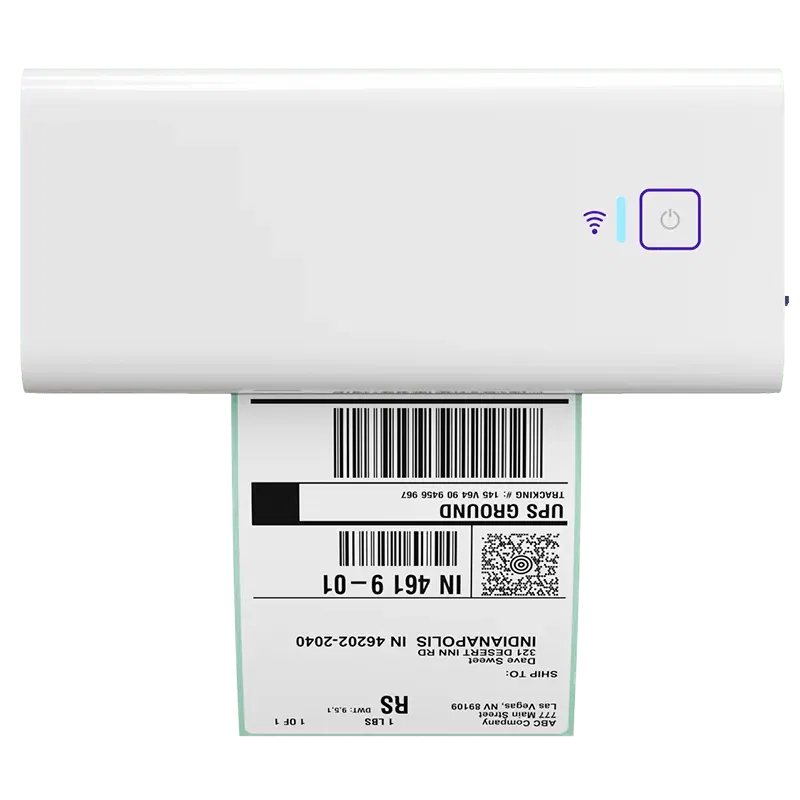
The Rollo Wireless Label Printer (X1040) prints up to 650,000 4×6 labels on direct thermal — no ink, no toner, no cartridges to buy. Once you have right-sized the box and know the billable weight, the print step is the easy part. It is a practical next step for small teams that want clean labels, one less recurring cost, and a setup that holds up as order volume grows.
Who this is not for
Dimensional weight planning matters less in a few cases:
- Dense, small shipments only. If everything you send is heavy in a small box, you’ll almost always bill on actual weight.
- Flat-rate-exclusive shippers. USPS Flat Rate packaging is exempt from DIM pricing, so the math doesn’t apply.
- Letters and documents. Non-parcel mail isn’t priced on dimensional weight.
If your catalog is bulky, lightweight, or mixed across US and Canadian lanes, the rest of this guide is built for you.
Final words

Dimensional weight vs actual weight isn’t hard once you know the rule: carriers bill the higher number. Make dimensions part of your normal workflow — measure first, choose the right box, and watch for bulges that push you into a new tier.
The bigger win is seeing the cost before you commit. Rollo Ship is a multi-carrier shipping platform that puts USPS, UPS®, FedEx, Canada Post, and Purolator rates on one screen, so the billable-weight difference is obvious before you print.
Try Rollo Ship free and compare rates with your real dimensions on your next order.
Ready to see the real cost before you buy the label?
If your team keeps getting billed above scale weight, Rollo Ship shows real-time rates across USPS, UPS®, FedEx, Canada Post, and Purolator using the dimensions you enter. You see the true cost before you print, not after the adjustment email. It is a practical next step for small teams that want fewer surprise adjustments, clearer per-label costs, and a shipping process that holds up as order volume grows.

Follow Rollo on:
Frequently Asked Questions About Dimensional Weight vs. Actual Weight
📌 Q: Do carriers charge dimensional weight or actual weight?
💭 A: Carriers charge the greater of dimensional weight or actual weight. That higher number is the billable weight, and it sets the shipping fee. For bulky, lightweight packages the dimensional weight usually wins; for small, dense packages the actual weight usually wins. Both are compared on every applicable shipment.
📌 Q: What dim factor (divisor) should I use to calculate DIM weight?
💭 A: The divisor depends on the carrier, service, and rate type. In the US, USPS commonly uses 166, FedEx uses 139, and UPS® uses 139 for daily rates or 166 for retail rates. International quotes use a metric divisor, often 5,000 for centimeters and kilograms. Always confirm the current divisor with your carrier.
📌 Q: How do I calculate DIM weight for a box?
💭 A: Measure length, width, and height at the outer edges, then multiply them to get cubic volume. Divide that volume by your carrier’s divisor and round up to the next whole pound. Compare the result to your scale weight. The higher of the two is your billable weight and the basis for the rate.
📌 Q: What is the difference between volumetric weight and dimensional weight?
💭 A: There is no difference. Volumetric weight and dimensional weight are the same calculation under two names, along with DIM weight, cubed weight, and cubic weight. “Dimensional weight” is common in the US; “volumetric weight” is common internationally and in freight. Both convert a package’s size into a billed weight using the same formula.
📌 Q: When does USPS use dimensional weight?
💭 A: USPS applies dimensional weight mainly to Priority Mail, Priority Mail Express, and Ground Advantage parcels that exceed one cubic foot (1,728 cubic inches) for Zones 1–9. Below that threshold, packages are billed on actual weight. Flat Rate packaging is exempt. When DIM applies, USPS divides cubic inches by 166 and rounds up.
📌 Q: How do I quickly estimate volumetric weight for courier rates?
💭 A: For a fast estimate, multiply the box dimensions and divide by your courier’s divisor. In inches and pounds, divide by 139 for most courier services. In centimeters and kilograms, divide by 5,000. Round up to the next whole unit, then compare it to the actual weight—whichever is greater is what you’ll be billed.
📌 Q: How is dimensional weight calculated for shipments from the US to Canada?
💭 A: For USPS shipments from the US to Canada, the dimensional weight divisor is 139 rather than the domestic 166, which can raise the billable weight. Canadian carriers like Canada Post and Purolator apply their own metric cubing rules. Confirm the current divisor per carrier and per direction before quoting cross-border rates.
📌 Q: Why did I get a dimensional shipping adjustment after buying a label?
💭 A: Carriers re-measure and re-weigh shipments after pickup. If your entered dimensions were off, a poly mailer bulged, or rounding pushed the size up, the billable weight rises and triggers an adjustment fee. Entering accurate outer-edge dimensions and right-sizing the box are the most reliable ways to prevent these charges.


