
TL;DR: UPS vs USPS prices rarely settle into a simple winner, but the switch point is more precise than most sellers expect. On published rates, the switch sits at twenty-one pounds: USPS Ground Advantage prices lower from one through twenty, and UPS® Ground takes the lead from twenty-one. That is where USPS steps up a price band. Flat Rate follows its own rule, where distance moves the break far more than weight does. The reliable move is comparing both quotes on the actual parcel, on matching price tiers.
UPS vs USPS Prices: At a Glance
- Four inputs set almost every parcel price: billed weight, zone, service level, and surcharges.
- Billed weight is the greater of actual weight and dimensional weight, so an underfilled box can price like a heavy one.
- USPS applies dimensional weight only above one cubic foot. UPS® may apply it to any package.
- On matched pricing tiers, USPS Ground Advantage prices lower to twenty pounds. UPS® Ground takes over at twenty-one.
- Each carrier publishes more than one price set, and which one you pay depends on how you buy the label.
- Some parcels shipped through UPS® are handed to USPS for final delivery, so the two networks are not always separate.
Read Ahead

Comparing UPS vs USPS prices usually starts with a specific frustration. Two quotes come back for the same box, and the gap makes no obvious sense. One was cheaper last week.
This guide is for online sellers in the US and Canada who pack their own orders. It covers what sets each price, where the cheaper option flips, and why the answer moves. Every figure here comes from each carrier’s own published rate tables.
It does not tell you which carrier to use. That depends on your parcels.
What sets UPS® and USPS prices

Four inputs set almost every parcel price: billed weight, zone, service level, and surcharges. Change any one, and the number moves. Most price surprises trace back to a seller estimating one input while the carrier calculates a different one.
Billed weight comes first. Carriers charge on the greater of actual weight and dimensional weight. A light item in a large box prices on the box.
Here the two carriers diverge sharply. USPS applies dimensional weight only to parcels larger than one cubic foot. UPS® states that dimensional weight may apply to all of its domestic and international package services.

Both divide cubic inches by 139 to get the dimensional figure. The difference is not the math. It is whether the rule touches your box at all.
Zone comes second. A zone is a distance band between origin and destination ZIP codes. Higher zone, higher rate, everything else equal.
USPS builds its zone charts from latitude and longitude coordinates, measuring between the centroid of each three-digit ZIP code area. Zones run Local and 1 through 9, refreshed quarterly. UPS® publishes its own separate zone charts, so one ZIP pair can sit in different zone numbers depending on which carrier you ask.

Service level is the part sellers control most directly. Ground services cost less and take longer. Air and expedited services reverse that trade.
Surcharges come last and get overlooked most. They apply on top of the base rate. That gap between quote and invoice usually lives here.
Is USPS cheaper than UPS®?

On published rates, USPS Ground Advantage prices below UPS® Ground at every zone from one pound through twenty. Its rate structure also carries fewer add-on charges than most private carriers apply. That advantage runs to twenty pounds and then ends abruptly.
The clearest USPS advantage sits at the light end. The gap is widest on small parcels and narrows steadily as weight climbs. Both services cap at seventy pounds.
Residential delivery is the second factor. USPS states that Priority Mail carries no surcharges for fuel, residential or rural delivery, or Saturday delivery. For a seller shipping mostly to homes, that absence compounds across hundreds of labels.
Included insurance is easy to miss. Priority Mail, Priority Mail Express, and USPS Ground Advantage each include up to $100 of insurance in the price. On a private carrier the equivalent cover is usually a separate line.

Flat Rate packaging is the third. A Flat Rate box costs the same anywhere in the US, for mailpieces up to seventy pounds. For heavy, dense items going a long way, that can undercut a weight-based quote outright.
There is a quieter advantage too. Flat Rate packaging is exempt from USPS nonstandard fees entirely. An awkwardly shaped item that would trigger a size fee in your own box does not trigger one in a Flat Rate box.
None of this makes USPS cheaper by default. It makes USPS cheaper for a specific parcel profile, up to a specific weight.
Is UPS® cheaper than USPS?

On published rates, UPS® Ground becomes the lower-priced option at twenty-one pounds in nearer zones, and at around twenty-five pounds in the furthest ones. Its ground network also handles higher weight ceilings. For sellers shipping bulky or heavy goods, the comparison reverses.
Weight is the main driver, and the switch is sharper than most sellers expect.
USPS Ground Advantage steps up a price band at twenty-one pounds. Between twenty and twenty-one pounds its published price rises by roughly 13% to 28%, depending on zone. UPS® Ground moves about 2% across the same pound.
That single step is what flips the comparison. It is not a gradual curve crossing. One carrier holds its line and the other takes a stair.

There is a practical consequence. If a parcel lands at twenty-one or twenty-two pounds, getting it under twenty-one changes which price band it falls into. Repacking to shed a pound can be worth more than switching carriers.
This one is worth checking on your own parcels rather than taking on trust. If anything you ship sits in the twenty-to-twenty-five pound range, put it on a scale and note the exact weight. Then run that weight and your destination ZIP through the shipping calculator to see both carriers’ live rates side by side. It takes about a minute and needs no account.
If the gap on that parcel is worth acting on, the same comparison runs inside a free Rollo Ship account, where the winning rate becomes a printed label in the same screen.
Then there is the delivery date. UPS® publishes Ground Time-in-Transit maps, so expected transit days are looked up from the ship date and ZIP code. Knowing the date changes what the price is buying.
Read that as an expected date rather than a refunded promise. UPS® currently keeps its Service Guarantee active on its Next Day Air services and UPS® 2nd Day Air A.M. and suspended on everything else, Ground included.
USPS works the same way at this tier. Its published Priority Mail delivery estimate carries no money-back guarantee. Neither carrier refunds you on a standard ground parcel.
Step up to the express tier and both change. Priority Mail Express carries a one-to-three-day money-back guarantee, delivered by 6 PM, with refund requests accepted within thirty days. One exception is worth knowing: USPS discontinued guaranteed-service refunds for Priority Mail Express to and from Alaska and Hawaii.
Service pairs: how UPS vs USPS prices line up

Comparing carriers at the company level hides the answer. Comparing at the service level surfaces it. Each USPS service has a rough UPS® counterpart, and on published rates the cheaper option flips at a locatable weight.
| Comparable services | Typical fit | Where the cheaper option flips |
|---|---|---|
| USPS Ground Advantage (2–5 days) ↔ UPS® Ground (1–5 days) | Everyday parcels | USPS lower to 20 lbs. UPS® lower from 21 lbs in zones 2–5, and from about 25 lbs in zones 6–7 |
| USPS Priority Mail (2–3 days) ↔ UPS® 2nd Day Air | Two- to three-day expectations | Flips toward USPS on light parcels. Neither is guaranteed; only UPS® 2nd Day Air A.M. carries an active service guarantee |
| USPS Priority Mail Express (1–3 days by 6 PM) ↔ UPS® Next Day Air | Overnight or near-overnight | Depends more on destination coverage than on weight. Both carry an active money-back guarantee, though USPS excludes Alaska and Hawaii |
| USPS Priority Mail Flat Rate ↔ Weight-Based USPS Priority Mail | Dense, heavy items in a small box | Medium box: weight-based cheaper to about 20 lbs in zones 1–3, but only to about 3 lbs in zone 8 |
Crossover weights derived from USPS Notice 123 (effective July 12, 2026) and the UPS® 2026 Rate and Service Guide (updated July 7, 2026), retail tiers compared like for like. Rates change on each carrier’s own schedule.
Read the table by parcel, not by carrier. A store shipping two product sizes may sit on different sides of the same row.
Which is faster, UPS® or USPS?
Neither carrier is faster across the board at the ground tier. UPS® Ground publishes one to five business days and provides time-in-transit maps that return an expected date from the ship date and ZIP code. USPS Ground Advantage publishes two to five business days without a per-lane date lookup. At the express tier, both are next-day capable and both carry an active money-back guarantee.
The practical difference is predictability, not raw speed. UPS® tells you the expected date before you buy; USPS gives you a range. Neither refunds you on a standard ground parcel.
Each carrier publishes two price sets

Both USPS and UPS® publish more than one price for the same service. Which one you pay depends on how you buy the label, not on the parcel. This is the most common reason two people quote the same shipment and get different numbers.
USPS separates retail from commercial pricing. Retail applies at the Post Office counter. Commercial applies when the label is bought online or through a shipping platform, and it is lower across the whole rate table.
UPS® draws a similar line. Daily Rates apply to shippers with a scheduled pickup or a UPS® contract. Retail Rates apply when shipping from a UPS® location, without a payment account, or infrequently.
So the honest answer to “what does it cost” has a second question inside it. Cost to whom, buying how?
This is not a technicality. Any USPS vs UPS price comparison collapses if the tiers do not match. Compare USPS published retail against a discounted UPS® rate, and UPS® looks cheaper at every weight, including the light parcels where it is not. Compare like tiers, and USPS holds the light end outright.
The tier you are on can matter more than the carrier you choose. Any comparison worth acting on puts both carriers on the same footing.
The surcharges that move the number
Surcharges apply after the base rate and explain most of the gap between a quoted price and a final invoice. Fuel, residential delivery, delivery area, and oversize charges are the common ones. They vary by carrier and change on published schedules.
Fuel surcharges are common, but there is no standard formula. The US Energy Information Administration notes that every company sets its own method for calculating them. A fuel surcharge on one carrier is not comparable to a fuel surcharge on another.
USPS states that Priority Mail carries no fuel surcharge at all. UPS® publishes its fuel surcharge separately and updates it on its own schedule.

Residential surcharges apply when a private carrier delivers to a home rather than a business. UPS® defines a residential delivery as one to a home or a home-based business in a residential area. Note the second half: a business run from a house is still residential.
Delivery area surcharges apply to addresses outside dense service areas. Rural destinations trigger them most. UPS® publishes a Delivery Area Surcharge and a separate Extended Area Surcharge.
Oversize and additional-handling charges apply to parcels past published size or shape limits. USPS publishes nonstandard fees at 22 inches, 30 inches, and two cubic feet, plus a fee for awkward shapes like tubes, cans, and liquid containers. A long, light box can trigger these without ever feeling heavy, the same mechanic covered in our guide to oversize fees on heavy items.

UPS® publishes its own Additional Handling triggers: longest side over 48 inches, second longest over 30 inches, average package weight over 50 pounds, cubic size over 10,368 cubic inches, or an item not fully encased in corrugated cardboard. That last one catches tires, drums, and pails.
Size caps sit above that. USPS parcels max out at 108 inches combined length and girth, with Ground Advantage running to 130 inches at an oversized price. UPS® small package tops out at 150 pounds, 165 inches combined length and girth, and 108 inches in length.
One UPS® rule is worth singling out. A domestic package counts as a large package if any one of four things is true: length plus girth over 130 inches, length over 96 inches, cubic size over 17,280 cubic inches, or weight over 110 pounds.
Large packages carry a minimum billable weight of 90 pounds. A nearly empty oversized carton can bill as though it weighed 90 pounds. Only one trigger has to fire.
Comparing base rates alone will mislead you. The surcharge stack is where the real difference lives.
Flat rate or weight-based?
Flat rate pricing charges one price per box size regardless of zone, up to seventy pounds. Weight-based pricing charges on billed weight and distance. On published rates, the weight at which the flat rate becomes the cheaper choice drops sharply as the zone gets further.
The test is density, and distance moves the answer more than most sellers expect.
Take the Medium Flat Rate Box on published retail prices. In nearby zones, weight-based Priority Mail stays cheaper until roughly twenty pounds. By Zone 8, weight-based overtakes the flat-rate price at about three pounds.
Same box. Same contents. The break moves from twenty pounds to three because of distance alone.
| Flat Rate box | Zones 1–3 | Zone 5 | Zone 8 |
|---|---|---|---|
| Small | 3–5 lbs | 2 lbs | 1 lb |
| Medium | 20 lbs | 7 lbs | 3 lbs |
| Large | above 20 lbs | 15 lbs | 5 lbs |
Weight at which weight-based Priority Mail starts costing more than the flat-rate box. Derived from USPS Notice 123, published retail prices, effective July 12, 2026.

The practical read is simple. For anything crossing the country, check Flat Rate early. For local and regional parcels, weight-based holds longer than people assume.
If you ship in a Medium Flat Rate Box, this is worth testing against one real order. Take a parcel going somewhere far, weigh it, and compare the flat-rate price against the weight-based quote for that zone.
Same principle at volume: inside Rollo Ship the flat-rate and weight-based quotes sit next to each other on every order, so you are not checking this box by box.
Dimensional weight is the other half of this question. Our dimensional weight guide covers how billed weight is calculated, and the DIM weight calculator runs the numbers on a specific box.
Why a UPS® package sometimes arrives via USPS

UPS® Ground Saver, formerly UPS® SurePost, combines UPS® ground transportation with final delivery handled by UPS® or by USPS, depending on the destination. UPS® describes it as a lower-cost option for less urgent packages, available to customers with a UPS® contract. Delivery runs comparable to UPS® Ground plus one to two days.
This surprises sellers who see a UPS® tracking number end with a postal carrier at the door. Nothing has gone wrong. The handoff is part of the service design.
Two details matter more than the trivia. The handoff is conditional on destination, so the same service can finish two different ways. And access requires a UPS® contract, so it sits outside what most sellers can simply select at checkout.
For pricing, it reframes the question. A parcel can travel on both networks under one service, which means “UPS® or USPS” is not always a clean either-or. The trade is time, since the extra one to two days is the price of the lower rate.
From understanding prices to comparing them
Understanding what drives UPS vs USPS prices tells you why the gap exists. It does not tell you which number wins on the box in front of you. That requires both quotes for the same parcel, on matching price tiers, with billed weight and surcharges already applied, before the label prints, not after the invoice arrives.
Comparing both prices before you print
Most sellers compare carriers the slow way. Two browser tabs, two quote forms, the same dimensions typed twice. It works for one label and falls apart at forty.
The structural version puts both quotes on one screen for the same parcel, on matching price tiers, with billed weight and surcharges already reflected. You compare outcomes instead of estimates.
Rollo Ship is a multi-carrier shipping platform that does this across five carriers in one account: USPS, UPS®, FedEx, Canada Post, and Purolator. Rollo is not a carrier. Postage is paid directly to the carrier, and Rollo’s per-label fee is separate.
For a seller shipping mixed parcel sizes, that changes the daily workflow. A three-pound order to a nearby residential address and a twenty-five-pound order across the country no longer need separate research. Both rates appear together.

Rollo Ship’s AI-powered rate selection groups similar orders, applies the seller’s shipping rules, and recommends the cheapest qualifying service before the label is printed.
Access covers more than the two carriers in this comparison. UPS® rates are available through Rollo Ship at program rates set by the carrier. FedEx is available through a connected account, and Canada Post and Purolator cover Canadian domestic shipping. USPS rates through Rollo Ship include access to discounted USPS rates up to 90% off retail USPS rates on select services.
Rollo Ship holds a 4.8★ rating on Capterra. More than 500,000 sellers across the US and Canada ship on Rollo.
Rollo Ship is free to start with no monthly subscription. The first 200 labels are fee-free. After that, the per-label fee starts at 5¢ and drops to as low as 1¢ through Rollo Rewards.
That matters for how you test this. Printing your first label costs nothing beyond the postage itself. You can check the comparison on one real parcel without committing to anything.
For sellers who want rate selection applied automatically across an order queue, the shipping automation tools handle it at volume.
Rollo Ship is one structural approach among several. What it changes is whether both numbers are visible before the label prints.
Shipping from Canada: what changes

A Canadian seller’s comparison set is a different one. Domestic parcels move through Canada Post and Purolator, and cross-border parcels to the US can move through UPS® from a Canadian origin. USPS is the United States postal operator, so it is not part of the domestic Canadian picture.
The pricing logic carries over. Canada Post states that postage is determined by the weight, size, and destination of the item, with add-on options affecting the total. Same four inputs, different network.
Two structural patterns repeat. Canada Post publishes a flat-rate box alongside its weight-based services, exactly as USPS does. And Purolator applies account discounts to its published rates, which is the same two-tier structure UPS® and USPS use.
The guarantee pattern repeats as well. Canada Post includes an on-time delivery guarantee on Priority, XpressPost, and its flat-rate box, but not on Regular Parcel. Purolator states that standard Purolator Ground is not a money-back guaranteed service.
In every one of these networks, the economy ground tier is the one without a refund attached. That is worth knowing before you price against it.
Cross-border adds customs documentation and duty handling on top. UPS® publishes separate guidance on commercial invoices and customs forms for shipments leaving Canada. Those costs sit outside the base rate.
Canadian sellers can compare Canada Post and Purolator rates alongside cross-border options in one account. The Rollo Canada page covers setup for Canadian origins, and the Canada Post carrier page covers domestic service detail.
What happens without a system
A seller who picks one carrier and stops comparing does not overpay dramatically on any single label. That is what makes it hard to notice.
The leak is per-parcel and constant. A twenty-one-pound order priced in the band above where it needed to be. A residential surcharge is absorbed on every order to a home address. A flat rate box is used at Zone 2, where weight-based would have cost less, or weight-based is used at Zone 8, where flat rate would have won.
None of those show up as a line item called “avoidable.” They show up as a monthly shipping cost that runs higher than the rate sheet suggests it should.
The fix is not a better guess. It is seeing both prices for the actual parcel, on matching tiers, before committing.
What you need to print one label today
Printing a shipping label takes four things: the parcel’s weight, its dimensions, the destination ZIP or postal code, and a printer. Nothing else is required to send a single parcel.
A thermal label printer speeds things up at volume, but it is not a starting requirement. Labels print on ordinary paper from an ordinary printer, and you tape the label to the box.
You also do not need to connect a store first. Store integrations matter when you are pulling in orders automatically. For one parcel, you enter the address yourself.
So the smallest useful test is a single real shipment. Weigh the box, enter the destination, compare the rates you see, and print the one that wins.
Your first label, start to finish
Here is how it runs on Rollo Ship. Most sellers get from a cold start to a printed label in under ten minutes, with no store connection and no printer purchase.
- Create the account. No subscription, no card required to look at rates.
- Enter the parcel. Weight, dimensions, and the destination ZIP or postal code.
- Read both quotes side by side. USPS and UPS® appear together, on matching price tiers, with billed weight and surcharges already applied.
- Fund the label. Postage goes directly to the carrier, and Rollo’s per-label fee is separate.
- Print it. Ordinary paper and tape work. A thermal printer is optional.
The first 200 labels carry no service fee. After that the per-label fee starts at 5¢ and drops to as low as 1¢ through Rollo Rewards as your volume builds.
Who this is not for
This guide covers parcel pricing for online sellers. It will not help much if you are:
- Shipping freight or LTL. Above 150 pounds the parcel networks stop applying and freight pricing takes over.
- Shipping almost exclusively under one pound. At that weight the comparison rarely moves enough to justify the effort.
- Primarily an international shipper. Customs, duties, and international service tiers dominate the cost picture, and this guide covers domestic mechanics.
- Looking for this year’s rate increases. This covers how prices are structured, not what changed in the most recent annual adjustment.
One Place
to Compare
Both Prices
If you are tired of bouncing between tabs, retyping the same dimensions, and finding surcharges after the fact, Rollo Ship puts USPS, UPS®, FedEx, Canada Post, and Purolator rates in one account, so you compare on matching tiers before you buy the label.

Compare before you print
Understanding what drives UPS vs USPS prices is the groundwork. Applying it per parcel is where the money is.
Rollo Ship puts USPS, UPS®, FedEx, Canada Post, and Purolator rates in one account, with billed weight and surcharges reflected in the quote you see. Free to start, no monthly subscription; the first 200 labels are fee-free.
You probably have a parcel going out this week. That is the one to test it on. Weigh it, compare both rates, and print whichever comes out lower.
Compare both rates and print that label →
Skip the Paper and Tape
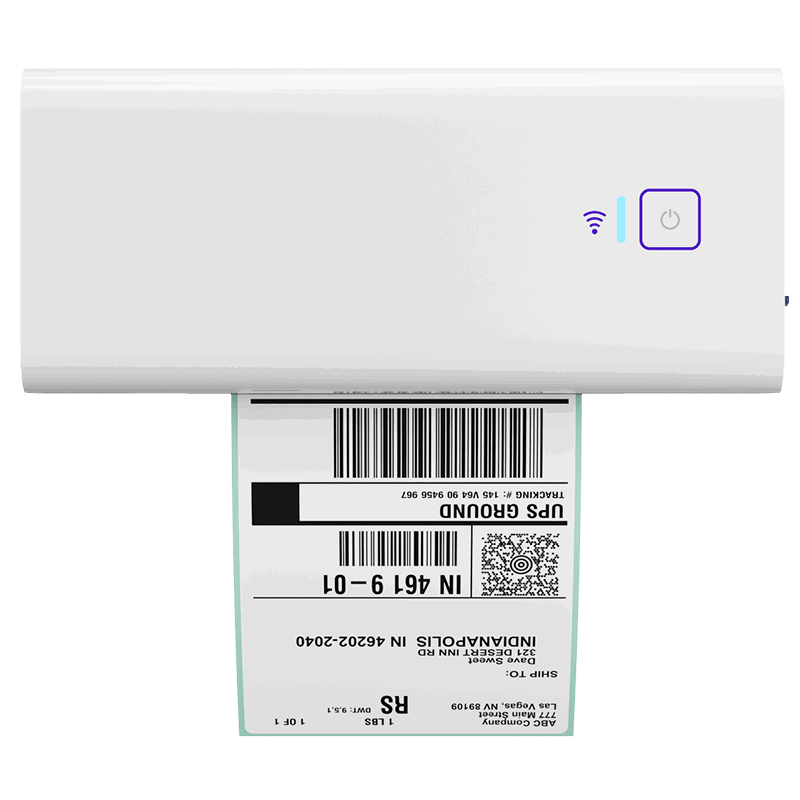
Paper labels work fine to start. Once you are printing every day, the Rollo Wireless Thermal Printer (X1040) prints 4×6 labels that peel and stick, with no ink to replace. It works with Rollo Ship, and per-label costs drop through Rollo Rewards as your volume builds.
Follow Rollo on:
Frequently Asked Questions About UPS vs USPS Prices
📌 Q: Is UPS® or USPS cheaper for shipping?
💭 A: Neither is cheaper across the board. On published rates, USPS Ground Advantage prices are lower than UPS® Ground from one pound through twenty. At twenty-one pounds, USPS steps up a price band, and UPS® becomes the cheaper option in nearer zones. Your own crossover moves if you hold negotiated rates on either side, so compare both quotes on matching price tiers.
📌 Q: Why do UPS® and USPS quote different prices for the same box?
💭 A: The two carriers calculate billed weight, zones, and surcharges differently. USPS applies dimensional weight only above one cubic foot, so a moderately large box may still be priced on actual weight. USPS also states that Priority Mail carries no fuel, residential, or Saturday surcharges. Same box, different inputs, different number.
📌 Q: Why does my UPS® package get delivered by USPS?
💭 A: UPS® Ground Saver, formerly UPS® SurePost, moves parcels through the UPS® network, then hands final delivery to UPS® or USPS depending on the destination. Nothing has gone wrong when a postal carrier brings it to the door. UPS® describes delivery as comparable to UPS® Ground plus one to two days, and the service is available to customers with a UPS® contract.
📌 Q: When is a USPS Flat Rate box cheaper than paying by weight?
💭 A: Distance decides it more than weight does. On published retail prices, weight-based Priority Mail stays cheaper than the Medium Flat Rate Box until about twenty pounds in nearby zones. By Zone 8, that drops to roughly three pounds. For anything crossing the country, check Flat Rate early.
📌 Q: Do I need a thermal printer to start shipping?
💭 A: No. Labels print on ordinary paper from a standard home or office printer, and you tape the label to the parcel. A thermal label printer saves time once you are printing in volume, but it is not required to send your first parcel. You also do not need to connect a store to ship a single order manually.
📌 Q: Can Canadian sellers compare UPS® and USPS prices?
💭 A: Not as a like-for-like pair, because USPS is the United States postal operator. Canadian sellers compare Canada Post and Purolator for domestic parcels and UPS® through a connected account for cross-border shipments to the US. The pricing logic is the same in either country: Canada Post confirms that weight, size, and destination set the postage, with add-ons on top.
📌 Q: Is UPS® or USPS faster?
💭 A: At the ground tier, neither is reliably faster. UPS® Ground publishes one to five business days with a Time-in-Transit lookup that returns an expected date by ZIP code. USPS Ground Advantage publishes two to five business days as a range. At the express tier, both are next-day capable, and both carry an active money-back guarantee.
📌 Q: What does it cost to try comparing rates on Rollo Ship?
💭 A: Nothing beyond the postage itself. Rollo Ship is free to start with no monthly subscription, and the first 200 labels carry no per-label service fee. After that the fee starts at 5¢ per label and drops to as low as 1¢ through Rollo Rewards. Rollo is not a carrier; postage is paid directly to the carrier.


