
TL;DR: Supplement shipping is simpler than most wellness founders expect, and essential oil shipping is harder. Capsules, tablets, powders, and softgels are not on the USPS domestic restricted list. Many essential oils are classed as flammable liquids, which changes what a carrier will accept. The rules also split at the border: USPS allows certain flammable liquids by surface, while Canada Post treats dangerous goods as non-mailable except under specific business accounts. For brands shipping the same box every month, those differences compound twelve times a year.
At a Glance
- Dietary supplements appear on neither the prohibited nor the restricted list in USPS domestic shipping guidance.
- Under USPS Publication 52, a combustible liquid with a flashpoint of 100–140°F (38–60°C) is permitted only by surface transportation and only with Limited Quantity marking.
- Canada Post treats dangerous goods as non-mailable matter. Limited-quantity acceptance is available to contract customers and Solutions for Small Business cardholders.
- Canada Post names essential oils, specifically tea tree and eucalyptus, under Class 3 flammable liquids.
- Most probiotics are not cold-chain products. Many are freeze-dried or microencapsulated and stay viable at ambient temperature.
- Almost no hazardous materials are permitted in international mail through USPS.
What We’ll Cover

Supplement shipping looks like a compliance problem and behaves like a margin problem. Most wellness founders brace for the regulatory side. Then the real cost shows up somewhere else entirely.
This guide is for direct-to-consumer wellness operators in the United States and Canada. That means supplement brands, aromatherapy sellers, and anyone shipping a recurring wellness box to subscribers. It covers what gets flagged, what ships ambient, how the rules change at the Canadian border, and what changes when the same parcel goes out every month.
One thing worth settling first. Capsules and powders are usually the easy part. Oils are where it gets complicated.
What supplement shipping actually costs a wellness brand

The visible cost is postage. The hidden cost is repetition. A wellness brand shipping a monthly box makes the same packaging and carrier decision twelve times a year, so a small inefficiency stops being a rounding error and becomes a line item. Dimensional weight penalties, single-carrier defaults, and retail-rate return labels all repeat on schedule.
Three costs compound quietly in this vertical.
Box size. Supplement tubs are light and bulky. That combination is what triggers dimensional weight (DIM) billing, where you pay for space rather than mass.

Carrier defaults. Many brands pick one carrier at launch and never revisit it. The parcel profile changes as the product line grows. The carrier choice usually doesn’t.
Returns. Consumables come back less often than apparel. When they do come back, the label is often bought at retail.
When does a wellness parcel get flagged?

A parcel gets flagged when its contents fall under hazardous materials rules, not when they are simply health products. This is the distinction that trips up wellness brands. Dietary supplements in capsule, tablet, or powder form are not listed as prohibited or restricted in USPS domestic shipping guidance. Liquids are a different question, and the answer depends on flashpoint.
The USPS domestic shipping restrictions guidance names perfumes, nail polish, hand sanitizer, aerosols, medicines, and hemp products as restricted. Dietary supplements appear on neither list. That is a useful thing to know before you build a packaging process around a rule that does not apply to you.
Oils are the exception. Under USPS Publication 52, Packaging Instruction 3B, mailability depends on the flashpoint of the liquid.
| Flashpoint | USPS domestic mailability | Primary receptacle limit |
|---|---|---|
| 100–140 °F (38–60 °C) | Surface transportation only | Metal ≤ 1 gallon; nonmetal ≤ 1 quart |
| 140–200 °F (60–93 °C) | Air or surface | ≤ 1 gallon |
| Above 200 °F (93 °C) | Not regulated as hazardous | Sturdy, securely closed container |

Surface shipments in the first band require the US Department of Transportation (DOT) Limited Quantity surface mark. Air shipments in the middle band require more: the Limited Quantity air mark, a Class 9 label, identification number ID8000, and a Shipper’s Declaration for Dangerous Goods. International mail is prohibited for these materials.
There is also a fee layer. USPS adds no hazmat handling fee on Ground Advantage® and $7.50 on Priority Mail® and Priority Mail Express®. A $50.00 noncompliance fee applies to commercial shipments that are improperly declared or labelled.

One practical note that costs brands real money. If you reuse boxes, any former dangerous-goods marking has to be fully obliterated, not crossed out. A visible old label is enough for a carrier to refuse the parcel.
How to ship essential oils

How to ship essential oils depends on one variable: flashpoint. Flashpoint determines the transport mode, and the packaging carries the marking that goes with it. Many oils are Class 3 flammable liquids rather than ordinary consumer goods. USPS permits certain flashpoint bands by surface with Limited Quantity marking. Canada Post names tea tree and eucalyptus oil specifically.
Carrier-by-carrier acceptance terms for limited-quantity oils vary and are worth confirming directly with each carrier before you build a process around them.
For packaging mechanics on flammable liquids in the fragrance category, our guide to shipping perfumes and cosmetics covers absorbent material, secondary containment, and Limited Quantity marking in detail.
Ambient or cold chain? Most wellness products ship ambient

Most supplements ship at ambient temperature, including most probiotics. This surprises founders who assume live cultures imply refrigeration. Many modern probiotic formulations are freeze-dried or microencapsulated, which keeps them viable at room temperature through their labelled shelf life. Refrigeration is formulation-specific, and the product label is what governs.
The International Probiotics Association notes that manufacturers set storage instructions based on stability data for each formulation, accounting for every environment the product passes through, including shipping. So the shipping question is answered by the label, not by the category.

Where genuine temperature sensitivity exists, the parcel design changes rather than the carrier list. Insulation, transit time, and season start to matter more than rate. Brands shipping heat-sensitive products often find that a shorter service beats a cheaper one in July.
That trade-off is not unique to supplements. One chocolate seller facing the same summer problem solved it with service selection rather than specialized logistics.
Shipping supplements to Canada: where the rules diverge

Shipping supplements to Canada introduces two separate questions. The first is carrier acceptance, which is where the sharpest divergence from the United States sits. The second is regulatory import status, which is a Health Canada matter rather than a carrier one. Wellness brands often conflate them, and the two have different answers.
Health Canada regulates supplements as Natural Health Products (NHPs), a category with its own licensing framework. An NHP that is fully compliant for import can still be non-mailable if it is also a dangerous good. The two determinations are independent.
On carrier acceptance, the Canada Post non-mailable matter guidance is direct. Dangerous goods as defined by the Transportation of Dangerous Goods Regulations are non-mailable matter. Canada Post will not accept packages containing dangerous goods or displaying dangerous goods symbols.
Essential oils are named explicitly. Tea tree and eucalyptus oil appear under Class 3, flammable liquids.
There is a route through. An expanded acceptance program covers limited quantities and excepted quantities, but it is available to contract customers and Solutions for Small Business cardholders rather than to every shipper.

Compare that with the US position above. USPS permits certain flammable liquids by surface with the right marking. Canada Post starts from non-acceptance. Same product, two different structural problems.
Two more Canadian details worth knowing. Perishable items are mailable at the sender’s own risk with no damage coverage, and the Canada Border Services Agency (CBSA) may require import permits. And any item emitting an offensive odor is unacceptable for mailing, which is not a trivial footnote for an aromatherapy brand.
Subscription box shipping: the recurring-shipment math
Subscription box shipping changes the economics rather than the rules. A subscription box ships to a known address, on a predictable date, in a consistent parcel size. That predictability is an advantage, because every variable is stable enough to optimize once and benefit from repeatedly. It is also a risk, because a bad default repeats on schedule too.
Here is what actually shifts between a one-off order and a monthly box.
| Variable | One-off order | Recurring monthly box | Why it compounds |
|---|---|---|---|
| Parcel dimensions | Varies by cart | Fixed by design | A DIM penalty repeats every cycle |
| Carrier choice | Chosen per order | Set once, rarely revisited | Rate drift goes unnoticed for months |
| Address quality | Fresh at checkout | Ages between cycles | Correction fees recur on stale addresses |
| Label volume | Sporadic | Predictable batch | Per-label cost becomes a fixed monthly line |
| Returns | Order-specific | Tied to churn events | Return cost correlates with cancellation timing |
The address point deserves a sentence of its own. Subscribers move. A list that was clean at signup will not be clean at month nine, and correction surcharges land quietly on the invoice.
Recurring volume also works in the other direction. Predictable batch shipping qualifies for volume-based pricing tiers faster than sporadic order flow at the same annual total, because most platforms measure shipment count, not just spend.
Returns on consumables: what actually comes back

Consumables return at lower rates than categories like apparel, because an opened supplement usually cannot be resold. That changes the shape of the returns problem. The question is rarely how to restock a return. It is how much the return label cost and whether the return was worth accepting at all.
Most wellness brands land on a policy rather than a process. Unopened product comes back. The opened product is refunded without a return shipment, because paying postage to receive something you cannot resell is a net loss.
Where a return label is issued, its cost is a live decision. Comparing services on a return label is the same exercise as comparing them on an outbound one.
What happens without a system like this?
Without a repeatable process, the cost of supplement shipping does not spike. It leaks. A brand shipping 400 boxes a month with a DIM-triggering parcel spec pays that penalty 4,800 times a year, and no single invoice ever looks alarming enough to investigate.
The same pattern applies to carrier defaults. A rate that was competitive at launch may not be competitive two product lines later. Nobody notices, because nothing broke.
Address decay works the same way. Correction surcharges arrive one at a time. They are individually trivial and collectively substantial.
Knowing which parcels get flagged and which ship ambient answers the compliance question. It does not answer the operational one, which is how a two-person team runs that decision every month without rebuilding it.
How wellness brands structure recurring shipping
The pattern that works is not complicated. Classify the SKU once, set the parcel spec once, then compare carriers on every batch rather than defaulting to one. Most of the compounding cost in this vertical comes from the third step being skipped.
Rollo Ship is a multi-carrier shipping platform built for that comparison step. It connects five carriers in one account: USPS, UPS®, FedEx, Canada Post, and Purolator. FedEx is available through a connected FedEx account. Rollo is not a carrier. Postage is paid directly to the carrier, and Rollo’s per-label fee is separate.

For a Canadian wellness brand, that carrier mix does structural work. If a product falls outside Canada Post acceptance, Purolator and UPS® service in Canada sit in the same account. If it ships ambient like most supplements do, the options can be compared on the same order without switching platforms. The Rollo Canada page covers Canadian-origin setup, and the Canada Post carrier page has service details.
The platform’s AI-powered rate selection groups similar orders, applies the seller’s shipping rules, and recommends the cheapest qualifying service before the label is printed. On a monthly batch of near-identical subscription boxes, that grouping is doing more work than it would on mixed one-off orders. You can also model costs before committing, using the Rollo shipping calculator.
Rollo Ship holds a 4.8-star rating on Capterra. More than 500,000 sellers across the United States and Canada ship on Rollo.
Compare
Carriers on
Your Next
Subscription
Batch
Bouncing between carrier tabs every cycle costs more than it looks. Rollo Ship puts that comparison in one place, and your first 200 labels carry no per-label fee. Every shipment earns Rollo Rewards points automatically, so testing it moves you up tiers.

Who this is not for
This guide will not help every wellness operator, and it is worth being direct about that.
Brands needing validated cold chain. If your product requires continuous temperature monitoring with logged data, that is specialized logistics rather than parcel shipping.
Brands looking to outsource fulfillment. If you want someone to pick, pack, and kit your boxes, you are looking for a third-party logistics provider. That is a different category of service.
Brands needing subscription billing. Managing recurring payments, churn, and plan changes is a separate software category from shipping.
Anyone needing a regulatory ruling. No article can tell you whether your specific formulation is a dangerous good. That determination comes from your manufacturer, the safety data sheet, or the relevant authority.
Getting the workflow in place

The compliance side of supplement shipping is mostly a one-time classification exercise. The economics are the recurring part, and that is where a multi-carrier comparison step earns its place in the workflow.
Rollo Ship is a shipping platform, not a fulfillment service or a compliance authority. It handles rate comparison, label creation, and carrier access across the US and Canada, so a two-person wellness team can run the same decision every month without rebuilding it.
No monthly subscription, no card required to start. The first 200 labels are fee-free, enough to run a full subscription cycle and see how the rate comparison lands against your actual parcel spec. After that, the per-label fee tracks your Rollo Rewards tier: 5 cents to start, then 3 cents, 2 cents, and as low as 1 cent at the top tier.
Points accrue automatically on every shipment, and tiers qualify on shipment count or points, whichever you reach first. A brand shipping 400 subscription boxes a month clears the Pro threshold inside the first cycle.
Rollo is not a carrier. Postage is paid directly to the carrier.
Print the Label Without
Slowing Down the Workflow
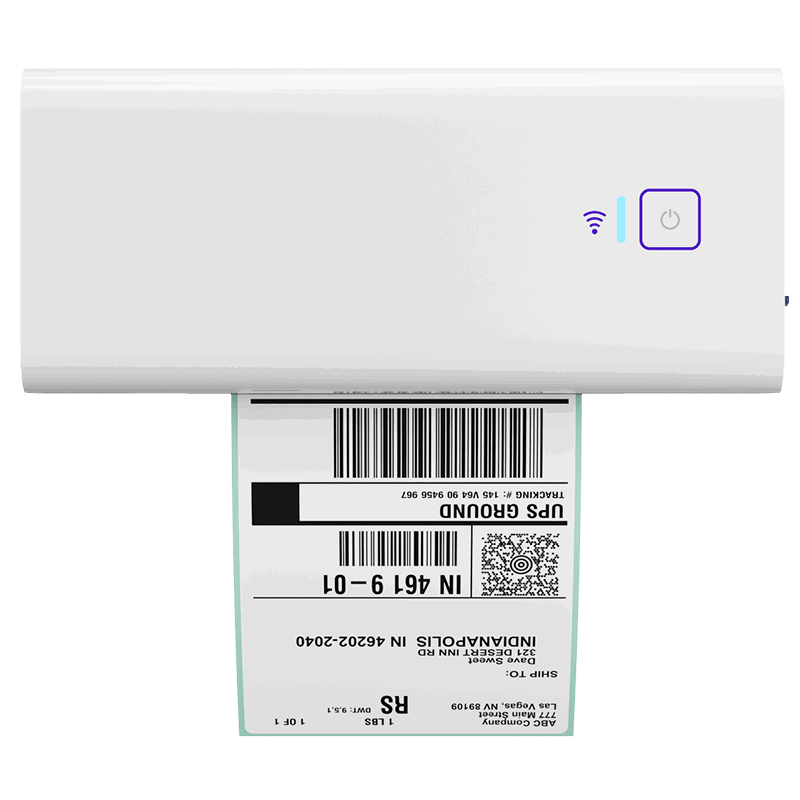
Once you know which shipping path makes the most sense, the next step should feel simple. Rollo’s Wireless Printer helps you print crisp 4×6 labels quickly, so your packing station keeps moving without adding extra friction to the order.
Follow Rollo on:
Frequently Asked Questions About Supplement Shipping
📌 Q: Can you ship supplements internationally?
💭 A: Supplements in capsule, tablet, or powder form can generally be shipped internationally, subject to the destination country’s import rules and your own export obligations. Liquid supplements and oils are more restricted. USPS guidance states that almost no hazardous materials are permitted in international mail, so a flammable-liquid product will usually need a different route.
📌 Q: Can I ship supplements to Canada?
💭 A: Yes, though two separate requirements apply. Carrier acceptance covers whether the parcel itself is mailable, and Canada Post treats dangerous goods as non-mailable matter. Separately, Health Canada regulates natural health products as a category, with licensing requirements for commercial import that differ from personal-use shipments. Confirm both before your first cross-border batch.
📌 Q: Do supplements need special packaging to ship?
💭 A: Standard supplements generally do not require hazardous materials packaging. Practical packaging still matters: seal tubs against leakage, cushion glass, and size the box to the contents rather than to convenience. Oversized boxes trigger dimensional weight (DIM) billing. Liquid and oil products may require absorbent material, sealed secondary packaging, and limited quantity marking.
📌 Q: How do I package essential oils for shipping?
💭 A: Packaging depends on the flashpoint of the specific oil and the carrier you use. USPS requires enough absorbent and cushioning material to prevent breakage and absorb leakage, sealed secondary packaging, strong outer packaging, and DOT Limited Quantity marking for surface transport. Our perfumes and cosmetics guide covers the mechanics in more detail.
📌 Q: Does subscription box shipping work differently from a regular order?
💭 A: The rules are identical. The economics are not. A subscription box ships in a fixed parcel to a known address on a predictable date, so packaging and carrier decisions repeat rather than reset. That makes optimization more valuable and bad defaults more expensive. Address accuracy also degrades between cycles in a way it never does on one-off orders.


